
Precision Industrial Couplings
HangZhou Ever Power Transmission Co. Ltd engineers and manufactures the full spectrum of shaft couplings — from jaw and gear couplings to fluid and spacer types — purpose-built to eliminate misalignment, dampen vibration, and protect your equipment investment.
Complete Coupling Range
Ten specialized coupling families designed to cover every drivetrain scenario — from precision servo systems to heavy mine conveyors. Click any category to view full specifications.
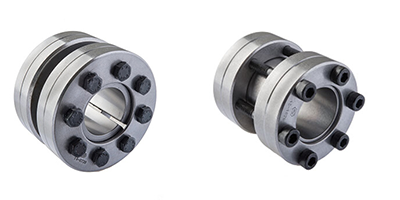
Rigid Couplings
Used when precise shaft alignment is required. Robust and provide a solid connection, making them ideal for high-torque applications where flexibility is not needed.
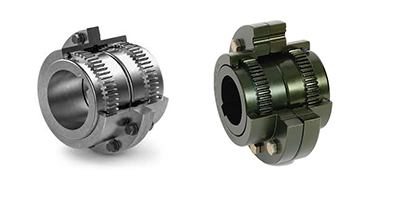
Accouplements d'engrenages
Ideal for heavy-duty, high-torque applications. Engineered to transmit massive rotational forces while offering some calculated allowance for misalignment.
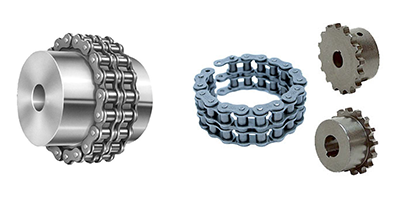
Chain Couplings
These couplings use chains to connect the two shafts, offering a rugged and compact solution for applications requiring strong and reliable power transmission.
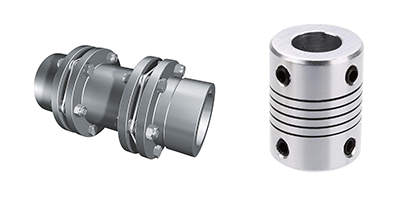
Flexible Couplings
Designed to accommodate misalignment between shafts, absorb torsional vibrations, and reduce stress on connected machinery across varied applications.
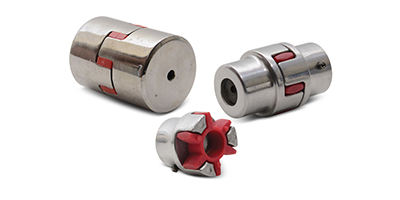
Accouplements à mâchoires
A fail-safe choice known for structural simplicity and excellent shock-absorption capabilities, preventing catastrophic equipment failure during load spikes.
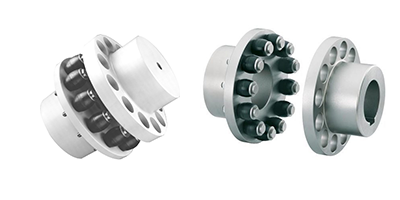
Pin Couplings
Perfect for heavy-duty drive systems that demand a fine balance of multi-directional flexibility, high shock damping, and long-term element durability.
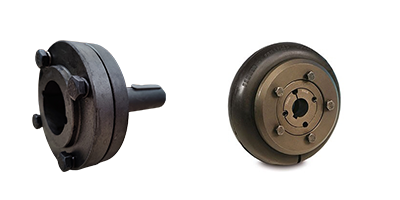
Fenaflex Spacer Couplings
Combines maximum flexible tire-element tolerance with convenient spacer gaps, ensuring elite angular/parallel offset capacity and easy machine serviceability.
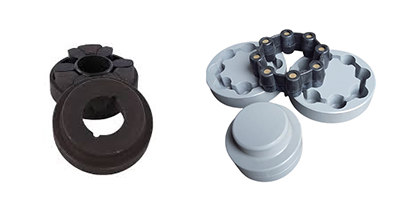
MH and HRC Couplings
Premium-engineered for standard industrial motors, delivering an optimal balance between torque strength and flexible alignment to minimize drivetrain wear.
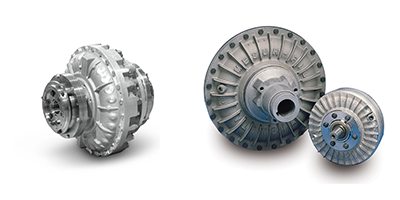
Fluid Couplings
Provide smooth power transmission by using hydraulic fluid to transfer torque. Critical for shock dampening, controlled soft start-ups, and load management.
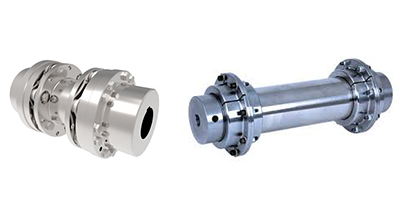
Spacer Couplings
Features a removable middle drop-out section, allowing rapid pump seal change-outs and standard maintenance without moving or re-aligning coupled shafts.
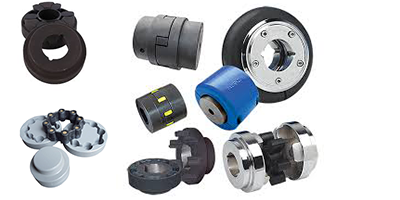
Material Options
Available in premium material selections including lightweight high-tensile aluminum and corrosion-proof stainless steel to counter extreme cleanroom or marine elements.
What Happens When You Choose the Wrong Coupling
A misspecified or low-quality coupling doesn’t just wear out — it becomes the weakest link in your entire drivetrain. These are the failure patterns we help engineers and procurement managers eliminate for good.
Premature Bearing & Seal Failure
Uncorrected shaft misalignment generates continuous radial and axial forces, destroying bearings and seals 3–5× faster than their rated service life — creating costly unplanned downtime.
Vibration Damaging Downstream Equipment
Rigid couplings used in shock-load or misaligned applications transmit all vibration directly into shafts, gearboxes, and bases — accelerating fatigue cracking and loosening fasteners.
Motor Overload & Burn-Out
Without torque-limiting protection, hard starts and sudden jam loads force full motor torque through the drivetrain, tripping breakers or burning motor windings — especially in conveyor and mixer applications.
Rapid Elastomer Element Wear
Incorrect spider or insert selection causes jaw couplings to run hot and fail within weeks, forcing repeat maintenance and creating a false perception that the coupling type itself is wrong for the job.
Unexpected Failures Mid-Production
Couplings sourced from unknown manufacturers fail without warning due to substandard alloy grades, insufficient hardness treatment, or dimensional tolerances that don't match rated torque claims.
High Total Cost of Ownership
Cheap imported couplings appear cost-effective until you factor in replacement frequency, labor hours, production losses, and downstream damage — easily 10× the initial coupling cost over a year.
Ever Power Couplings:
Engineered to Solve Every One of These Problems
With a complete range of precision-manufactured couplings — from elastomeric flexible types to heavy-duty gear and fluid couplings — we match the exact coupling technology to your torque, speed, misalignment, and environment requirements. Every product is manufactured to AGMA, DIN, and ISO standards and backed by material test certification.
Industries We Power Every Day
Our coupling products operate in the world’s most demanding environments — from deep-sea pump stations to food-grade processing lines.





Coupling Type Comparison Guide
Use this reference to quickly narrow down the coupling family for your application — then contact our team for precise size and specification selection.
| Coupling Type | Misalignment Tolerance | Vibration Damping | Torque Range | Soft Start | Best For |
|---|---|---|---|---|---|
| Jaw Coupling | Moderate (angular + parallel) | ✔ Bien | Up to 6,000 Nm | - | Pumps, fans, general drives |
| Gear Coupling | Angular ±1.5° | - Faible | Up to 4,500,000 Nm | - | Heavy industry, steel mills |
| Rigid Coupling | None (zero tolerance) | - None | Haut | - | Precision servo, CNC, encoders |
| Flexible Coupling | High (all three types) | ✔ Excellent | Moyen | - | Pump sets, compressors |
| Pin Coupling | Modéré | ✔ Bien | Moyen | - | Motor-pump, fan drives |
| Fluid Coupling | Low (parallel only) | ✔ Excellent | 5 kW – 2.5 MW | ✔ Yes | Crushers, conveyors, hoists |
| Chain Coupling | Modéré | - Faible | Moyen | - | Low-speed conveyors, ag machinery |
| Spacer Coupling | Modéré | ✔ Bien | Moyen-élevé | - | Pump seal maintenance access |
| Fenaflex Spacer | High (tyre element) | ✔ Excellent | Moyen-élevé | - | Diesel-pump sets, marine |
| MH / HRC | Modéré | ✔ Bien | Moyen-élevé | - | General industry, replacement |
How to Select the Right Coupling
Use this referChoosing the wrong coupling type is the root cause of most drivetrain failures. Use this framework — or email our engineers for free selection support.cise size and specification selection.
Define Your Torque & Power Requirements
Calculate peak torque (Nm) and apply a service factor (typically 1.25–2.5×) based on your load type: smooth drives, moderate shock, heavy shock, or reverse loading. This gives your design torque for coupling selection.
Identify Shaft Sizes & Speed
Record both driver and driven shaft diameters, keyway dimensions, and operating RPM. Ensure the coupling's bore range covers both shafts. High-speed applications may require dynamic balancing.
Assess Misalignment Type & Magnitude
Measure or estimate angular misalignment (degrees), parallel offset (mm), and axial displacement. Flexible couplings tolerate all three; rigid couplings demand precise alignment. Higher misalignment tolerance generally means a larger coupling.
Consider Space, Environment & Special Needs
Axial space constraints may require a spacer type. High temperatures, corrosive chemicals, or hygienic environments require material and seal upgrades. Does your application require electrical isolation, soft-start, or torque limiting?
Verify Catalog Rating — Then Contact Us
Cross-check catalog rated torque, bore range, and maximum RPM against your design torque. If in doubt, our engineering team will do the selection for you free of charge — just send your drive parameters to [email protected].
Key Selection Parameters
Foire aux questions
Answers to the questions B2B buyers most often ask before placing their first order.
What is the difference between flexible and rigid couplings?
Rigid couplings connect two shafts as a single unit with zero tolerance for misalignment — ideal for precision applications. Flexible couplings use elastomeric or mechanical elements to accommodate angular, parallel, and axial misalignment while damping vibration and shock loads, protecting bearings and motors.
Do you supply custom or non-standard couplings?
Yes — full OEM and ODM services including custom bore sizes, keyway configurations, special flanges, non-standard pilot lengths, and private labeling. Submit a drawing or sample part for a tailored quotation within 24 hours.
What is your lead time and shipping arrangement?
Standard stocked couplings ship within 5–10 business days. Custom orders are typically 15–30 days. We ship FOB, CIF, or EXW from Hangzhou via sea, air, or express courier. Anti-rust export packaging is standard.
How do I select the correct coupling for my application?
Key parameters: transmitted torque (Nm with service factor), shaft diameters, speed (RPM), misalignment type and magnitude, space envelope, and environmental conditions. Our engineers provide free selection assistance — simply email your drive data to [email protected].
What certifications do your couplings carry?
Our facility is ISO 9001:2015 certified. Material test certificates, hardness reports, and dimensional inspection reports are provided with every order. Third-party SGS or Bureau Veritas inspection can be arranged on request at no extra charge.
Can fluid couplings protect motors from overload damage?
Yes. Fluid couplings provide inherent torque-limiting: when driven load resistance exceeds a set threshold, the fluid coupling slips rather than transmitting excess torque, protecting both the motor and driven equipment from overload and shock — especially valuable on conveyors, crushers, and mine hoists.