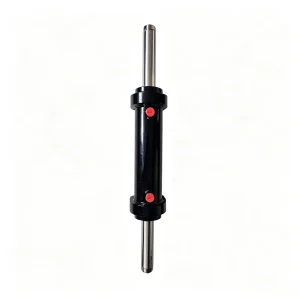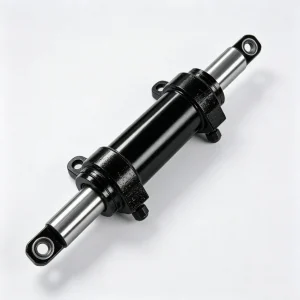
描述
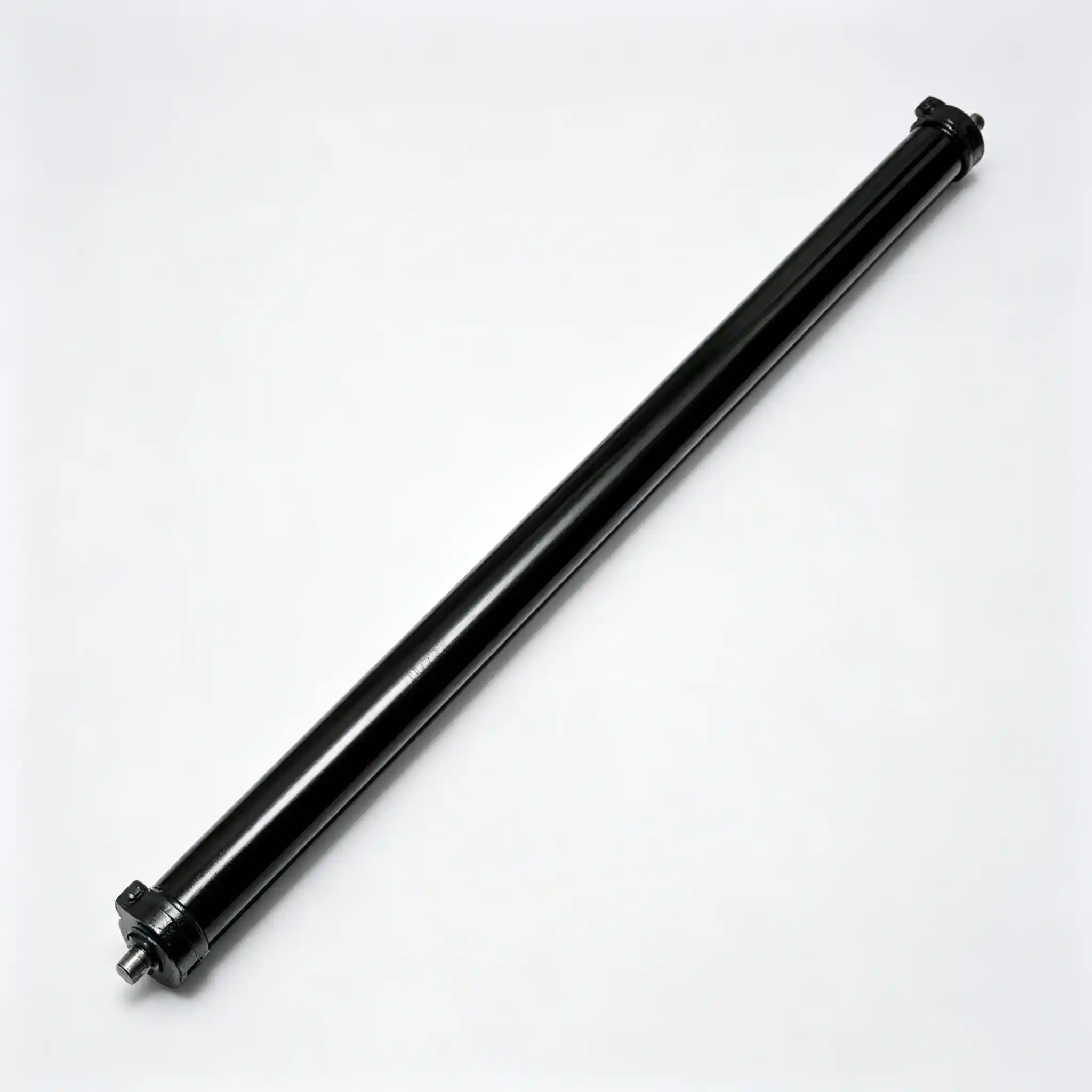
HCYY11112000 Forklift Hydraulic Cylinder — High-Pressure Lift Cylinder for Industrial Forklifts
The HCYY11112000 forklift hydraulic cylinder is engineered to deliver consistent, leak-free lifting performance in demanding warehouse, logistics, and heavy-industry environments. Designed as a direct-fit forklift lift cylinder for counterbalance and reach trucks in the 2–3-ton class, this unit pairs high-tensile steel construction with precision-honed bore tolerances to maintain stable hydraulic pressure across thousands of duty cycles.
- Bore diameter engineered to OEM specification tolerances
- Rod chrome-plated to Ra ≤ 0.4 µm for extended seal life
- Rated working pressure: 20 MPa / 200 bar
- Compatible with standard mineral-based and biodegradable hydraulic fluids
- NBR / PU composite seal kit for temperatures −20 °C to +80 °C
How to Select the Right Forklift Lift Cylinder for Your Mast Configuration
Selecting a replacement or upgrade forklift lift cylinder is not simply a matter of matching outer dimensions. The interaction between bore diameter, rod diameter, stroke length, and system working pressure determines the actual lifting force available at the carriage — and getting any of these parameters wrong can result in sluggish mast travel, premature seal failure, or cylinder drift under load.
The HCYY11112000 is optimised for single-mast and two-stage mast assemblies where the free-lift cylinder and primary lift cylinder work in tandem. The cylinder bore is sized so that at 20 MPa working pressure, the output force comfortably covers the rated load capacity with the required safety factor built in per ISO 4413 and ANSI B56.1 guidelines. This means your equipment maintains full-rated capacity even at elevated operating temperatures, when hydraulic oil viscosity drops and internal leakage tends to increase in inferior cylinders.
From an engineering standpoint, the mast hydraulic cylinder in a counterbalance forklift is under a combined axial compressive load (from the lifted load) and a bending moment caused by mast deflection. The HCYY11112000 addresses this with a piston rod diameter that keeps the rod slenderness ratio well within Euler’s buckling limit for the specified stroke, ensuring rod integrity under side-load conditions common in real warehouse operations.
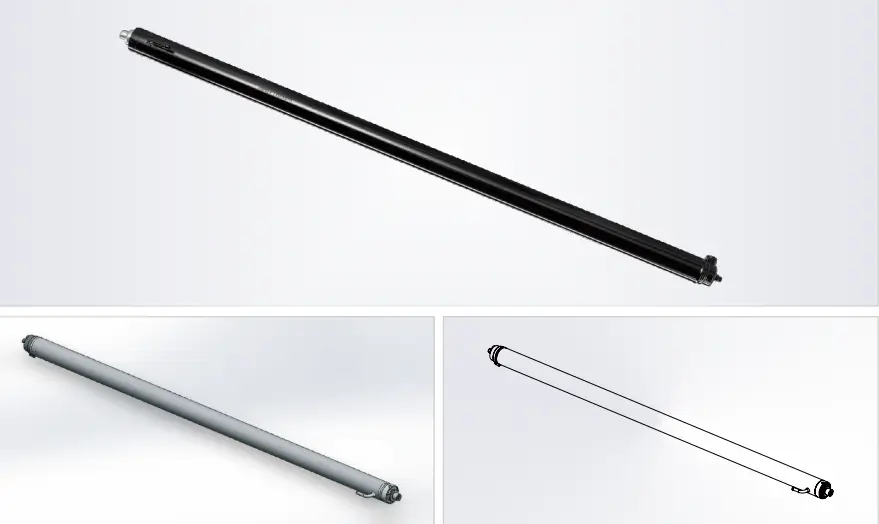
Fig. 1 — HCYY11112000 dimensional reference drawing
Technical Specifications: OEM-Grade Forklift Cylinder Replacement for 2–3 Ton Counterbalance Trucks
The table below summarises the key performance parameters of the HCYY11112000. All values are verified under factory acceptance test conditions before shipment, with test reports available on request.
| 范围 | Value / Specification | Note |
|---|---|---|
| Model | HCYY11112000 | Forklift lift cylinder |
| Cylinder Type | Single-acting, telescopic / plunger | Gravity return |
| Rated Working Pressure | 20 MPa (200 bar) | Burst-tested to 1.5× rated |
| Cylinder Material | ST52 / 20# seamless steel tube | Honed inner bore Ra ≤ 0.4 µm |
| Rod Material | 45# steel, hard chrome plated | Chrome layer ≥ 25 µm |
| Seal Kit | NBR + PU composite | −20 °C to +80 °C |
| 表面处理 | Phosphating + primer coat | Salt-spray tested ≥ 200 h |
| Hydraulic Fluid | Mineral oil ISO VG 46/68, biodegradable | Standard forklift hydraulic oil |
| Port Thread | Per dimensional drawing | BSP / NPT / metric available |
| Certification | ISO 4413 compliant | Factory acceptance test report included |
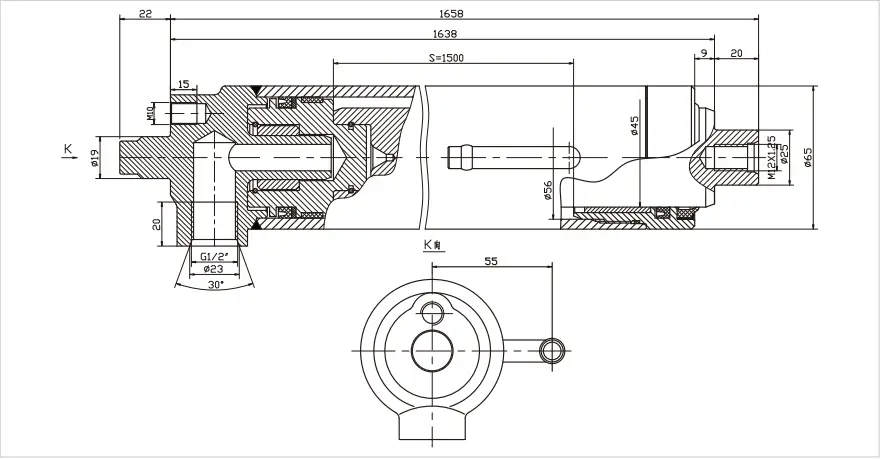
Fig. 2 — HCYY11112000 forklift lifting cylinder full dimensional drawing
Forklift Hydraulic Cylinder Applications: From Warehouse Logistics to Heavy Manufacturing
Industrial forklifts operate in some of the most demanding duty-cycle environments imaginable — cold-storage warehouses where seals are exposed to sub-zero temperatures, outdoor lumber yards with airborne debris, and paint-shop loading areas where solvent contamination is a constant concern. The HCYY11112000 is purpose-built for this breadth of application.
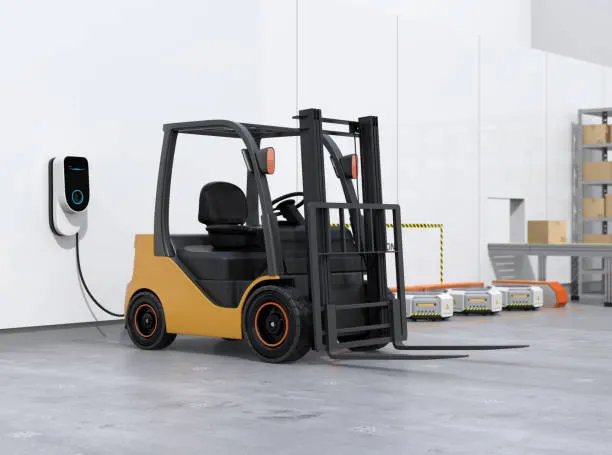
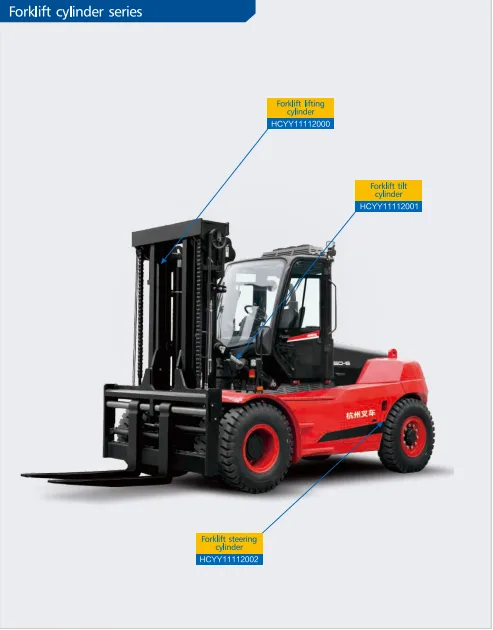
Logistics and distribution centres demand cylinders capable of completing 300–500 lift cycles per shift without internal bypass leakage causing mast drift. The HCYY11112000 achieves this through a precision-lapped piston-to-bore interface and a dual-lip wiper seal that excludes particulate contamination on every return stroke.
Automotive and paint-line loading robots — such as the loading/unloading systems used in paint lines — pair hydraulic lift cylinders with servo-controlled positioning. In these environments, the consistent static sealing performance of the HCYY11112000 prevents the micro-creep that would otherwise throw positional accuracy out of tolerance.
Port and container-handling equipment operates in highly corrosive salt-spray environments. The phosphating plus primer surface treatment on the HCYY11112000 barrel provides a first layer of protection, while the hard-chrome rod surface resists pitting from airborne chlorides.
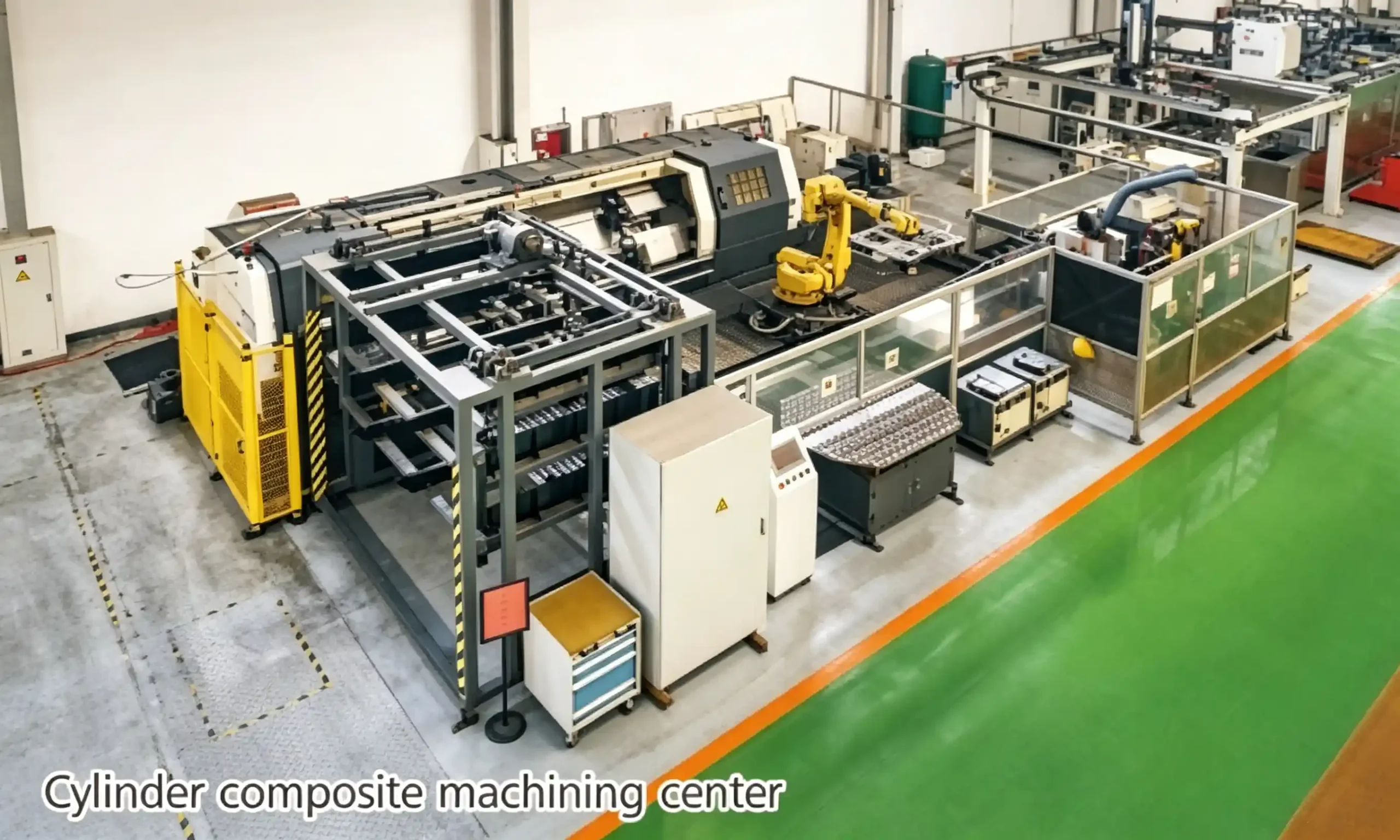
Fig. 3 — Our dedicated forklift hydraulic cylinder assembly and QC workshop
Why B2B Buyers Choose Our Forklift Cylinder Replacement Over Generic Market Alternatives
The hydraulic cylinder aftermarket is crowded with low-cost alternatives that meet dimensional specifications on paper but fall short in material traceability and process control. Here is where HCYY11112000 production differs in ways that matter operationally:
- Material traceability: Each batch of ST52 tube stock is accompanied by a mill certificate. Hardness and tensile strength data are archived per production lot, allowing procurement teams to request documentation for quality audits.
- Bore honing in-house: We do not outsource the bore finishing operation. Our CNC honing machines maintain the 0.4 µm Ra finish target consistently across production runs, which directly translates to longer seal life — a critical factor when seal replacement requires mast disassembly.
- Chrome plating thickness verification: Rod chrome thickness is measured with an eddy-current gauge on every rod, not sampled. Thin chrome is the primary cause of early rust-through on rods exposed to wash-down cycles.
- Pressure testing before despatch: Every HCYY11112000 unit is hydraulically tested to 1.5× rated pressure (30 MPa) and held for a soak period before the test pass record is attached to the shipment documentation.
- Lead time flexibility: Standard lead time for stocked configurations is 3–5 working days. Custom stroke / port configurations are typically 15–20 working days with engineering review included at no charge.
Forklift Hydraulic Cylinder Procurement: What to Verify Before Placing a Bulk Order
Procurement managers sourcing forklift hydraulic cylinders at scale — whether for a fleet maintenance contract, a spare-parts distribution business, or an OEM assembly programme — face a set of verification challenges that are not present when buying a single replacement unit. The risk profile of a bad purchasing decision multiplies with order quantity: a cylinder that fails at 200 hours instead of 2,000 hours means not one unplanned maintenance event, but dozens, spread across a fleet and occurring at unpredictable intervals.
The first verification step we recommend is to request a factory acceptance test (FAT) report from any manufacturer you are evaluating. A genuine FAT report for a hydraulic cylinder should include the test pressure, soak duration, leakage result (zero permitted), and the unique serial number or batch code of the unit. If a supplier cannot provide individual unit test records — or provides only a batch-level pass certificate without unit-level traceability — that is a signal that the testing regime is statistical rather than 100% inspection.
The second verification step is material certification. Ask for the mill certificate for the cylinder barrel material. The certificate should specify the heat number, chemical composition, and mechanical properties of the steel. For ST52 tube, the minimum yield strength is 355 MPa and the ultimate tensile strength range is 490–630 MPa. A supplier who cannot provide this documentation is likely sourcing tube from stock with no verified provenance — an unacceptable situation for a safety-critical component.
The third area to examine is the seal specification. Seal material is rarely marked on the cylinder itself, and it is easy for a supplier to substitute a lower-grade NBR compound for the specified PU/NBR composite without visible evidence. Ask for the seal kit part number and the seal manufacturer’s name. Cross-check the seal manufacturer’s published data sheet for compatibility with the hydraulic fluid type and temperature range of your application. This step takes ten minutes and can prevent a seal failure at 500 hours that would otherwise be attributed to installation error.
Finally, confirm the lead time commitment in writing. Many distributors quote a short lead time based on stock they do not actually hold, then shift to a longer manufacturing lead time when the purchase order is placed. For fleet maintenance programmes where a cylinder-out-of-stock situation causes an inoperable machine, the cost of downtime can quickly exceed the savings from choosing a lower-priced supplier. We maintain safety stock of the HCYY11112000 standard configuration and can confirm inventory position at the time of quote.
Forklift Lift Cylinder Installation Guide and Preventive Maintenance Best Practices
Even the highest-quality hydraulic cylinder will underperform or fail prematurely if installation and maintenance procedures are not followed. The following recommendations apply specifically to the HCYY11112000 in counterbalance forklift mast assemblies.
Before installation: Flush the hydraulic circuit with clean filtered oil before connecting the new cylinder. Particles left from a failed seal in the old cylinder — or metallic debris from pump wear — will score the bore of the replacement unit within hours of operation. Use a 10-micron return-line filter as a minimum; 3-micron is recommended in paint-shop or food-industry environments.
Torque the gland nut correctly: Under-torquing allows the gland to back off under pressure cycles, creating a dynamic leak path at the rod seal. Over-torquing distorts the seal housing, crushing the wiper seal and causing it to shred the chrome rod. Reference the torque value specified on our assembly drawing, which ships with every unit.
Break-in cycle: After installation, cycle the mast through its full range of travel five to ten times at no load and at low system pressure. This distributes grease across the mast channel liners and allows the new seals to seat properly before full-load operation.
Ongoing inspection intervals: Inspect the rod for pitting, scoring, or chrome flaking every 500 operating hours or at each planned maintenance service, whichever comes first. A pitted rod will destroy a new seal set within days; if pitting is visible, the rod must be re-chromed or the cylinder replaced before returning the machine to service.
Oil analysis: Periodic oil sampling catches internal bypass (wear metal in the sample) and seal degradation (rubber particles) before they cascade into mast drift or catastrophic pump failure. We recommend oil analysis every 1,000 hours on high-cycle applications.
Forklift Cylinder Cross-Reference and Compatibility: How to Identify the Right Replacement Part
One of the most frequent questions we receive from maintenance managers is: “How do I know this cylinder is the right one for my forklift?” It is a fair question, because OEM cylinder part numbers are not always easy to find — they are sometimes stamped on a nameplate that has worn off, or referenced in a service manual that has not been updated for the specific mast configuration installed on the truck.
The practical approach is to measure the cylinder that is being replaced rather than relying on part numbers alone. The five measurements that matter are: outer barrel diameter, rod diameter, collapsed length (centre of front pin to centre of rear pin with cylinder fully retracted), extended length (same measurement at full extension), and port thread specification. With these five measurements, our technical team can identify the correct HCYY11112000 configuration within the same business day and confirm whether a direct replacement is possible or whether a custom stroke variant is required.
Port thread compatibility is an area where errors frequently occur. European-market forklifts typically use BSP (British Standard Pipe) threads, while North American machines use NPT, and many Japanese machines use JIS metric threads. The thread form is not visible to the eye without a thread gauge — BSP and NPT have nearly identical thread pitch and diameter in the most common sizes, but they are not interchangeable. Attempting to fit a BSP adaptor into an NPT port — or vice versa — will cross-thread and damage the port, causing an immediate external leak. Always specify the thread standard when requesting a quote, and if you are uncertain, request a sample fitting kit from us to verify before ordering.
For fleet managers maintaining mixed-brand fleets — a common situation in logistics companies that have acquired equipment through multiple purchasing cycles — we offer a consultation service to rationalise the cylinder specifications across the fleet. In many cases, a single cylinder configuration with appropriate adaptors can serve multiple forklift models, reducing the number of part numbers held in the spare-parts store and simplifying reordering. Contact our technical team with your fleet list and we will provide a rationalisation analysis at no cost as part of the quotation process.
Request a Quote or Technical Drawing for HCYY11112000
Whether you need a single replacement cylinder, a bulk procurement for a fleet maintenance programme, or a custom stroke variant for a non-standard mast configuration, our engineering team is ready to assist. Submit your enquiry with your forklift model, mast type, and required quantity — we respond within one business day.