Description

Front Loader Hydraulic System
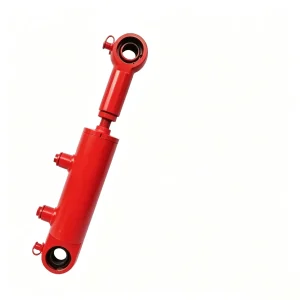
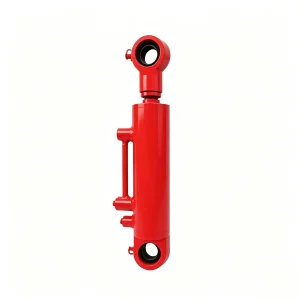
Front Loader Arm Swing Cylinder — Compact 40 mm Bore Actuator for Precise Arm Lateral Positioning
Rod: 22 mm
Stroke: 60 mm
Mounting: 260 mm
The front loader arm swing cylinder controls the lateral positioning movement of the lifting arm assembly on front-load refuse collection vehicles. When a front loader approaches a commercial or industrial waste container, the arm must swing outward from its stowed position to align the fork tines with the container’s lifting pockets, and then swing back inward to bring the loaded container over the hopper aperture for dumping. This 40 mm bore, 60 mm stroke actuator provides the precise, rapid swing actuation needed for efficient multi-container collection cycles while operating reliably in the contaminated, high-vibration environment of daily refuse collection service.
Technical Specifications
| Cylinder Type | Arm Swing / Lateral Position Actuator (Double-Acting) |
| Bore Diameter | 40 mm |
| Rod Diameter | 22 mm |
| Stroke Length | 60 mm |
| Installation Distance (C-C) | 260 mm |
| Application | Front Loader Arm Lateral Swing Positioning |
Front Loader Arm Swing Cylinder Function: How 60 mm Stroke Controls Lateral Arm Travel and Container Fork Alignment
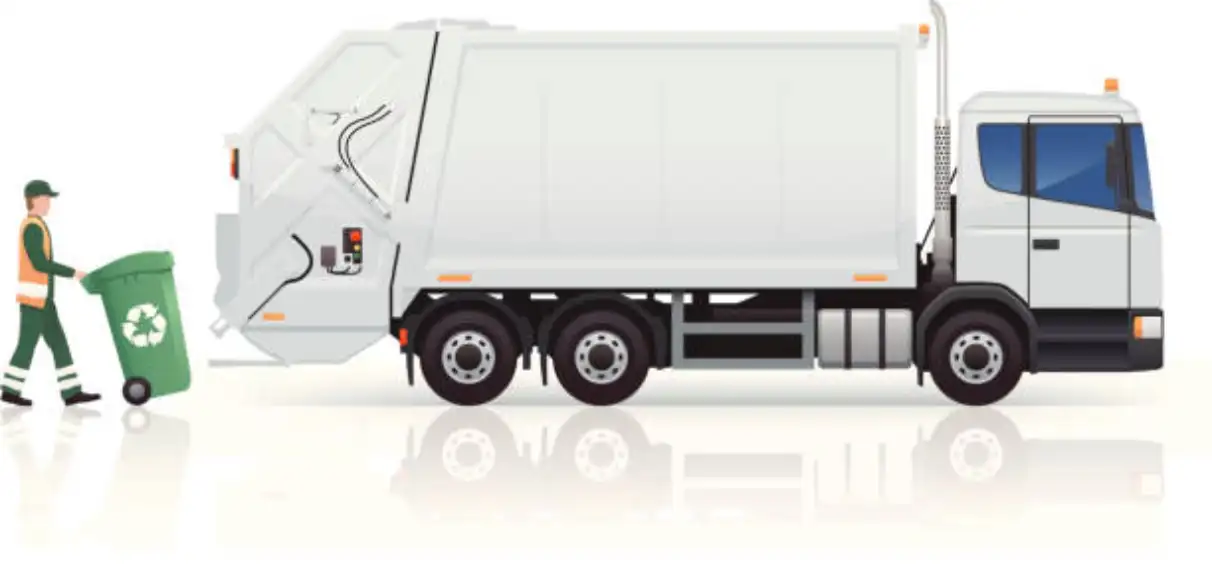
On a front-load refuse collection vehicle, the arm assembly must accomplish a precise lateral swing movement to bridge the gap between the vehicle’s parked position and the variable location of commercial waste containers on a customer site. Container placement is rarely perfectly aligned with the vehicle centerline — vehicles park within the available street space, and containers may have drifted from their designated pad position. The swing cylinder provides up to 200–300 mm of lateral adjustment at the fork tip (amplified from the 60 mm cylinder stroke through the arm linkage geometry), allowing the driver to align the forks with the container pockets without repositioning the entire vehicle.
A 40 mm bore cylinder at 160 bar generates approximately 20 kN of force — far more than required for the lateral swing function on an unloaded arm, where the actuating force needed is primarily that required to overcome the arm pivot bearing friction and accelerate the arm mass laterally. The excess force capacity exists for two important operational reasons: first, when the arm makes contact with a container that is not perfectly aligned, the cylinder must be able to push or pull the container laterally to engage the fork pockets without requiring the driver to exit the cab and manually reposition the container. Second, the 20 kN capacity provides a meaningful crushing force margin if the arm experiences an impact with a fixed obstacle — the cylinder can hold its position against impact loads that would occur if the arm swings into a wall or bollard before the operator or the vehicle’s proximity sensor system intervenes.
The 260 mm C-C mounting distance is compact by design. The arm swing cylinder is typically housed within the arm structure itself, packaged between the arm side plates in a protected position that shields it from direct contact with containers and roadside obstacles. The 260 mm C-C dimension fits within the internal width of standard front loader arm fabrications without requiring the arm to be widened — a widened arm increases the vehicle’s overall width, potentially exceeding road width regulations in narrow European urban collection routes.
High-Frequency Hydraulic Arm Swing Actuator Durability: Cycle Life, Seal Fatigue, and Vibration Resistance in Front Loader Service
The arm swing cylinder on a front loader operates at a higher cycle frequency than almost any other hydraulic cylinder on the vehicle. A front-load collection route may involve 200–400 container pickups per day. Each pickup cycle includes at least two complete swing cylinder strokes — one to swing the arm out and one to swing back — with additional strokes if the initial alignment requires correction. This adds up to 400–800 full stroke cycles per shift for each swing cylinder. Over a 250-day working year, this amounts to 100,000–200,000 full stroke cycles annually — a duty cycle that demands seal materials and bore surface finishes designed for high-cycle endurance rather than just static pressure capacity.
High-cycle seal fatigue is the primary wear mechanism in swing cylinders, rather than the abrasive rod surface wear that dominates in dirty, slow-cycle environments. Under rapid repeated cycling, the seal lips experience pressure-induced micro-deformation on each stroke. The recovery time between strokes determines whether the lip returns to its full sealing geometry before the next stroke. At high cycle rates, seals with insufficient elastic recovery — characteristic of lower-grade polyurethane compounds — progressively lose sealing lip interference, leading to internal bypass leakage that manifests as slow arm drift when the operator holds the swing position without cylinder command.
The seal package for this cylinder uses a high-resilience polyurethane compound with a Shore A hardness of 90–95, providing the stiffness needed to maintain lip geometry under rapid cycling while retaining sufficient elasticity for seal recovery at low operating temperatures. The piston seal is a compact bi-directional PTFE-backed design that minimizes friction and heat generation during rapid cycling — elevated friction generates heat that accelerates seal compound degradation in high-frequency applications. The bore honing process for this cylinder uses a plateau-hone finish (Ra 0.3 μm, Rpk <0.1 μm) that retains oil film for seal lubrication while minimizing the peak roughness that drives abrasive seal wear during the millions of seal-to-bore contact events in the cylinder’s service life.
Sourcing Front Loader Swing Cylinders for Refuse Vehicle Manufacturers and Fleet Replacement Programs
For front loader refuse vehicle manufacturers, the arm swing cylinder is typically part of a hydraulic system that includes the lift cylinder, the fork spread/close cylinder, and in some designs a tilt cylinder for fork angle adjustment. Sourcing all of these cylinder types from a single supplier simplifies the vendor management process, ensures hydraulic fluid and seal material compatibility across the entire system, and allows for consolidated shipment scheduling aligned with the vehicle production build schedule. We supply complete front loader hydraulic cylinder sets to vehicle manufacturers and can coordinate delivery schedules with chassis build sequencing.
For fleet maintenance programs, arm swing cylinder replacement is typically triggered by one of three failure presentations: external rod seal leakage (visible oil on the rod), internal bypass leakage causing arm drift under load, or physical damage to the cylinder body from an arm-structure impact. Replacement cylinders must match the OEM dimensional specification exactly — any deviation in C-C distance changes the arm’s swing angle range, potentially preventing the arm from reaching full lateral extension or causing structural interference with the arm side plates at end of travel. Our technical team maintains dimensional records for swing cylinder configurations used in major front loader platforms from leading vehicle manufacturers and can confirm compatibility before order placement.
Minimum order quantities for standard configurations start at 10 units per order, which aligns with the typical annual replacement volume for a mid-size municipal or commercial fleet. Blanket order programs with monthly release scheduling are available for larger fleet operators, providing committed pricing and stock reservation without requiring full order payment upfront. Technical support including installation guidance, torque specifications, and system pressure verification procedures is provided with all orders at no additional charge.
Applications
- Front-load refuse collection vehicles — arm lateral swing positioning
- Automated side-loader arm guidance and centering actuator
- Commercial container lift systems — fork horizontal adjustment
- Industrial waste compactor feed systems — lateral chute positioning
- Recycling collection vehicles with multi-compartment front arms
Source the Front Loader Arm Swing Cylinder — Fleet Quantities Welcome
Contact our technical sales team for OEM part cross-reference, dimensional drawing verification, and blanket order pricing for refuse fleet maintenance programs.