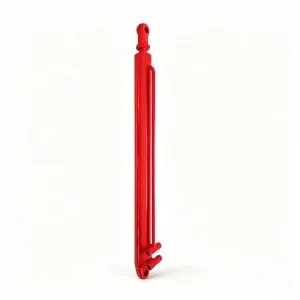
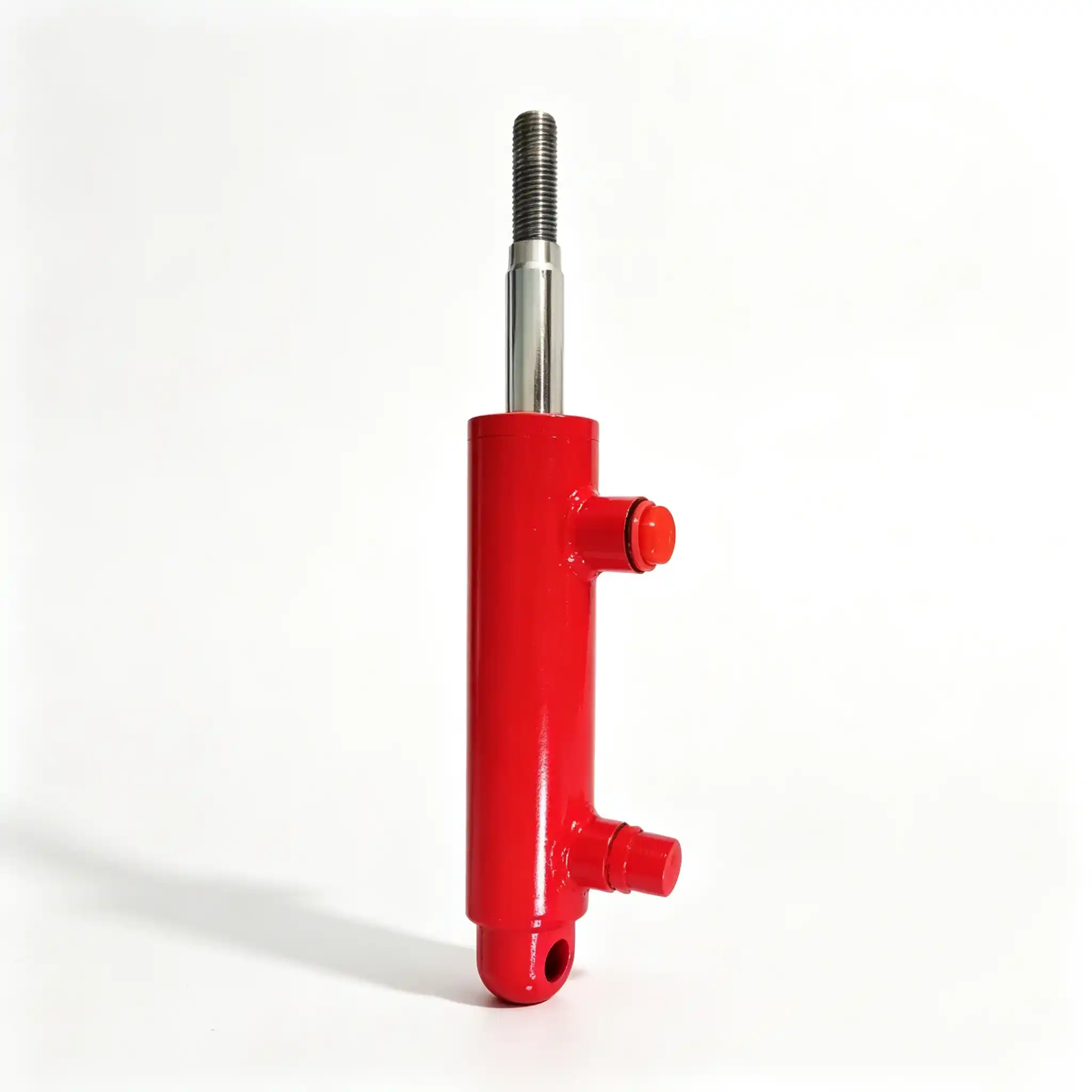
Beschreibung
YM4P.83.03 · Corn Harvester Series
Corn Harvester Engagement Cylinder — Engineering-Grade Performance for High-Cycle Clutch Systems
Part No. YM4P.83.03 | Bore: 40 mm | Rod: 22 mm | Stroke: 110 mm | C/C: 348 mm
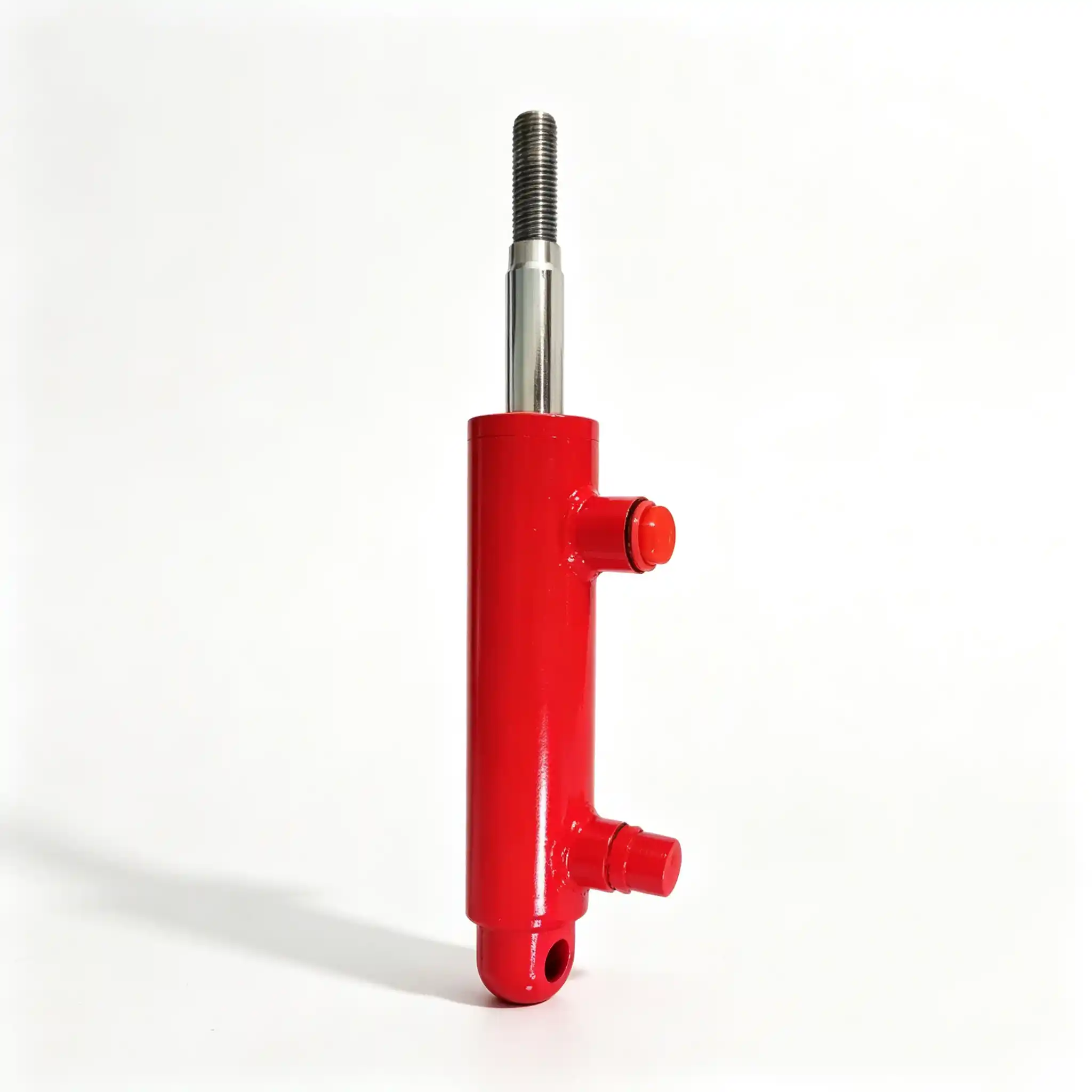
YM4P.83.03 Engagement Cylinder
The YM4P.83.03 corn harvester engagement cylinder is purpose-engineered for the drive-engagement mechanism on row-crop corn harvesters — a position that endures some of the highest cyclic loading in the entire machine. Every time the operator engages or disengages the header drive, threshing drum, or main belt clutch, this cylinder absorbs the inertial shock of spinning drum masses and the sudden torque transfer that comes with it. Getting that component wrong means nuisance downtime in the middle of harvest. Getting it right means your machine finishes the season.
Designed as a direct OEM-compatible replacement — and available for custom-specification builds for integrators — this cylinder is produced to SAE J1453 port standards, honed bore with Ra ≤ 0.4 µm finish, and hard-chrome plated rod conforming to ISO 6020/2 dimensional tolerances.
40mm Bore Hydraulic Cylinder Specifications — Full Parameter Breakdown for Procurement & Engineering Review
| Parameter | Value | Engineering Note |
|---|---|---|
| Bore Diameter (D) | 40 mm | Compact bore balances output force against envelope space in tight clutch bracket housings. At 160 bar working pressure, push force ≈ 20.1 kN. |
| Rod Diameter (d) | 22 mm | Rod area ratio (A_annulus / A_bore) ≈ 0.70. Pull force at 160 bar ≈ 14.0 kN. The asymmetry is intentional — engagement (push) requires more force than release. |
| Stroke (L) | 110 mm | Sized for full belt-tensioner or clutch-fork travel without over-stroking, which would risk piston seal damage at end-of-stroke under pressure spikes. |
| Mounting Distance (C/C) | 348 mm | Center-to-center pin distance fully retracted. Matches OEM bracket geometry on Lovol/Zoomlion-family 4-row corn harvesters. Critical for bolt-on replacement. |
| Rated Working Pressure | 160 bar (2,320 psi) | Continuous operating pressure in normal harvester hydraulic circuits. |
| Peak / Surge Pressure | 250 bar (3,625 psi) | Cylinder tube and end-caps proof-tested to 1.5× rated; designed to handle hydraulic shock from emergency re-engagement under load. |
| Rod Surface Treatment | Hard chrome, 25–30 µm | HRC 60+ surface hardness. Resists abrasion from harvest chaff and field debris common in open-cab, low-clearance cylinder positions. |
| Seal System | Polyurethane + PTFE guide ring | Suitable for hydraulic oil ISO VG 46/68 at −25 °C to +100 °C continuous. PTFE wear ring eliminates metal-to-metal contact on honed bore. |
| Port Standard | BSP G3/8″ (SAE J1453 optional) | BSP ports for European and Asian OEM circuits. SAE ORB ports available on request for North American assemblies. |
| Mounting Style | Clevis-to-clevis (pin mount) | Both eyes accept Ø20 mm pins. Custom knuckle-joint or flange-mount ends available for OEM integrators. |
Engineering Reference · Force Calculations
Push Force (extend): F = P × A_bore = 160 bar × π/4 × (0.040 m)² ≈ 20,106 N (20.1 kN)
Pull Force (retract): F = P × A_annulus = 160 bar × π/4 × (0.040² − 0.022²) ≈ 14,067 N (14.1 kN)
The 1.43:1 push-to-pull ratio is deliberately matched to engagement-mechanism geometry, where clutch spring preload and belt tension demand a higher push force than the return spring requires for disengagement. This ratio eliminates the need for an oversized cylinder — keeping mass and package size competitive.

Drive-engagement hydraulics under real harvest-field load conditions
Why the Engagement Cylinder Is the Most Stress-Exposed Hydraulic Component on a Corn Harvester
Procurement engineers who have only spec’d lift or dump cylinders often underestimate what the engagement cylinder is actually doing. This isn’t a slow-travel, high-stroke positioning cylinder — it’s a controlled-impact actuator. When the operator engages the header or threshing drum from the cab, the cylinder must:
- Overcome clutch spring preload — typically 8–12 kN on 4-row machines — before the belt begins to grip.
- Transfer load progressively, not as a hard step-change, to prevent belt-slip wear and V-belt thermal failure. The cylinder’s low internal leakage (≤ 3 cc/min at rated pressure) allows the operator to modulate engagement speed via the control valve.
- Hold position against belt back-tension during steady-state harvesting — any seal drift here causes belt slippage under load, instantly audible as a belt screech and costly in throughput.
- Survive rapid disengagement shocks — when the operator hits the kill switch under a full threshing load, the reverse pressure spike can briefly exceed 200 bar, which is why this cylinder is spec’d to 250 bar surge.
A generic “equivalent bore” cylinder sourced without understanding these dynamic loads will typically show premature rod seal extrusion, gland nut loosening, or internal bypass within one season. The YM4P.83.03 is built specifically for this duty cycle, with wiper seal geometry tuned for chaff-laden environments and a piston seal stack that maintains sealing force across the full temperature swing of a harvest day.
OEM Supplier Construction Standards — How the YM4P.83.03 Outlasts Generic Agricultural Hydraulic Cylinders
Bore Finishing
Cylinder tube is cold-drawn seamless steel (E355 / DIN 2391), then honed to Ra ≤ 0.4 µm — the same finish spec used in European OEM cylinders. This directly controls seal-film geometry, reducing dynamic friction and extending piston seal life beyond 500,000 cycles in laboratory testing.
Rod Chrome Depth
25–30 µm hard chrome (electrodeposited, HV 800+) on the rod surface. Field experience on corn harvesters shows that cylinders with <18 µm chrome — common in lower-tier replacements — suffer pit corrosion from morning dew and chaff acids within 2 seasons, causing premature rod seal cutting.
Wiper Seal Design
Dual-lip polyurethane wiper with a bronze-filled PTFE secondary wiper. This combination physically blocks chaff particles from riding the retracting rod into the seal gland — a failure mode unique to open-cab corn harvesters where dust concentrations around the drive housing routinely exceed 15 g/m³.
End Cap Welding
Butt-welded end caps with full-penetration welds, 100% ultrasonic tested on production batches. Threaded gland-nut retaining ring additionally lock-wired. No adhesive bonding on pressure-bearing joints — a shortcut found on some non-OEM cylinders that fails on surge events above 200 bar.
Application Fit — Compatible Harvester Models and Drive Engagement Architectures
The YM4P.83.03 has been validated against the following corn harvester platform configurations. Where the OEM part number differs, dimensional interchangeability has been confirmed against published service manuals.
| Harvester Platform | Engagement Type | Fit Status |
|---|---|---|
| 4-Row Self-Propelled Corn Harvesters (YM4P platform) | Header belt-clutch engagement | Direct OEM Fit |
| Similar 4-row platforms with C/C 340–355mm bracket spacing | Threshing drum or header drive clutch | Verify Pin Ø |
| OEM integrators — custom bracket spacing | Any belt-tension or engagement application | Custom Stroke / C-C Available |

Peak-load field conditions — exactly when engagement cylinder reliability is most critical
Agricultural Hydraulic Cylinder Specs — Seal Life Optimization for Multi-Season Reliability
The dominant cost in engagement cylinder ownership is not the cylinder itself — it’s labour-intensive mid-harvest seal replacement. An experienced harvester mechanic can replace the seals in this cylinder in approximately 45 minutes in the field with basic tooling, but that’s still 45 minutes of machine downtime at a moment when ground conditions and weather windows are the controlling variable.
Several design decisions specifically address seal longevity:
- Piston seal stack: Quad-ring (X-ring) primary with a PTFE backup ring. X-rings reduce dynamic friction by ~30% vs. standard O-rings at the same groove, which is the main driver of seal heat buildup on high-cycle engagement actuators.
- Gland seal accessibility: Standard retaining nut (C-spanner, 60 mm A/F) — no special tooling required. Seal kit includes all consumable components and is available as a separately catalogued spare.
- Temperature range: PU/PTFE compound rated −25 °C to +100 °C continuous, −40 °C intermittent. Relevant for European and North American harvest seasons where early-morning temperatures can stress under-specified elastomers.
- Hydraulic fluid compatibility: Mineral oil, HETG (rapeseed-based biodegradable), and HF-D fire-resistant — no reformulation required for markets with mandatory biodegradable fluid regulations.
Corn Harvester Engagement Cylinder OEM Supplier — Custom Configurations and Batch Order Options
Standard production runs of the YM4P.83.03 are stocked for immediate dispatch. For OEM integrators or distributors with platform-specific requirements, the following custom parameters are supported without tooling surcharge for orders above MOQ:
- Stroke length: 80–150 mm (within tube design envelope)
- Mounting distance (C/C): adjusted ±40 mm from standard
- Port size/standard: BSP, NPT, SAE ORB, BSPT
- Rod end: clevis, knuckle joint, rod eye, flange mount
- Bore-side end: clevis, trunnion, foot bracket
- Surface finish: zinc phosphate + epoxy coat, black oxide, or per customer spec
- Seal material: NBR, PU, FKM (Viton) for specialty fluid compatibility
- OEM part number and private-label marking available on MOQ ≥ 50 pcs
All custom configurations are supported with 2D drawing review and optional 3D STEP file provision before production sign-off. Lead time for standard configurations is 7–15 business days ex-works; custom configurations 20–35 business days depending on volume and specification complexity.
Ready to Specify or Procure?
Get CAD Drawings, OEM Quotation, or Custom Engineering Support
Whether you need a like-for-like replacement in volume, a design-adapted cylinder for your own platform, or full 2D/3D documentation for your engineering review — our technical team responds with detail, not a generic price list.