Beschreibung
Agricultural Hydraulic Cylinders › Towing & Implement Lifting › Towing and Lifting Cylinder
Model HCYY11112017
Towing and Lifting Cylinder
for Agricultural Machinery
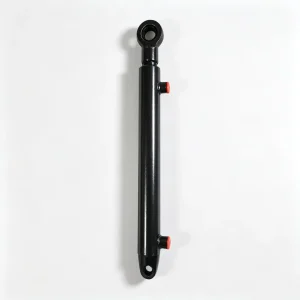
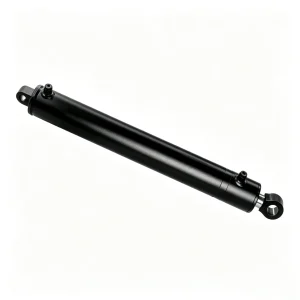
A compact, lightweight agricultural towing and lifting cylinder engineered for the frequent lift cycles, variable load angles, and field-environment durability requirements of tractor-mounted implement lifting systems and towed equipment hydraulic connections — where low weight and reliable force delivery across 348 mm of stroke define operational value.
Rod Φ25 mm
Stroke 348 mm
Install 536 mm
16.7 MPa WP
Weight 6 kg
Product Overview
Why the Agricultural Towing and Lifting Cylinder Is the Most Demand-Diverse Hydraulic Component on a Working Farm — and Why Generic Bore Selection Consistently Fails Here
The Application Diversity Problem
A tractor-mounted hydraulic cylinder in a towing and lifting application may be asked to raise a plough linkage for headland turning, hold a seed drill at transport height during road transfer, tension a bale wrapper arm, or provide the clamping force for a log splitter attachment — sometimes within the same working day. Each of these tasks has a different force requirement, a different static hold duration, and a different rod-seal contamination exposure level. The cylinder specification must satisfy the worst-case combination of these variables without being oversized to the point where it consumes disproportionate hydraulic flow and slows the tractor’s primary functions.
The Weight Constraint
Agricultural towing and lifting cylinders are typically mounted at the rear of the tractor on the 3-point hitch linkage or on a towed implement chassis. In either position, the cylinder’s own weight contributes to the rear axle loading, affecting tractor stability and front-axle steering weight. At 6 kg, the HCYY11112017 is engineered for minimum dead weight while maintaining the structural integrity required for 16.7 MPa working pressure and 24.5 MPa withstand ratings. This weight-to-performance ratio is not achievable with larger bore cylinders that might seem superficially capable for the same application — a 50 mm bore cylinder of comparable stroke would weigh 30–50% more and consume proportionally more hydraulic flow per extension cycle, reducing the speed of other tractor hydraulic functions operating simultaneously.
The HCYY11112017 agricultural towing and lifting cylinder is sized at 40 mm bore and 25 mm rod to deliver precisely the force range needed for tractor implement lifting and towing hitch applications in the compact machine class — sufficient to lift and hold the target implement against gravity and field vibration, without the flow demand and weight penalty of an oversized cylinder. The 348 mm stroke is matched to the geometric arc requirements of standard 3-point hitch lower link travel and common towed implement lift arm geometry, providing complete range of motion from ground contact to maximum transport height.
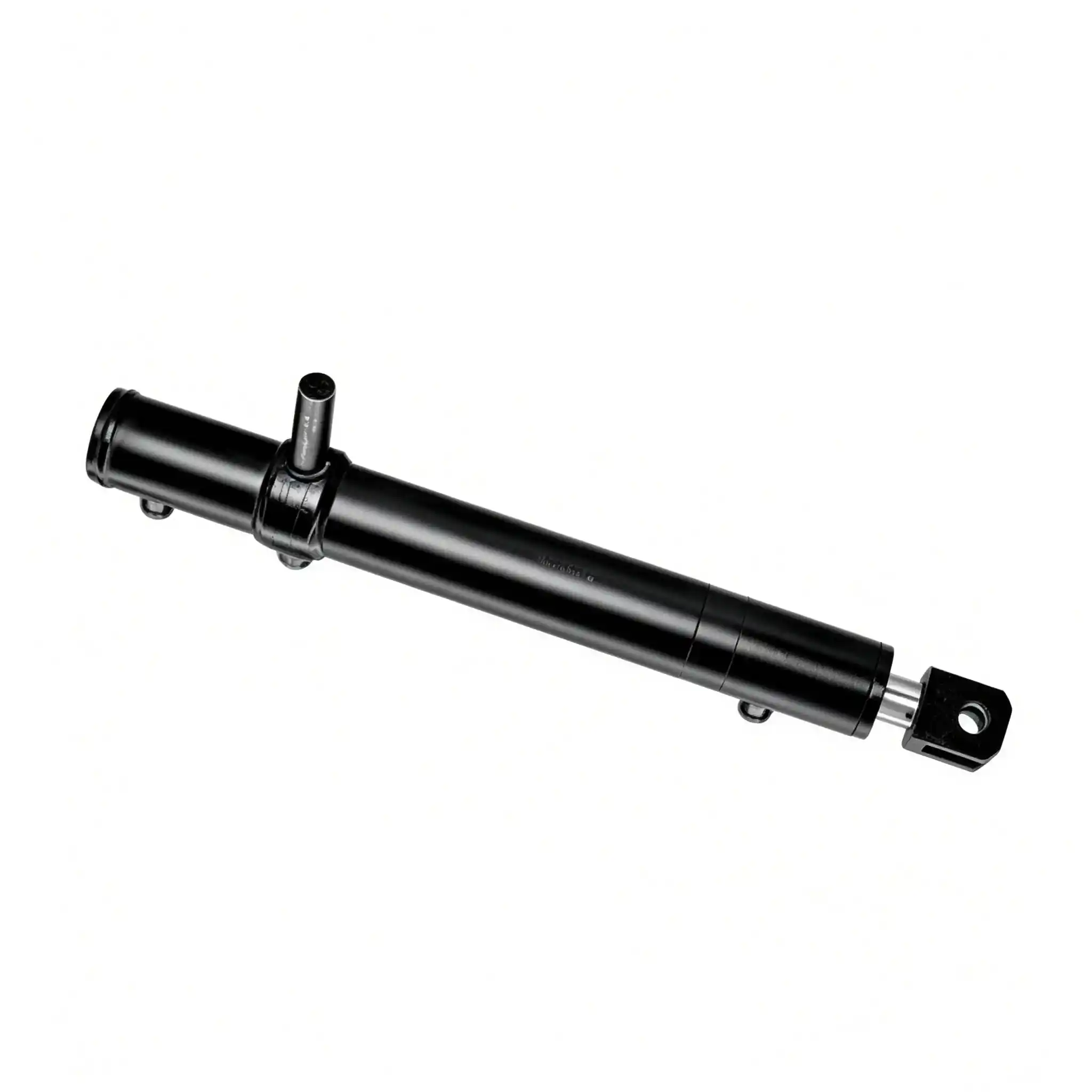
HCYY11112017 — 6 kg lightweight towing and lifting cylinder; 348 mm stroke for full tractor implement range of motion
Technical Specifications
HCYY11112017 Towing and Lifting Cylinder: 40mm Bore, 348mm Stroke — Why Every Parameter Is Optimised for Agricultural Implement Duty
| Parameter | Value | Agricultural Significance |
|---|---|---|
| Cylinder Model | HCYY11112017 | Direct OEM cross-reference for tractor implement hydraulic system service and parts procurement documentation |
| Bore Diameter | Φ40 mm | Piston area 12.6 cm². Push force ≈ 21.0 kN at 16.7 MPa — appropriate for compact tractor implement lift loads of 800–1,500 kg through typical 3-point hitch mechanical advantage ratios of 3:1 to 5:1 |
| Rod Diameter | Φ25 mm | Rod annulus area 7.7 cm². Pull force ≈ 12.9 kN at 16.7 MPa for implement lowering. At a bore-to-rod ratio of 1.60:1, the 25 mm rod maintains adequate pull force while minimising cylinder weight — critical for rear-axle balance on compact tractors |
| Stroke | 348 mm | Covers the full vertical travel range of standard 3-point hitch lower link geometry from maximum ground penetration to maximum transport height, without requiring the operator to manage a partial-stroke stop position |
| Installation Distance | 536 mm | Pin-to-pin retracted length. Sets the implement position at minimum link height. Must be verified against the tractor’s hydraulic cylinder mounting bracket spacing — a 10 mm mismatch prevents correct implement levelling at the work position |
| Working Pressure | 16.7 MPa | Matches the standard tractor hydraulic system pressure. No pressure reducer required — the cylinder connects directly to the tractor’s work port hydraulic circuit without additional components |
| Max Withstand Pressure | 24.5 MPa | 46% safety margin accommodates hydraulic pressure spikes from sudden implement contact with the ground, tractor deceleration load transfer, and pump pressure regulation hunting that can briefly exceed working pressure settings |
| Weight | 6 kg | Lightweight construction for minimal rear-axle loading contribution. At 6 kg, this cylinder can be handled by one person during field installation and replacement without lifting equipment |
Lift Force
21.0 kN
@ 16.7 MPa · Φ40 mm
Lower Force
12.9 kN
@ 16.7 MPa · Φ25 mm rod
Complete Weight
6 kg
One-person field installation without lifting equipment
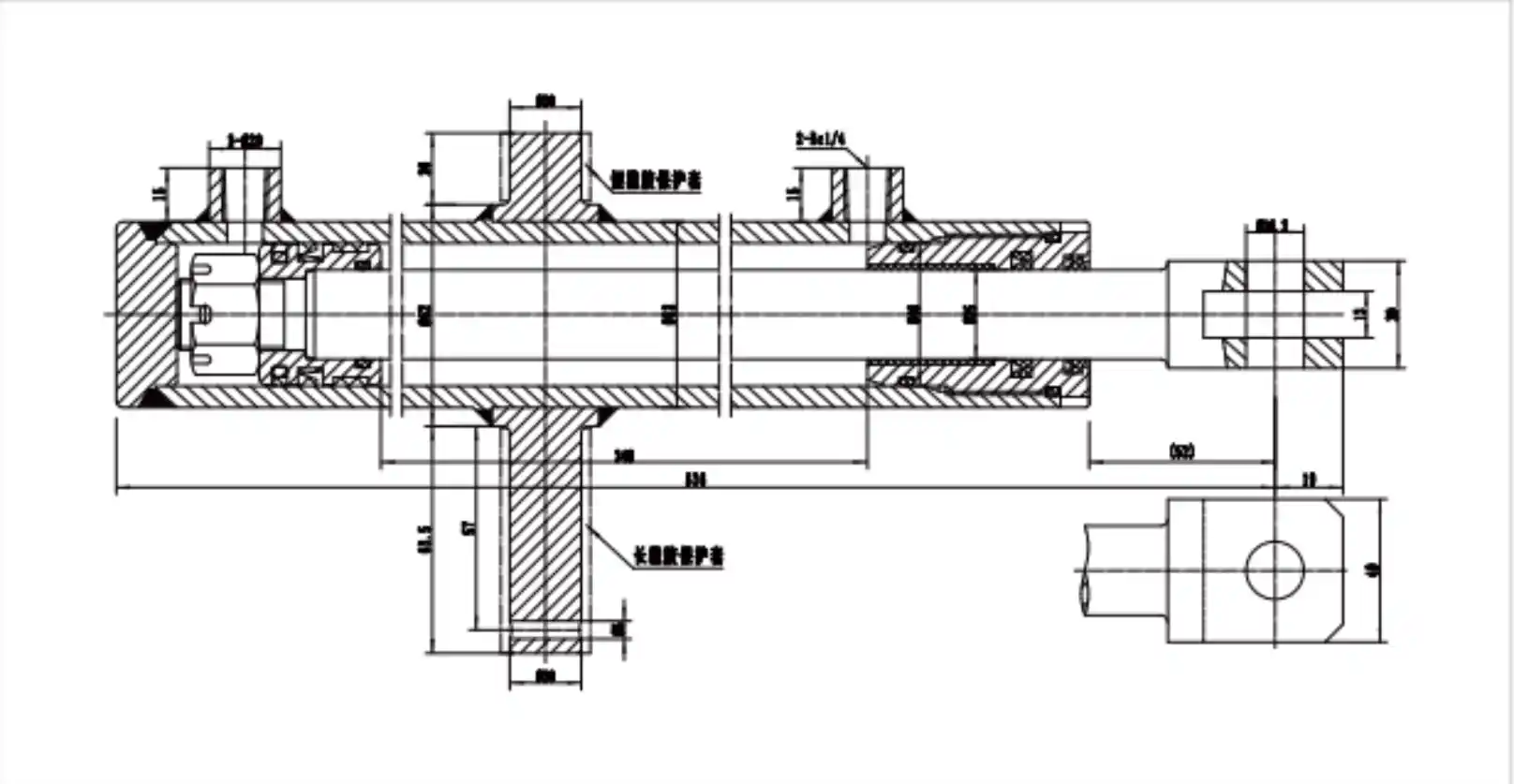
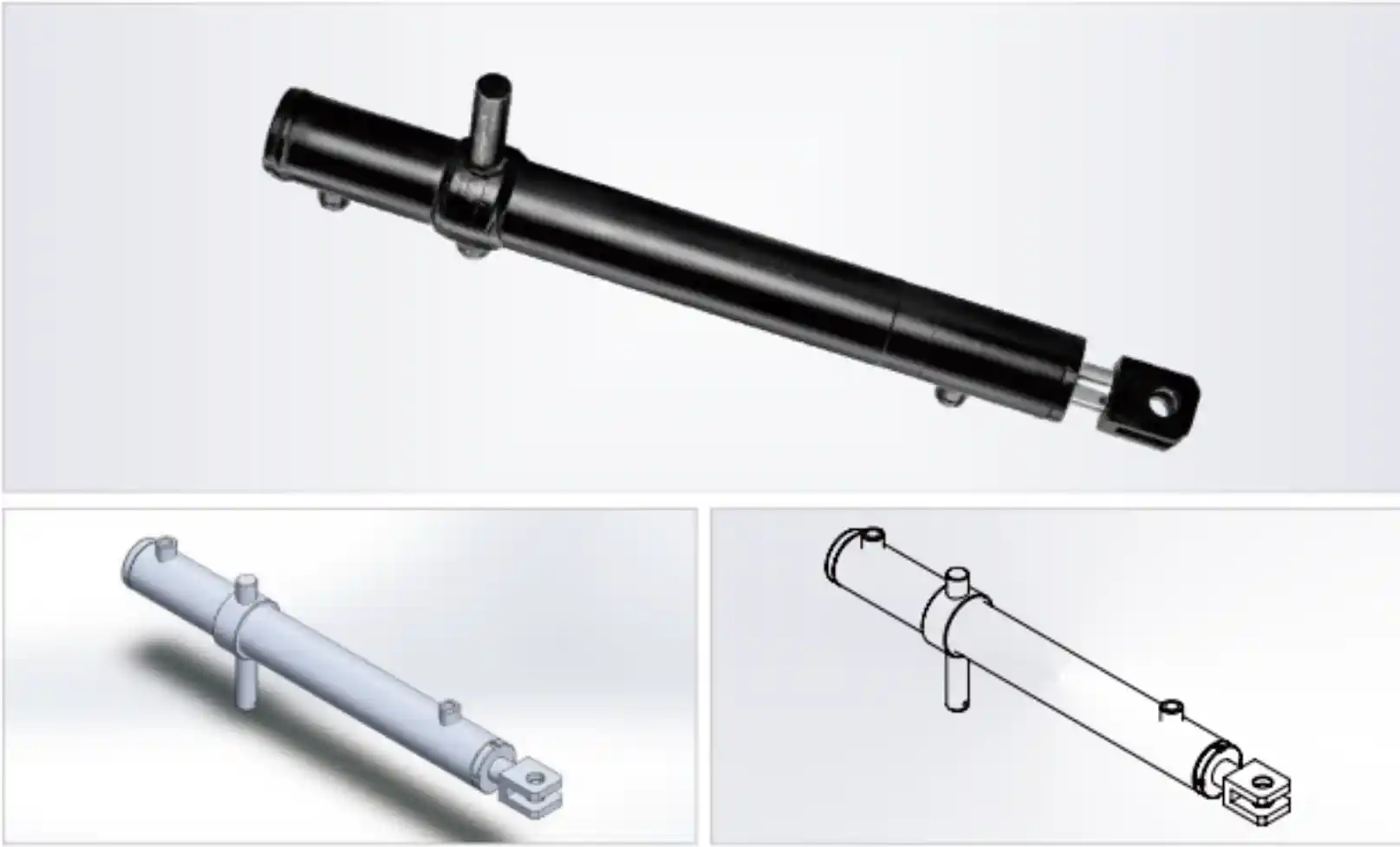
HCYY11112017 dimensional drawing — full drawing package (PDF/DWG) available for OEM and distributor accounts on request
Manufacturing & Seal Engineering
Induction-Hardened Rod, Field-Contamination Sealing, and Agricultural-Environment Chrome Specification — Built for Multi-Season Tractor Implement Service
Rod Surface Engineering for Field Conditions
The 25 mm rod is machined from 45# medium-carbon steel (SAE 1045 equivalent, tensile strength ≥ 600 MPa) and induction-hardened to HRC 54–58 at a 1.5–2.0 mm case depth, with the core remaining at HRC 28–32. Agricultural cylinder rods operate in direct contact with field-level contamination: soil particles, crop residue, pesticide and fertiliser spray drift, and rain exposure during field operations. The 25–40 μm hard chrome layer applied to HV 900–1,000 hardness and ground to Ra 0.2–0.4 μm provides the combined abrasion resistance and corrosion resistance that this multi-contaminant environment demands. Chrome on a small-bore cylinder rod is proportionally more protective per unit of exposed surface area than on larger bore units — the smaller rod circumference means the wiper seal contacts a larger fraction of the rod surface with each stroke, making surface consistency across the full rod length a more significant seal life variable.
Towing Duty Seal Requirements — Cyclic Load Profile
The towing and lifting cylinder operates in a mixed duty profile that distinguishes it from both the grain tank lifting cylinder (predominantly static hold) and earthmoving stick cylinders (predominantly dynamic cycling). A plough lift cycle at field headlands involves one full extension and one full retraction per headland turn — at a typical field size and tractoring pace, this produces 40–80 full-stroke cycles per hour during active ploughing. Between headland turns, the cylinder holds the implement at working depth under the vibration loads transmitted through the tractor-implement connection — a low-amplitude, high-frequency vibration loading that challenges seal lip adhesion at the rod surface. The polyurethane U-cup rod seal, with its high tensile strength (35–45 MPa) relative to nitrile rubber and its resistance to adhesive wear under vibration-induced micromotion, is specified for exactly this combined static-hold-under-vibration and periodic full-stroke-cycling duty profile.
Wiper Seal for Soil and Crop Debris Exclusion
Towing and lifting cylinders in field operation typically have the rod extending downward or horizontally — orientations where soil and crop residue can accumulate on the rod surface between operating cycles. The dual-lip polyurethane wiper seal at the rod gland excludes particulate contamination in two stages: the outer lip removes coarse particles (soil clods, straw fragments, crop residue) from the rod on each retraction stroke; the inner lip captures fine particles that the outer lip cannot fully intercept at the slower retraction speeds of loaded implement lowering. The inter-lip cavity allows captured material to accumulate without immediately reaching the primary rod seal — providing a buffer interval between wiper lip contamination events and primary seal exposure. This design is standard in NOK and SKF agricultural hydraulic seal kits for small-bore implement cylinders.
- Barrel and end-cap: Cold-drawn seamless steel tube with full-penetration end-cap welding and post-weld stress relief. The 40 mm bore barrel wall provides hoop stress safety factor above 2.5 at 24.5 MPa maximum withstand pressure — adequate for the impact loading of unexpected implement-to-ground contact events during field operation.
- Piston seal: Step-cut PTFE or polyurethane U-cup configuration for zero internal bypass during static hold at implement working depth. Any bypass at the piston on a 3-point hitch lifting cylinder causes the implement to slowly lower to the ground while the tractor is moving — a soil damage and tractor loading event that operators immediately notice and associate with hydraulic system failure.
- Clevis pin hardware: Machined to H7 bore tolerance for consistent pin engagement. The mounting clevises at both rod and barrel ends are designed with adequate pin boss thickness for the lateral loads imposed when the implement swings during tight headland turns — a load case not relevant to grain tank cylinders but common in towed implement operation.
- Fluid compatibility: All seals rated for mineral hydraulic oil ISO VG 46/68 and UTTO (Universal Tractor Transmission Oil) where tractor hydraulic systems share fluid with the transmission — a common configuration in European and Asian compact tractor designs that requires seal compatibility beyond standard mineral oil ratings.
Force & Application Analysis
3-Point Hitch Implement Lifting, Towed Equipment Hydraulics, and Variable Load Angles: How the 40mm Bore Delivers Across All Agricultural Towing and Lifting Scenarios
3-Point Hitch Mechanics: How 21 kN of Push Force Lifts a 1,200 kg Implement
The apparent mismatch between the cylinder’s 21.0 kN push force and the 1,200 kg (11.8 kN) implement weight is explained by the 3-point hitch linkage geometry. The cylinder does not lift the implement directly — it acts on the lift arm which connects to the top link and lower links through a mechanical advantage system. At the cylinder’s mounting position on the lift arm, the effective mechanical advantage ratio is typically 2.5:1 to 4.0:1 depending on tractor model. At a 3:1 ratio, the cylinder’s 21.0 kN push force generates a lifting force of 63.0 kN at the lower link attachment points — far in excess of what is required for a 1,200 kg implement (11.8 kN). The cylinder force reserve above the minimum lift requirement is consumed by implement-soil separation forces during lifting out of work depth (which can momentarily reach 2–3× the implement weight in heavy clay soils), hitch friction, and the dynamics of rapid lifting during tight headland turns at field speeds of 8–12 km/h.
Towed Equipment Hydraulic Applications: Force and Control Requirements
When used as a towing cylinder — hydraulically actuated from the tractor’s remote work port to control a function on a towed implement — the HCYY11112017 operates under a different force profile than a mounted implement lift cylinder. Towed implement applications include bale wrapper arm positioning, trailer tailgate operation, bale chute deployment on forage wagons, and fertiliser spreader gate control. In these applications, the cylinder may operate through only 100–200 mm of its 348 mm available stroke per cycle, at forces well below its rated maximum, with the primary requirement being positional repeatability and rod-seal integrity against the road and field vibration transmitted through the towing connection. The cylinder’s 16.7 MPa rating is deliberately conservative for these light-duty applications — it means the cylinder operates at 20–40% of its rated pressure in most towed implement functions, extending seal life proportionally compared to a cylinder operating at or near its rated pressure continuously.
Variable Load Angle and Rod Bending: The Structural Case for the 25 mm Rod on a 40 mm Bore
Agricultural towing and lifting cylinders rarely operate at a constant angle relative to gravity. As the implement lifts from work depth to transport height, the angle between the cylinder centreline and the vertical changes by 15–30° depending on hitch geometry. At intermediate positions, the cylinder carries a significant side-load component from the implement weight acting at an angle to the cylinder axis. At 348 mm full extension with a 25 mm rod, the rod slenderness ratio is 13.9 — well within the Euler buckling safety limit of 20 for pin-ended columns with this rod material. The 25 mm rod diameter provides a section modulus of Z = π × 25³/32 ≈ 1,534 mm³. At a 2 kN side-load (a conservative estimate for implement lifting at an off-axis angle), the resulting bending stress at the rod surface is approximately 130 MPa — within the elastic limit of the induction-hardened rod material, meaning each lifting cycle returns the rod to straight without accumulated permanent deflection. This structural sizing is what allows the cylinder to maintain seal geometry and rod-seal concentricity across years of angled lifting service.
Installation & Maintenance
Field Installation Checklist and Annual Service Protocol for Agricultural Towing and Lifting Cylinders
Installation: Matching the 536 mm Installation Distance to Your Machine
Before fitting, confirm the mounting bracket pivot spacing on the tractor or implement matches 536 mm pin-to-pin with the cylinder in the fully retracted position. This measurement corresponds to the implement at its lowest working position (maximum insertion depth or minimum lift height). If replacing a failed cylinder, measure the retracted length of the old unit before disassembly — frame distortion from a previous impact event can shift the pivot spacing from nominal, and fitting a new cylinder to a distorted frame will impose the same pre-load that damaged the previous one. Confirm the hydraulic port size and thread type (BSP or metric) before connecting hose ends; adapters can be used but add potential leak points that are disproportionately troublesome in field environments where immediate maintenance access is limited.
Annual and Seasonal Maintenance
- Pre-season inspection: Before the first working season, extend the cylinder fully and inspect the rod surface for rust staining or chrome surface damage from off-season storage. Surface rust that has not penetrated the chrome layer can be cleaned with fine abrasive cloth (600 grit); any rust staining that remains after cleaning indicates chrome penetration and requires rod assessment. Operate through 5 full-stroke cycles at low system pressure before connecting to an implement load.
- Daily — working season: Inspect the rod wiper seal area for mud and soil accumulation after each field session. Compacted soil at the rod gland should be cleared with a soft brush and clean water — not with a pressure washer directed at the rod seal, which forces water and grit past the wiper lip. Allow the rod to air dry before the next field operation in wet soil conditions.
- 50-hour interval: Grease both clevis pins with NLGI #2 EP lithium grease. Agricultural implement pivot pins operate in an environment of soil abrasion and moisture that exhausts grease more rapidly than industrial equipment. Dry clevis pins allow fretting wear of the pin bore that produces the angular play leading to rod bending and rod-seal eccentricity.
- Static hold check — implement lifted: With the implement raised to transport height and the tractor engine off (system at charge pressure only), observe implement height over 5 minutes. Any measurable lowering of the implement indicates piston seal bypass — a condition that creates a road safety hazard when transporting implements on public roads, as the implement can settle to a lower height than road clearance standards require. Service immediately before road transport use.
- Annual — end of season: Before winter storage, retract the cylinder fully and apply corrosion-inhibiting oil to the rod surface and clevis bores. If the tractor will be stored outdoors, fit a rod boot or cover over the cylinder to prevent winter precipitation from resting on the rod surface through the wiper seal gap — the accumulated freeze-thaw cycling of trapped moisture is the primary cause of off-season chrome layer delamination on agricultural cylinders.
- Reseal interval: Under normal agricultural use (40–80 full-stroke cycles per hour during active field seasons, with off-season storage), plan for a wiper seal and primary rod seal replacement every 3–5 years or when visible weeping begins at the rod gland. The HCYY11112017 seal kit — available separately for field service — includes both wiper and primary seals sized for the 40 mm bore and 25 mm rod without requiring any machine tools for replacement.
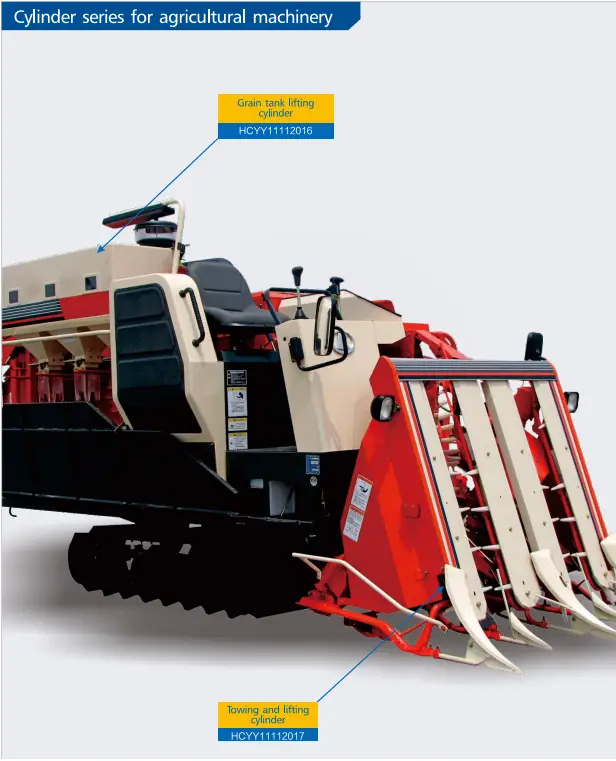
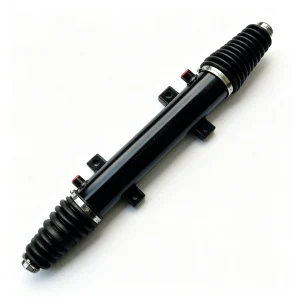
Complete agricultural hydraulic cylinder range — towing and lifting, grain tank, and auxiliary function cylinders for the full farm machinery portfolio
B2B Procurement — HCYY11112017
Request a Quote, Technical Drawing, or Pre-Season Bulk Pricing
Our agricultural hydraulic team holds full dimensional drawings, seal-kit specifications, tractor compatibility tables, and UTTO fluid compatibility data for the HCYY11112017 and the complete agricultural cylinder range. Distributor stocking orders with pre-season pricing, OEM supply programs, and single-unit field replacement samples are all handled with the same technical response standard.
All cylinders pressure-tested before dispatch. Certificates of conformance and material test reports for OEM accounts on request.