Description
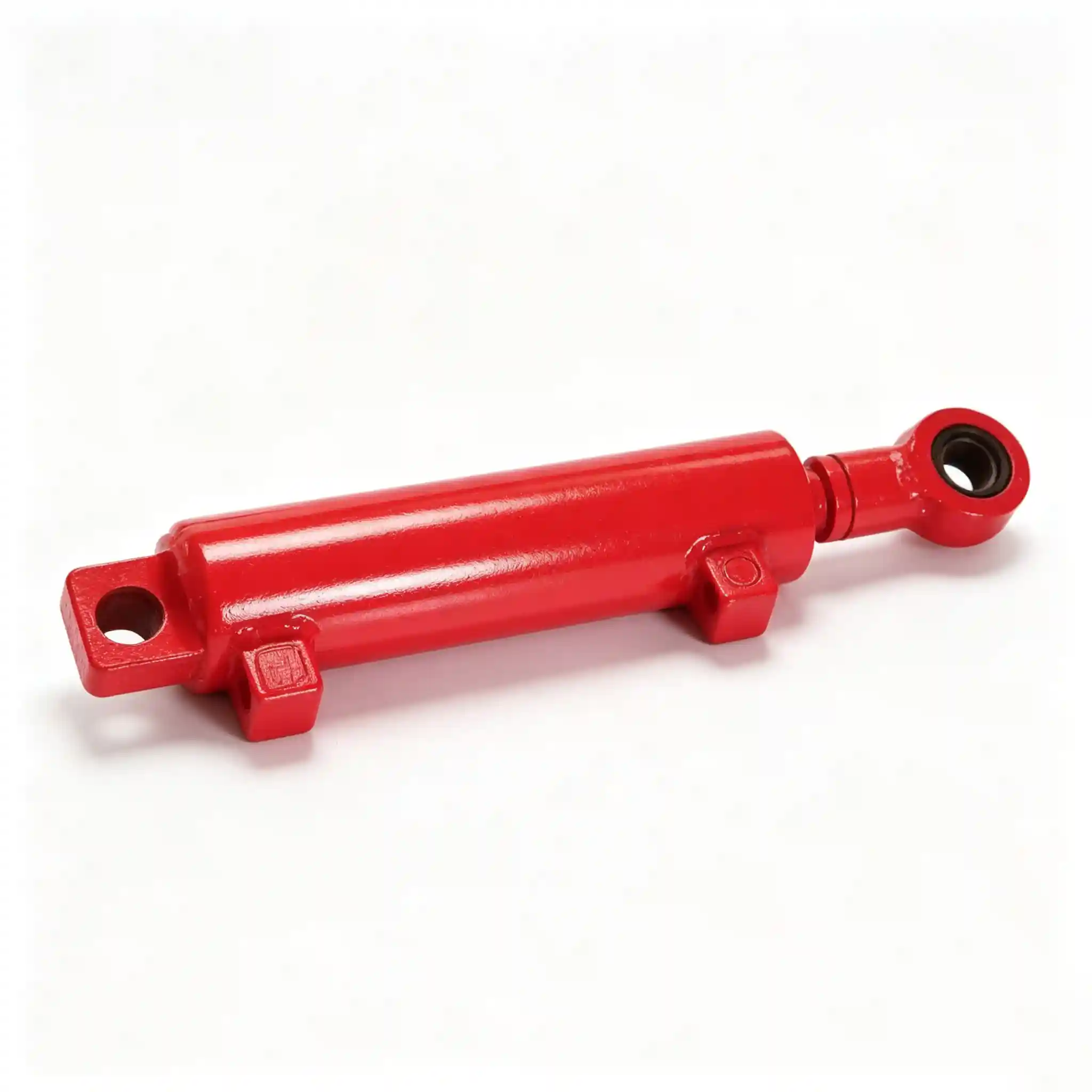
Model · YS50E-001
YS50E-001 Hydraulic Steering Cylinder — Combine Harvester
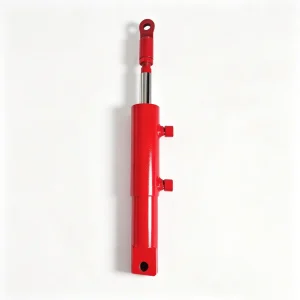
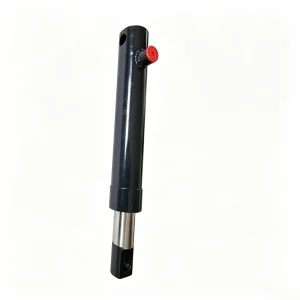
Steering is the safety-critical function in any self-propelled machine. The combine hydraulic steering cylinder YS50E-001 — bore 50 mm, rod 25 mm, stroke 153 mm, closed length 349 mm — is the actuator that translates hydraulic pressure from the orbital steering valve into front-axle pivot movement. Precise, consistent, leak-free: there is no margin for compromise in this application.
Key Specifications
Rod Diameter 25 mm
Stroke 153 mm
Closed Length (C–C)349 mm
YS50E-001 Hydraulic Steering Cylinder for Combine Harvester: Function and Safety Context
Unlike every other hydraulic cylinder on a combine harvester, the steering cylinder is not an efficiency device — it is a safety device. Header lift cylinders and reel cylinders can drift, respond slowly, or develop minor leakage without posing immediate danger to the operator or bystanders. A steering cylinder that loses pressure hold, develops internal bypass, or fails at the gland seal can leave a 10–14-tonne machine with limited directional control at road speeds of 20–25 km/h. That framing — safety-critical, not merely performance-critical — is why the YS50E-001 is engineered to a tighter specification tolerance than most other cylinders in this lineup.
The combine hydraulic steering cylinder on most mid-range self-propelled combines operates as a double-acting actuator working in parallel with the orbital (Danfoss-type or equivalent) steering valve. The operator turns the steering wheel, the orbital valve meters fluid to one side of the steering cylinder, and the cylinder pivots the front steering axle or the articulation joint, depending on the machine architecture. The YS50E-001 is designed for front-axle pivot steering systems — the most common configuration on Chinese-manufactured combines and their global derivatives.
Axle pivot steering places the cylinder in a mounting geometry where it operates across a short, precisely defined arc. The 153 mm stroke of the YS50E-001 corresponds to the total angular travel of the steering axle from full lock-left to full lock-right. On a typical combine with a front axle track width of 1,500–1,800 mm, 153 mm of cylinder travel maps to approximately 30–35° of total steering arc — enough for headland turning and manoeuvring into field entry gaps, but controlled enough to prevent over-steer at the road speeds combines travel between fields.
The 349 mm closed length defines the retracted geometry — the position the cylinder sits in when steering is centred — and is the parameter that governs bracket compatibility most directly. Changing the closed length by even 10 mm shifts the steering centre position relative to the axle geometry, which in practice changes the toe angle of the front wheels and affects straight-line tracking on the road.
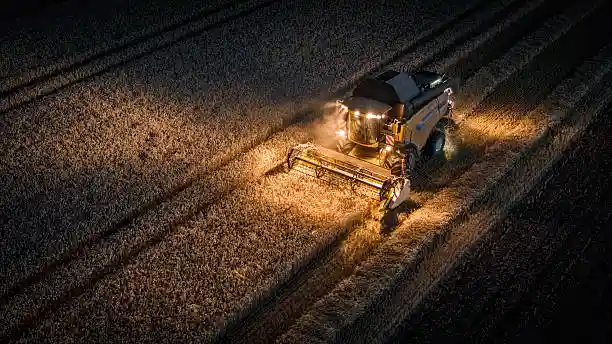
The YS50E-001 actuates the front steering axle pivot — directional control at field headlands and on road transport between fields.
Combine Harvester Power Steering Cylinder Replacement 50mm Bore: Dimensional Engineering Explained
The 50/25 bore-rod combination of the YS50E-001 produces an unusually high bore-to-rod ratio by agricultural cylinder standards. At 50% rod-to-bore ratio, this cylinder is at the opposite end of the spectrum from the thick-rod combine cylinders in this range. Understanding why requires looking at the force requirements of the application.
Front axle steering on a combine harvester requires the cylinder to overcome front axle kingpin friction, tyre scrub resistance (the lateral force required to change tyre direction on a hard surface), and dynamic cornering loads at road speed. At 150 bar system pressure and 50 mm bore (piston area ≈ 19.6 cm²), the YS50E-001 develops approximately 29.4 kN push force and — because of the thin 25 mm rod — approximately 27.7 kN pull force (annulus area ≈ 18.5 cm²). This near-symmetric force capability is intentional: left and right turns should feel identical to the operator, so the force differential between push and pull strokes must be minimised.
The thin rod (25 mm in a 50 mm bore) is acceptable in this application because steering cylinder rods operate under tension and compression over a very short 153 mm stroke from a relatively supported closed length of 349 mm. The maximum exposed rod length at full extension is approximately 153 mm — a short, rigid column for a 25 mm diameter rod that presents no practical buckling risk under the force levels involved.
The 153 mm stroke is a precision-matched dimension. It is not arbitrary. It is determined by the axle geometry of the specific combine platform: the distance between steering pivot centres, the offset of the cylinder mounting points from those pivots, and the required maximum steering angle all feed into a linkage calculation that produces the exact stroke figure. Using a cylinder with a stroke even 10–15 mm different would either limit steering lock angle (reducing manoeuvrability) or allow the axle to over-travel mechanically (risking bump-stop contact under hard cornering).
For agricultural hydraulic steering cylinder sourcing, this means that the 153 mm stroke is the most important verification point. The bore and rod can be estimated from visual inspection, but stroke must be confirmed dimensionally — measure from pin centre to pin centre both retracted and extended on the old cylinder, or source from the machine’s hydraulic circuit diagram.
Why Seal Integrity and Zero Internal Leakage Matter More in a Steering Cylinder Than in Any Other Combine Actuator
The performance requirement that separates a steering cylinder from a lift cylinder is position hold under static load with zero drift. When a header lift cylinder drifts 2–3 mm over 30 minutes, the operator notices and makes a correction — an inconvenience, not a hazard. When a steering cylinder drifts under load — for example, on a road transport downhill with a side camber — the machine tracks progressively toward the edge of the road without operator input. This is the failure scenario that defines the internal leakage specification for the YS50E-001.
The YS50E-001 piston seal assembly is specified to ≤ 1 cm³/min internal leakage at rated pressure — significantly tighter than the ≤ 3 cm³/min specified for the variator cylinder and the less defined leakage tolerances acceptable in header lift cylinders. Achieving this requires a combination of precise bore surface finish (Ra ≤ 0.3 µm), high-quality polyurethane piston seal with correct compression ratio, and piston-to-bore running clearance held within the designed range across the full temperature operating window (−10°C to +80°C for hydraulic fluid in field conditions).
The rod seal on the YS50E-001 uses a two-stage design: a primary PTFE-backed polyurethane lip seal and a secondary dust exclusion wiper. The PTFE backing reduces friction at the rod contact zone — important in steering cylinders because the orbital steering valve meters flow in small, frequent increments during steering corrections, meaning the rod seal cycles through many thousands of micro-movements per operating day. High friction at the rod seal translates to operator fatigue: a heavy, notchy steering feel that makes precision field navigation physically demanding.
The 25 mm rod receives a minimum 25 µm hard chrome layer with surface finish Ra ≤ 0.15 µm — finer than the rod finish specified for lift cylinders — because the rod seal friction and longevity are more sensitive to rod surface quality in steering applications where the seal operates at low-velocity micro-stroke movements rather than full-stroke cycles.
All assembled YS50E-001 units undergo a low-leakage verification test at rated pressure hold, in addition to standard hydrostatic proof testing. Only cylinders that pass the leakage check at assembly leave the production line — this test cannot be performed retrospectively after installation in the machine.
Common Failure Modes and Diagnostic Guidance for Harvester Steering Cylinder Service
Steering cylinder failures on combines typically present as one of three patterns. Recognising which failure mode is occurring before ordering parts avoids sourcing the wrong component:
- Steering drift under static load (internal piston seal bypass): The machine pulls progressively to one side on road transport or wanders on contoured ground without operator input. Confirm by parking on a slight camber, centring the steering, and observing wheel position after 10–15 minutes. Progressive wheel rotation indicates piston seal bypass. Replacement of the cylinder (or internal re-seal if the barrel surface is undamaged) resolves this. If the orbital steering valve is also suspect, test the cylinder in isolation by temporarily blocking the cylinder ports — if drift stops, the valve is the source; if drift continues, the cylinder piston seal is bypassing.
- External rod gland leak (rod seal failure): Visible hydraulic oil on the rod or dripping from the gland area. Caused by rod seal wear (normal at high cycle count), rod surface damage from impact or abrasion, or contaminated hydraulic fluid containing abrasive particulate above 15–20 µm. A gland-only leak does not immediately compromise steering function but will progressively worsen and eventually affect system pressure if fluid loss is not addressed. Rod seal replacement is feasible if the chrome rod surface is undamaged; if the rod surface shows scoring, cylinder replacement is more cost-effective than attempting a re-seal.
- Loss of full steering lock (mechanical or hydraulic end-stop issue): The steering wheel reaches the valve centre before the axle reaches full lock. This can indicate a mis-adjusted or bent tie rod (mechanical), a partially blocked port (hydraulic), or — less commonly — a cylinder with incorrect stroke that was substituted in a previous repair. Verify with a dimensional measurement of the installed cylinder in both full-left and full-right positions before concluding the cylinder is at fault.
If you are sourcing a replacement cylinder following any of the above failures, send us the machine make, model, and year alongside the existing cylinder’s measured dimensions and we will confirm the correct replacement variant before shipment.
Agricultural Hydraulic Steering Cylinder Specifications: Procurement Checklist for Combine Dealers
Combine dealers and repair specialists stocking the YS50E-001 should verify the following before adding this cylinder to their parts inventory for a specific customer base:
- Machine platform compatibility: Confirm the 50/25/153/349 dimension set matches the machines your customers operate. If serving multiple combine models, maintain a model-to-cylinder cross-reference chart — steering cylinders are not interchangeable between platforms even when bore and rod diameters match, because stroke and closed length govern axle geometry.
- Port thread standard: The YS50E-001 is available with BSP (British Standard Pipe) or metric port threads depending on the machine platform. Confirm the thread standard before ordering — mixing thread standards in a steering circuit requires adapter fittings that add potential leak points in a safety-critical hydraulic line.
- Clevis and pin bore dimensions: Pin bore diameter and clevis jaw width must match the existing steering linkage pins. Confirm these dimensions from the machine’s steering geometry drawing or by measuring the existing cylinder’s end fittings.
- Fluid compatibility: Confirm that the seal material compound (standard: PU + PTFE backing) is compatible with the hydraulic fluid specification in the target machines. Some export market combines use ISO VG 46 HVI mineral oil; others use UTTO or bio-based hydraulic fluids requiring different seal compounds.
- Documentation for compliance: For distributors supplying OEM assembly lines or repair shops that maintain ISO quality records, we provide material certificates, dimensional inspection reports, and hydrostatic test records with each shipment on request.
Complete Technical Specifications — YS50E-001
| Parameter | Value |
|---|---|
| Model Number | YS50E-001 |
| Product Type | Hydraulic Steering Cylinder (转向油缸) |
| Bore Diameter | 50 mm |
| Rod Diameter | 25 mm |
| Stroke | 153 mm |
| Closed Length (C–C) | 349 mm |
| Rod-to-Bore Ratio | 50% (symmetric force design) |
| Cylinder Type | Double-acting, low-leakage specification |
| Internal Leakage | ≤ 1 cm³/min at rated pressure |
| Piston Seal | High-precision PU — tight compression ratio specification |
| Rod Seal | PTFE-backed PU primary + dust wiper |
| Rod Surface | Hard chrome ≥ 25 µm · Ra ≤ 0.15 µm |
| Bore Surface Finish | Ra ≤ 0.3 µm |
| Application | Combine harvester front-axle pivot steering |
| Testing | Hydrostatic proof test + low-leakage verification (100% units) |
| MOQ | 1 pc (sample + documentation); stock orders from 10 pcs |
Source the YS50E-001 with Full Test Certification
Steering cylinders cannot be evaluated by price alone. We supply the YS50E-001 with individual hydrostatic test records and low-leakage verification certificates — documentation that matters to OEM lines, fleet operators, and quality-accredited distributors. Contact us for pricing, lead time, and platform compatibility confirmation.