Description
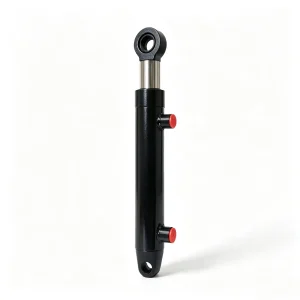
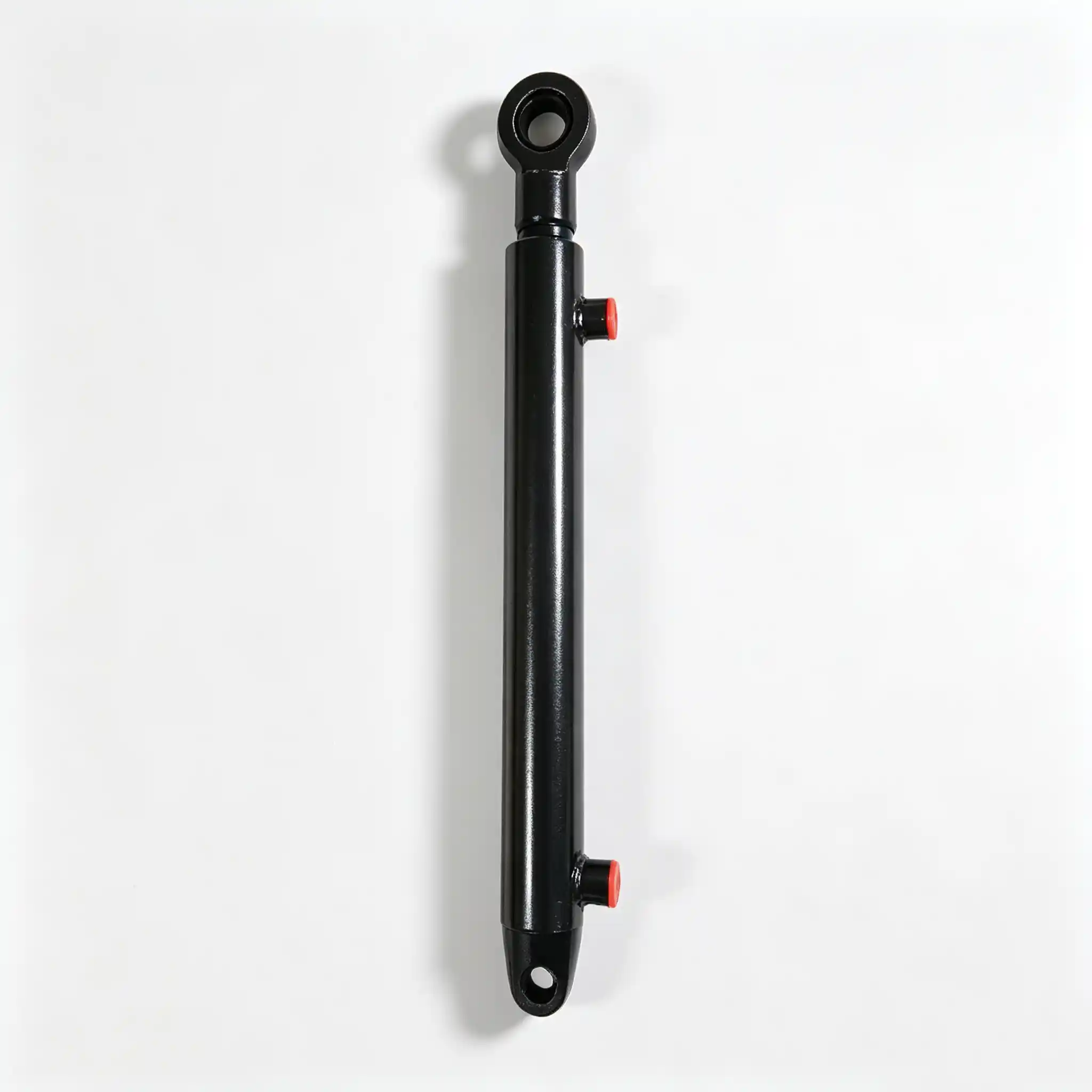
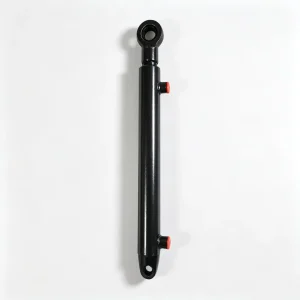
HK-DY-12 Baler Chamber Opening Cylinder — 50mm Bore Tailgate Actuator for Round Balers
Product Overview
The chamber opening cycle is the single most mechanically violent event in a round baler’s operating sequence. In the space of three to five seconds, the tailgate hydraulic cylinder must overcome the residual compression force of a fully formed bale pressing against the rear chamber halves, lift a tailgate structure weighing 180–350 kg through an arc of 60 to 80 degrees, hold it reliably open while the bale rolls free, and then return the tailgate to the closed and latched position before the next bale cycle begins. Every one of these phases places a different and demanding load on the actuating cylinder. The push force required to break the tailgate free from a high-density bale can momentarily exceed the rated system pressure, triggering the relief valve. The hold-open phase requires zero drift under a sustained gravity load. The return stroke must be fast enough to maintain cycle rate but controlled enough to avoid slamming the tailgate latch — a violent latch impact being the primary source of latch pin and bracket fatigue cracking on heavily worked balers.
The HK-DY-12 is engineered around these specific demands. With a 50mm bore, 32mm rod, 500mm stroke, and 730mm mounting distance, it matches the geometric envelope of the primary tailgate opening actuator position on the most widely deployed 1.5m and 1.65m round baler designs. The 50mm bore provides the push force authority to break a high-density bale free from the tailgate without depending on the system relief valve to open. The 730mm mounting distance — 55mm longer than the standard 675mm long-stroke variant — is specific to tailgate hinge geometry on these baler platforms, where the pivot radius and hinge bracket position require the additional installed length to achieve the correct force moment arm throughout the full 60–80 degree tailgate arc.
For procurement engineers sourcing hydraulic cylinder for baler chamber tailgate applications, the HK-DY-12 is supplied as a direct-fit replacement with matched mounting pin diameter, clevis bore, and port thread specification to the OEM part it replaces, eliminating the bracket modification and fitting adaptation work that generic cylinders require.
Technical Specifications
| Parameter | Value | Engineering Significance |
|---|---|---|
| Bore Diameter | 50 mm | Piston area ≈ 19.63 cm²; push force at 160 bar ≈ 31.4 kN — sufficient to break tailgate free from a 600 kg high-density bale without triggering system relief |
| Rod Diameter | 32 mm | Annular area ≈ 11.60 cm²; retract (close) force at 160 bar ≈ 18.6 kN; sized for tailgate return load without buckling risk at 500mm stroke |
| Stroke | 500 mm | Covers full tailgate arc travel (60–80°) on 1.5m and 1.65m round baler platforms; full stroke must be available for complete bale ejection clearance |
| Mounting Distance | 730 mm | Center-to-center retracted; HK-DY-12 specific — 55mm longer than standard long-stroke variant to match tailgate hinge pivot geometry |
| Max Working Pressure | 160 bar (rated) / 210 bar (peak) | Peak rating critical for tailgate-break-free events where instantaneous pressure spike briefly exceeds rated circuit pressure |
| Cylinder Type | Double-acting, tie-rod construction | Active force in both open and close directions; tie-rod permits field seal service during harvest without workshop return |
| Rod Surface Finish | Hard chrome, Ra ≤ 0.4 μm, min. 25 μm depth | Resists pitting from silage acids and fertiliser spray; extended chrome depth compensates for higher seal contact cycles on frequent-opening tailgate position |
| Port Thread | BSP G1/2″ standard (SAE available) | G1/2″ port size supports fast tailgate cycle times by minimising flow restriction at the cylinder port entry |
The rod diameter of 32mm on the HK-DY-12 reflects a specific engineering trade-off that distinguishes this cylinder from the 50mm bore / 40mm rod extended-stroke variant. The tailgate opening cylinder operates predominantly in push (extend) mode for the opening phase — the heavy-load direction — and in pull (retract) mode for closing. In the closing direction, the load is primarily the weight of the tailgate structure acting against the retract force, with the additional requirement that the cylinder pull the tailgate firmly into the latch mechanism at the end of the retract stroke. A 32mm rod provides an annular area of 11.60 cm² versus the 40mm rod’s 7.07 cm², which counterintuitively gives the 32mm rod a higher retract force at equivalent pressure. This larger annular area means the HK-DY-12 can close the tailgate with 18.6 kN of pull force at 160 bar, compared to 11.3 kN for the 40mm rod variant at the same pressure — a meaningful difference when pulling a heavy tailgate firmly into a latch under field conditions where the latch geometry may not be perfectly aligned after frame flex during bale ejection.
The practical consequence of this rod sizing is that the HK-DY-12 does not require the operator to use high SCV flow to close the tailgate reliably — the force authority is built into the cylinder geometry rather than depending on maximum system pressure for every close cycle. This reduces hydraulic circuit heat generation and extends valve and pump service life over a full season of operation.
Engineering & Design Advantages
Controlled Opening Force Profile — Why Push Force Smoothness Matters More Than Peak Force: The most damaging moment in the tailgate opening cycle is not maximum pressure — it is the sudden load drop that occurs when the bale breaks free from the tailgate. Before break-free, the cylinder is pushing against the combined weight of the tailgate and the bale’s residual compression force. At the instant the bale rolls clear, that resistance collapses to near zero. A cylinder without adequate end cushioning accelerates rapidly through the remaining stroke travel and impacts the end cap with full kinetic energy — a shock load that is transmitted directly to the tailgate hinge brackets and pivot pins. The HK-DY-12 incorporates a flow-adjustable cushion on the extend end cap. The adjustable cushion needle allows the operator to tune the deceleration rate to match the specific tailgate weight and travel speed of their baler model, absorbing the kinetic energy of the unloaded tailgate before end-of-stroke contact. Fixed cushions — as used on general-purpose cylinders — are calibrated for one specific flow rate and mass; they under-cushion light tailgates at high flow or over-cushion heavy tailgates at low flow. The adjustable design accommodates the full range of tailgate weights and SCV flow rates found across different baler models.
Seal System Designed for Intermittent High-Pressure Spikes: The tailgate opening position is one of the few positions in a baler hydraulic circuit where the cylinder regularly experiences brief pressure spikes above rated working pressure — specifically during the break-free event when the baler’s relief valve is momentarily triggered. Conventional PU lip seals begin to extrude into the rod-to-housing clearance at pressures above 180–200 bar if not backed by an anti-extrusion ring. The HK-DY-12 rod seal pack includes a PTFE anti-extrusion back-up ring behind the primary PU lip seal. PTFE has near-zero elastic deformation under pressure, physically blocking the extrusion gap regardless of peak pressure magnitude. This component adds less than 3% to total seal cost but eliminates the specific failure mode — rod seal extrusion followed by tearing — that is the dominant field failure on tailgate cylinders exposed to regular relief valve events.
Lateral Load Tolerance in Tailgate Pivot Geometry: A tailgate cylinder is rarely in perfect axial alignment with its load throughout its full stroke. As the tailgate rotates about its hinge pivot, the cylinder’s effective angle of pull changes — introducing a lateral (side) component to the rod load that increases as the tailgate approaches the fully open position. On a 1.5m baler tailgate, this side load can reach 800–1,200 N at the rod clevis. The HK-DY-12 uses a reinforced front bushing — a phosphor bronze sleeve bearing with 20mm of contact length, compared to the 12mm sintered iron bushings found in standard agricultural cylinders — to distribute this side load over a larger bearing area. The longer bushing reduces peak contact pressure on the rod chrome surface, preventing the localised polishing and micro-pitting that eventually initiates rod seal leakage on cylinders with inadequate front bushing support.
Latch-Closing Reliability at End of Retract Stroke: The tailgate must not only close — it must pull firmly into the latch mechanism and hold under the vibration loads of a moving tractor-baler combination on rough ground. The 18.6 kN retract force at rated pressure provides a substantial margin above the latch engagement force (typically 2–4 kN for spring-loaded latch designs), ensuring positive latch engagement even when minor frame distortion from years of bale ejection impact has moved the latch pin slightly out of nominal position. This force margin is what separates a tailgate that closes reliably from one that requires the operator to manually push the tailgate fully closed before the latch will engage — a safety hazard as well as an operational inconvenience.
Application Specifics
The HK-DY-12 is designed exclusively for the baler chamber opening and tailgate actuation function. Unlike general-purpose agricultural hydraulic actuators that can serve multiple positions, this cylinder’s 730mm mounting distance, adjustable end cushion, and specific rod-to-bore ratio are optimised for one job. The positions where this cylinder is the correct technical specification include:
- Primary tailgate opening actuator, 1.5m round balers: Single-cylinder installations where this unit provides the full tailgate opening and closing force. The 500mm stroke is the minimum required for full clearance on bales of 1.5m diameter without the tailgate striking the bale during ejection.
- Primary tailgate opening actuator, 1.65m round balers: Some 1.65m baler designs use twin cylinders in parallel — one on each side of the tailgate — each providing half the total required force. In this configuration, the HK-DY-12 is used as a matched pair, and it is critical that both cylinders in the pair are replaced simultaneously to ensure equal force distribution. A mismatched pair (one new, one worn) causes the tailgate to rack — open unevenly — which accelerates hinge pin and bracket wear on the side with the stronger cylinder.
- Tailgate locking assist cylinder: Some large baler designs use a secondary short-stroke cylinder to engage a positive mechanical lock on the tailgate latch after the primary hydraulic circuit has closed the gate. The HK-DY-12 is not used in this position — consult the HK-DY-13 specification for latch assist applications requiring shorter stroke and different bore sizing.

A common field error is attempting to substitute a general-purpose 50mm bore / 40mm rod cylinder in the tailgate position when the HK-DY-12 is not immediately available. The bore and stroke will appear to match, but the 730mm mounting distance of the HK-DY-12 versus 675mm on the general-purpose variant means the substitute cylinder will be 55mm too short in the retracted position. The result is that the tailgate does not close fully — it stops 55mm short of the latch position — requiring either a bracket modification or spacer plates to compensate. Specifying by mounting distance, not bore and stroke alone, is the correct procurement practice for tailgate cylinders.
Quality Control & Testing
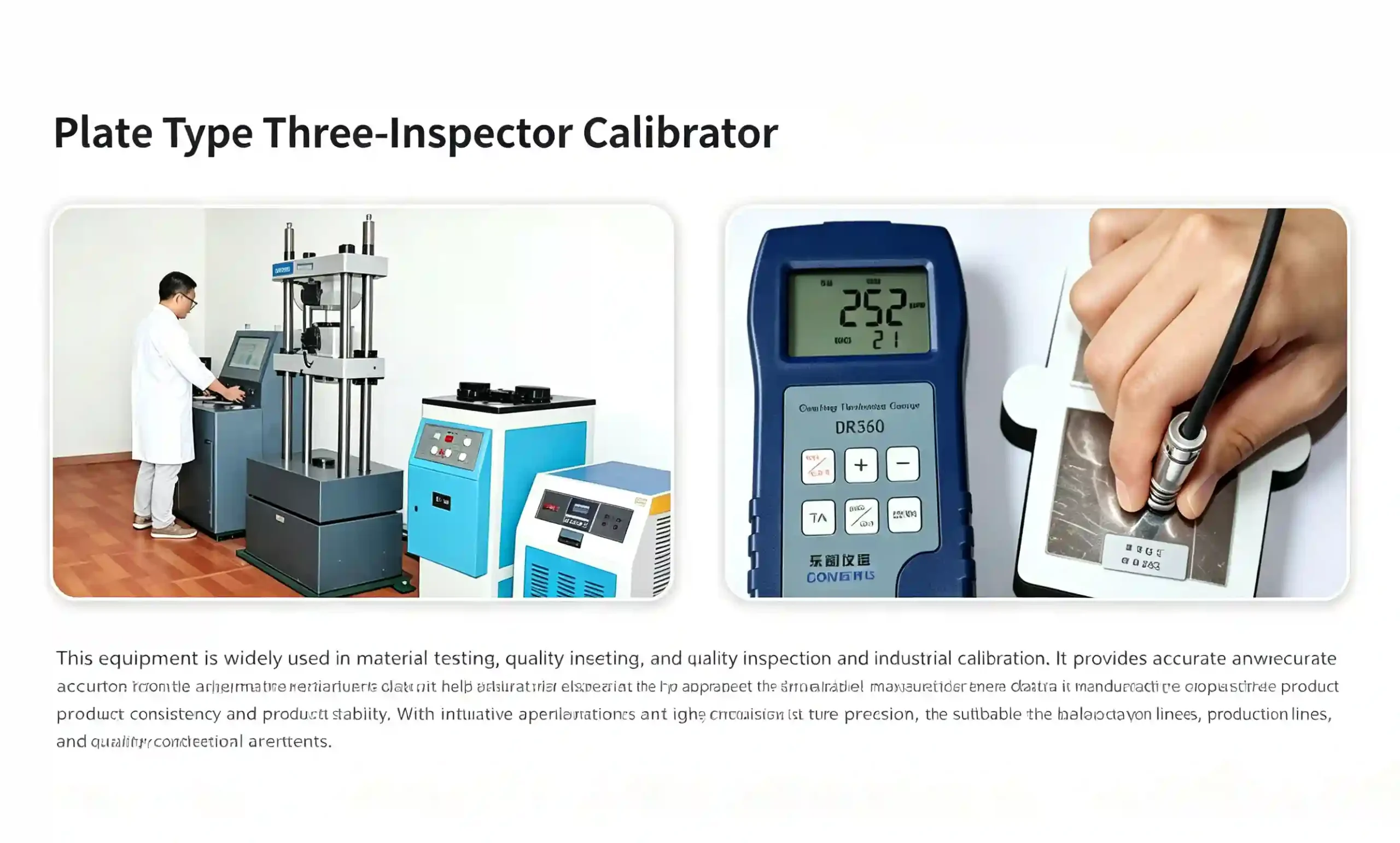
The HK-DY-12 testing protocol includes two procedures specific to its tailgate application that are not part of the standard cylinder test sequence:
- Adjustable cushion function verification: The extend-end cushion is tested across the full range of its adjustment, from fully open (maximum flow, minimum deceleration) to fully closed (minimum flow, maximum deceleration). At each extreme and at the mid-position, the cylinder is cycled at rated flow and the deceleration profile is recorded. The cushion must produce a smooth, progressive deceleration at all adjustment positions without pressure spike above 210 bar and without bounce or oscillation at end of stroke. Any cushion adjustment position that produces a pressure spike — indicating an internal cushion geometry defect — results in cylinder rejection.
- Simulated relief valve spike test: To replicate the pressure spike that occurs during the bale break-free event in field operation, each cylinder is subjected to 500 rapid pressure applications at 200 bar on the extend port, with a 5-second hold at 200 bar followed by instantaneous pressure release simulating break-free. After 500 cycles, the rod seal is inspected for extrusion damage. The PTFE anti-extrusion back-up ring must show zero permanent deformation and the primary PU seal must show no tearing or edge damage. This test directly validates the durability of the seal pack under the specific load pattern of tailgate operation.
- Standard protocol: Full-stroke no-load run-in (10 cycles at 10 bar), static pressure hold to 240 bar for 5 minutes on both chambers, and 100,000-cycle fatigue test on batch samples, as per the standard long-stroke cylinder protocol.
Maintenance & Troubleshooting Guide
The tailgate opening cylinder operates under load conditions unlike any other position on the baler. The following guidance addresses the failure patterns specific to this position:
1. Cushion Adjustment After Installation or Seal Replacement
After installing a new or rebuilt HK-DY-12, the cushion adjustment needle should be set to the fully open position (maximum flow) before the first operational test. Begin with low SCV flow on the tractor and cycle the tailgate open and closed three times at low speed to verify full mechanical travel and latch engagement. Then gradually increase SCV flow toward normal operating rate while observing the tailgate deceleration near the fully open position. If the tailgate impacts the open-position stop with an audible knock, increase the cushion restriction (turn the needle clockwise) in quarter-turn increments until the deceleration is smooth and the tailgate approaches end of stroke without impact. Do not over-restrict the cushion — excessive restriction slows the opening cycle time and can cause the tractor SCV to cycle prematurely if the back-pressure from the cushion approaches the SCV relief setting. The correct setting produces a smooth, firm deceleration with no audible impact and no measurable increase in cycle time.
2. Diagnosing Tailgate Drift — Cylinder vs. Valve
A tailgate that sinks slowly from the open position while the bale is ejecting is a safety concern and an indicator of hydraulic bypass. The bypass can be in the cylinder piston, the directional control valve, or the SCV on the tractor — three different components with different repair requirements. The correct diagnostic sequence: first, with the tailgate fully open and the tractor SCV in neutral, disconnect the hydraulic hoses at the cylinder ports and plug the open ports on the cylinder. If the tailgate continues to drift with ports plugged, the bypass is internal to the cylinder (piston seal). If the tailgate holds with ports plugged, the bypass is upstream — in the control valve or SCV. This test takes under five minutes and identifies the faulty component before any disassembly is undertaken, avoiding the time and cost of removing and rebuilding a cylinder that is functioning correctly.
3. Tailgate Racking — the Twin-Cylinder Matching Problem
On balers using two HK-DY-12 cylinders in parallel, the most common field complaint after seal replacement on only one cylinder is tailgate racking — the gate opens unevenly, with one side leading the other. This occurs because the new cylinder’s seals have higher friction than the worn seals in the unreplaced unit, causing flow to preferentially enter the low-friction (worn) cylinder and extend it faster. The correct approach is to replace both cylinders simultaneously, or if budget constraints require sequential replacement, to install matched cylinders from the same production batch — our batch coding on the cylinder end cap allows this verification. If racking has already occurred, inspect the tailgate hinge pins and bracket bores for oval wear from the uneven loading and replace any pin showing more than 0.5mm of wear before re-installing new cylinders.
4. Port Contamination During Field Hose Swaps
The tailgate cylinder hydraulic hoses on field-operated balers are among the most frequently disconnected connections on the machine — for transport, for maintenance access, and for the emergency hose repairs that are a routine part of commercial harvest operations. Every hose disconnection is an opportunity for contamination to enter the open port. Fitting plastic port caps and hose dust plugs at every disconnection is not a workshop luxury — it is an operational necessity. A single 5ml entry of soil-contaminated fluid through an unprotected open port during a field hose swap can introduce enough abrasive silica to destroy the piston seal within 50 operating hours. Keep a bag of matched port caps and hose plugs in the baler’s toolbox, and treat every disconnected fitting as a contamination risk.
Frequently Asked Questions
Q: My baler tailgate opens slowly and incompletely on the first cycle of the day but works normally after warming up. What is the likely cause?
This symptom — slow or incomplete opening when cold, normal operation when warm — is a classic indicator of one of two conditions. The first possibility is that the hydraulic oil viscosity at cold temperature is causing excessive pressure drop across the hydraulic lines and cylinder ports, reducing the effective pressure at the piston face. Switching from ISO VG 46 to a multi-grade hydraulic oil (HV 46, viscosity index ≥ 150) improves cold-flow performance substantially. The second possibility is that the cylinder’s cushion adjustment needle has partially seized in the closed direction from corrosion during off-season storage, restricting flow at all temperatures but more severely when cold oil further increases flow resistance. Remove and inspect the cushion needle — if it shows corrosion or partial seizing, clean with solvent and apply a light film of anti-seize compound before reassembly. If neither of these resolves the cold-start behaviour, the tractor SCV may be applying insufficient flow at cold temperatures due to its own cold-start pressure limiting — test with a flow meter at the SCV output to confirm.
Q: Can the HK-DY-12 be used as a direct replacement for the OEM tailgate cylinder on my specific baler model?
Compatibility is confirmed by matching four parameters: bore (50mm), rod (32mm), stroke (500mm), and mounting distance (730mm). If all four match your existing cylinder’s measurements, the HK-DY-12 is a confirmed dimensional replacement. Additionally, verify the mounting pin diameter (typically 25mm or 30mm on baler tailgate positions) and port thread standard (BSP or SAE) of your original cylinder. We supply matched mounting pin kits and offer both BSP and SAE port threading on the HK-DY-12 — specify at order time. If your original cylinder shows a different mounting distance (for example, 700mm or 760mm rather than 730mm), contact our technical team with the exact measurement — we maintain documented cross-references to OEM part numbers for major baler manufacturers and can confirm whether your application is within our supply range or requires a custom-dimension unit.
Q: The baler produces a loud bang when the tailgate closes. Is this a cylinder problem or a latch problem?
A loud impact sound on tailgate closing is almost always a retract-end cushioning issue, a latch geometry problem, or a combination of both — it is rarely a seal failure. If the cylinder has an adjustable retract-end cushion, check its adjustment first: a fully open (unrestricted) retract cushion allows the piston to accelerate through the full retract stroke and strike the rear end cap at full speed, transmitting the impact through the mounting clevis directly to the tailgate latch mechanism. Restrict the retract cushion incrementally until the closing impact is eliminated. If the cylinder does not have an adjustable retract cushion and the impact has worsened progressively over time, inspect the latch pin and jaw geometry — a worn latch pin that has shifted out of nominal position causes the tailgate to decelerate suddenly when the latch jaw contacts the pin, rather than engaging smoothly. A combination of retract cushion adjustment (where adjustable) and latch pin replacement resolves the majority of closing impact complaints.
Q: How do I correctly measure my existing tailgate cylinder to confirm I need the HK-DY-12 and not a different model?
Remove the cylinder from the machine with the rod fully retracted. Measure bore diameter with inside calipers or a bore gauge at the open port end of the barrel — not from the outside, as barrel wall thickness varies between manufacturers. Measure rod diameter with outside calipers at the mid-point of the rod, away from the clevis thread and the rod-seal contact zone near the front housing. Measure stroke by slowly extending the cylinder by hand (with ports open to atmosphere, not under pressure) until the piston contacts the extend-end cushion point — mark the rod at the front housing face — then extend to the mechanical stop and measure the distance between the two marks. Measure mounting distance from pin bore center to pin bore center with the cylinder fully retracted. Photograph the port thread and mounting pin diameter for reference. Send these five measurements and photographs to our technical team at [email protected] and we will confirm the correct part number within one business day.
Enquire About the HK-DY-12 Tailgate Cylinder
Our technical team provides part number cross-referencing, dimensional confirmation, and OEM compatibility verification for all major round baler platforms. For replacement programs, fleet supply, or OEM manufacturing supply, provide your cylinder measurements and baler make/model and we will respond within one business day with a confirmed compatibility assessment and commercial quotation.
Website:
ever-powers.com
Email:
[email protected]