विवरण
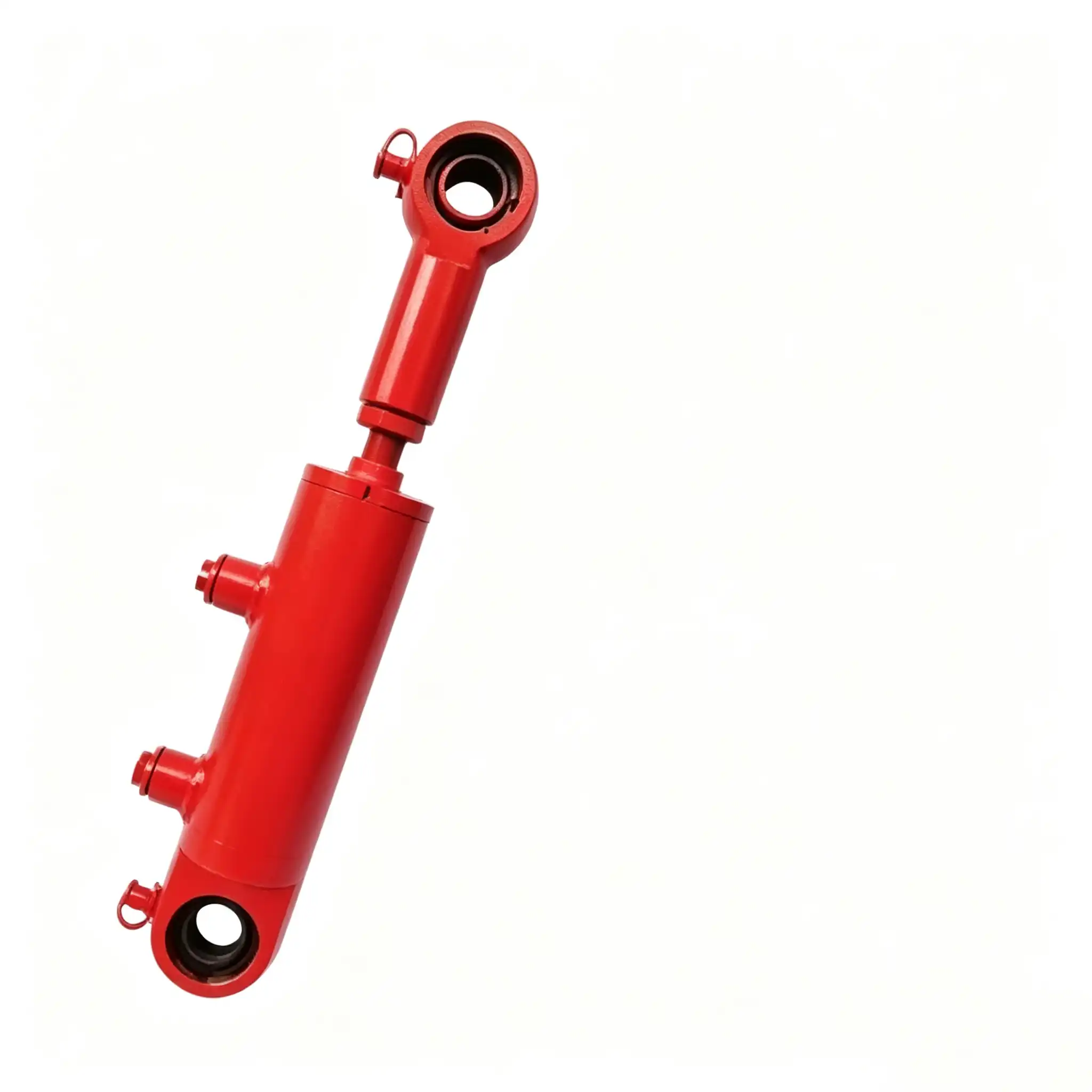
Garbage Truck Hydraulic Cylinder
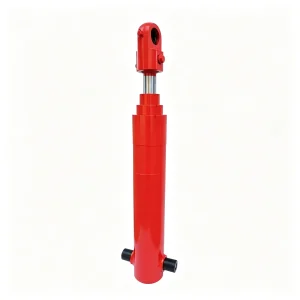
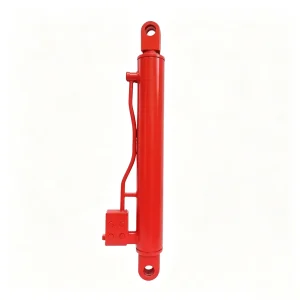
Tailgate Latch Cylinder — Compact, High-Cycle Locking Actuator for Rear-Load Refuse Compactors
Rod: 22 mm
Stroke: 50 mm
Mounting: 305 mm
The tailgate latch cylinder is the primary safety actuator responsible for securing the rear discharge door — commonly called the tailgate — of rear-load refuse compactor trucks during transport and compaction. Despite its compact 40 mm bore and 50 mm stroke, this cylinder operates at the intersection of structural integrity and cycle reliability: it must engage and disengage the latch mechanism hundreds of times per shift across years of outdoor service without seal degradation or positional drift that could compromise tailgate containment.
Technical Specifications
| Cylinder Type | Tailgate Latch Actuator (Double-Acting) |
| Bore Diameter | 40 mm |
| Rod Diameter | 22 mm |
| Stroke Length | 50 mm |
| Installation Distance (C-C) | 305 mm |
| आवेदन | Rear-Load Refuse Compactor Tailgate Latch |
Why the 40 mm Bore and 50 mm Stroke Define Tailgate Latch Cylinder Performance in Rear-Load Refuse Trucks
It is easy to underestimate a cylinder with a 50 mm stroke. In the context of a rear-load refuse compactor, however, the tailgate latch mechanism does not require long travel — it requires reliable, forceful, and repeatable short-travel actuation. The latch hook must engage a hardened steel keeper with enough force to overcome the compaction pressure acting on the tailgate from inside the body. On a standard 10–16 cubic meter rear-load body operating at 200–250 bar compaction pressure, the tailgate can experience ejection forces of 15–25 kN distributed across the door perimeter seals and latch points. The tailgate latch cylinder must generate sufficient engagement force to lock the keeper securely under this preload without relying on the hydraulic circuit maintaining pressure — most modern refuse truck latch systems are designed with a mechanical over-center or positive mechanical lock so the latch remains engaged even if hydraulic pressure is lost during transit.
A 40 mm bore cylinder at 160 bar operating pressure generates approximately 20 kN of push force. This provides the actuation force needed to drive the latch hook into engagement and maintain it against the door seal preload during latch verification — the brief hydraulic hold applied after latch engagement to confirm the hook is fully seated before the truck departs the collection point. The 22 mm rod is appropriately sized for this application: the rod operates primarily in compression during latch engagement (pushing the hook into the keeper) and in tension during release (pulling the hook clear of the keeper). A 22 mm rod in this duty cycle has a generous safety factor against Euler column buckling given the short 50 mm working stroke and the 305 mm C-C mounting distance, which positions the cylinder at a favorable angle relative to the latch linkage geometry.
The 305 mm center-to-center installation distance is not an arbitrary dimension. It places the cylinder at the correct geometric relationship to the latch arm pivot to maximize mechanical advantage at the point of keeper engagement — the moment in the latch stroke where resistance is highest. As the latch hook passes over the keeper apex and drops into the engaged position, the cylinder force requirement drops sharply. The 305 mm C-C distance ensures the cylinder is operating at near-peak force during this critical engagement phase, then transitions to a lower-force sustaining position once the hook is fully seated, which reduces the sustained hydraulic load on the circuit during travel.

High-Cycle Hydraulic Latch Cylinder Durability: Seal Selection and Corrosion Protection for Refuse Truck Service
Refuse truck hydraulic cylinders face an operating environment that is among the most corrosively aggressive encountered by any mobile hydraulic component. The tailgate latch cylinder is positioned at the rear of the vehicle body, where it is continuously exposed to: road salt and calcium chloride runoff from winter road treatment; leachate and organic decomposition fluids from collected waste that accumulate in the tailgate mechanism; high-pressure wash-down water used during vehicle cleaning at the end of each shift; and ultraviolet radiation with temperature cycling that causes paint and coating systems to fail faster than on protected chassis components.
The seal package for this cylinder uses a polyurethane rod wiper seal with a double-lip design: the outer lip scrapes bulk contamination from the rod surface during retraction, and the inner lip provides a secondary barrier against fine particle and moisture ingestion. The piston seal is a composite PTFE-backed lip seal that maintains consistent sealing force across the operating temperature range of -25°C to +90°C — important for northern European and North American winter operations where cold-start seal stiffness is a genuine service concern. Port threads are SAE O-ring face seal (ORFS) to eliminate the corrosion-aggravated leak risk associated with exposed NPT thread flanks.
The rod chrome plating specification for this cylinder is heavier than typical warehouse equipment: 25–35 μm of hard chrome applied over an induction-hardened 22 mm rod. The increased chrome thickness compensates for the abrasive contact that occurs when the rod surface contacts waste particles that work their way past the wiper seal in heavily contaminated operating environments. External cylinder body surfaces are treated with a two-component epoxy primer and polyurethane topcoat system, providing salt spray resistance exceeding 500 hours per ISO 9227 — a meaningful specification for vehicles operating year-round in coastal or road-salted regions.
Replacement and Cross-Reference Guide for Refuse Truck Tailgate Latch Cylinders: Sourcing for Municipal Fleet Maintenance
Municipal solid waste collection departments and private waste hauling contractors operate some of the largest mobile equipment fleets outside the military and mining sectors. A medium-sized municipal waste authority with 80–120 active rear-load collection vehicles will typically experience 15–25 tailgate latch cylinder replacements per year across the fleet — a volume large enough to justify establishing a preferred supplier relationship with committed stock allocation and documented dimensional cross-reference to OEM part numbers.
When evaluating replacement cylinder compatibility, fleet maintenance managers should verify four parameters beyond just the bore and stroke: the overall collapsed length (which determines whether the cylinder fits within the latch arm travel envelope without interference), the rod end connection type (clevis, eye, or threaded stud — each requires a specific coupling interface with the latch arm), the port orientation (inline or angled ports affect whether existing hydraulic hose routing can be reused), and the cylinder body mounting arrangement (side-mount brackets, trunnion, or clevis-cap configurations must match the existing chassis mounting points exactly). Our technical team provides dimension-matched cross-reference sheets for major refuse truck OEM platforms including Heil, McNeilus, Labrie, and Faun on request.
For fleet managers transitioning to a planned preventive replacement program — replacing tailgate latch cylinders at a defined interval rather than waiting for visible leakage or latch engagement failure — the recommended replacement interval is 18–24 months or 3,500–5,000 operating cycles for standard municipal collection duty, adjusted to 12–18 months for vehicles operating in road-salted winter environments or handling particularly aggressive waste streams such as food processing or chemical waste residuals.
विशिष्ट अनुप्रयोग
- Rear-load refuse compactor trucks — tailgate latch engagement and release
- Side-load automated collection vehicles — container hopper door latch
- Roll-off container trucks — body latch and cable lock actuator
- Recycling compactor trailers — discharge door safety latch systems
- Waste transfer station stationary compactors — ram lock latch actuator
Source the Tailgate Latch Cylinder for Your Refuse Fleet
Contact our team for OEM cross-reference matching, batch pricing for municipal fleet programs, and technical documentation including dimensional drawings and seal kit compatibility charts.