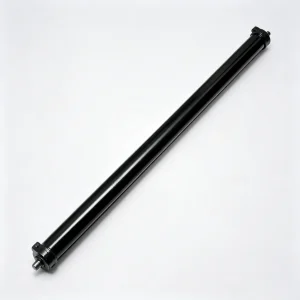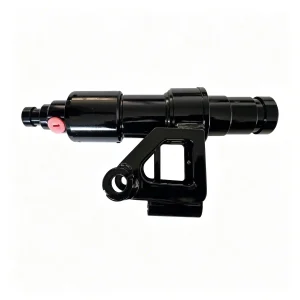
Deskripsi

HCYY11112001 Forklift Tilt Cylinder — Double-Acting Hydraulic Cylinder for Mast Forward/Backward Tilt Control
The HCYY11112001 forklift tilt cylinder is a double-acting hydraulic cylinder engineered to govern the forward and backward tilt motion of the forklift mast with precision and reliability. Unlike simple lift cylinders, tilt cylinders must sustain controlled movement under combined compression and tension loads — as the mast tilts forward it pushes the cylinder into extension, while mast return pulls it back into retraction. This bidirectional duty cycle demands a higher standard of sealing and rod-guide design, and that is exactly what the HCYY11112001 delivers.
- Double-acting piston with dual-side sealing for bidirectional control
- Heavy-duty rod guide bushing in phosphor-bronze for side-load tolerance
- Rated working pressure: 20 MPa / 200 bar
- Cushion end cap on extension to dampen mast end-of-travel impact
- FKM (Viton) seal option available for high-temperature applications
Hydraulic Tilt Cylinder Forklift: Understanding Why Double-Acting Design Matters for Mast Control
Many end users are surprised to discover that the tilt cylinder — not the lift cylinder — is the component most often responsible for mast instability complaints. When a forklift operator engages the tilt lever, the system must accelerate the mast and load through a defined arc, hold it at the desired angle under static load, and return it smoothly without the jarring sensation caused by hydraulic shock. All three of these requirements depend on the internal quality of the hydraulic tilt cylinder for the forklift mast.
The double-acting piston design of the HCYY11112001 means that positive hydraulic pressure is applied to both the extension and retraction strokes. This gives the operator positive control in both directions — critical when tilting the mast backward with a full load suspended, where gravity alone is insufficient to move the mast and any hesitation in the control valve can cause load oscillation.
The phosphor-bronze rod guide bushing deserves specific mention. Tilt cylinders experience significant radial loading because the cylinder clevis pin at each end undergoes angular displacement as the mast arcs through its tilt range. An inferior cylinder uses a simple steel guide ring that scars the rod surface when exposed to this radial loading. Phosphor-bronze is the material of choice for the HCYY11112001 because it is self-lubricating, softer than the chrome-plated rod, and dimensionally stable over the full operating temperature range.

Fig. 1 — HCYY11112001 tilt cylinder assembly view
OEM-Spec Forklift Tilt Hydraulic Cylinder with Chrome Rod: Full Technical Parameter Table
All specifications listed below are validated during factory acceptance testing. Test records are supplied with each unit, and third-party inspection is available upon request for large-volume procurement orders.
| Parameter | Value / Specification | Engineering Note |
|---|---|---|
| Model | HCYY11112001 | Forklift tilt cylinder |
| Cylinder Type | Double-acting, piston type | Active extension and retraction |
| Rated Working Pressure | 20 MPa (200 bar) | Proof-tested at 30 MPa |
| Cylinder Barrel | ST52 seamless honed tube | Bore finish Ra ≤ 0.4 µm |
| Piston Rod | 45# steel, hard chrome plated ≥ 25 µm | 100% eddy-current thickness check |
| Rod Guide Bushing | Phosphor-bronze (CuSn6) | Self-lubricating, corrosion-resistant |
| Seal Material | NBR / PU standard; FKM optional | FKM for high-temp / special fluids |
| End Cushion | Built-in adjustable hydraulic cushion | Reduces end-of-travel shock load |
| Mounting | Clevis pin both ends | Pin diameter per dimensional drawing |
| Surface Treatment | Phosphating + two-coat primer | Salt-spray ≥ 200 h |
| Compatibility | ISO VG 32–68 mineral oil, HETG | Biodegradable hydraulic fluid compatible |
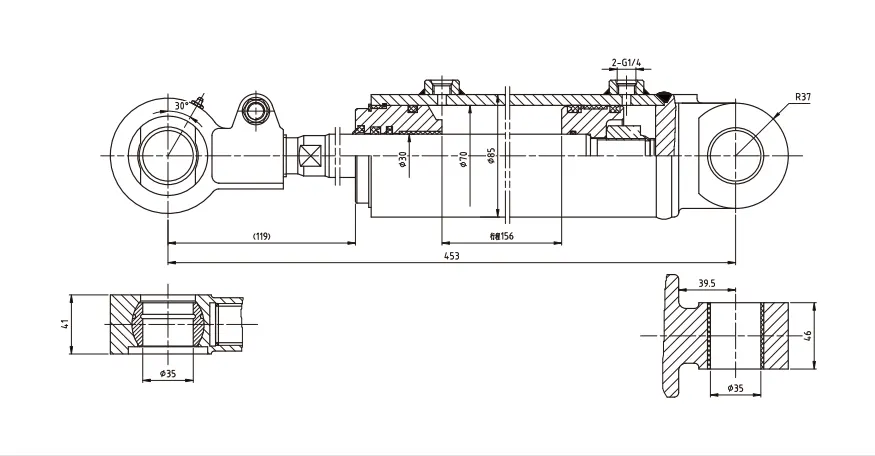
Fig. 2 — HCYY11112001 full dimensional drawing (refer to drawing for stroke and port specifications)
Where Forklift Mast Tilt Cylinders Are Used: Industrial Applications and Sector-Specific Requirements
The tilt cylinder on a forklift is a relatively small component in terms of physical size, yet its performance directly governs load stability, operator safety, and the speed of every pick-and-place operation. Understanding the sector-specific requirements helps procurement teams specify the right variant from the outset.


General warehousing and distribution: Standard ISO VG 46 mineral-oil environments where the primary concern is cycle life. At 300 tilt cycles per shift and two-shift operation, a tilt cylinder accumulates over 200,000 cycles per year. The NBR/PU seal configuration of the HCYY11112001 is designed for this level of continuous operation without requiring interim seal replacement.
Automotive paint lines: Solvent-contaminated hydraulic oil is a known risk in paint-shop environments, where vapours permeate into the hydraulic reservoir through vented caps. The optional FKM (Viton) seal set for the HCYY11112001 provides significantly better resistance to aromatic solvent attack compared to standard NBR seals, extending the service interval in this demanding sector.
Food and beverage processing: Biodegradable HETG (polyol ester) hydraulic fluids are mandated in many food-zone applications to eliminate contamination risk. The HCYY11112001 is fully compatible with HETG fluids, and the chrome plating on the rod resists the mild organic acid content found in some biodegradable oil formulations.
Timber and paper mills: Wood chip and paper dust are highly abrasive contaminants that rapidly degrade rod seals and wiper seals. The dual-wiper seal arrangement on the HCYY11112001 rod head provides a first barrier to exclude particulates, protecting the dynamic rod seal from direct abrasive contact.
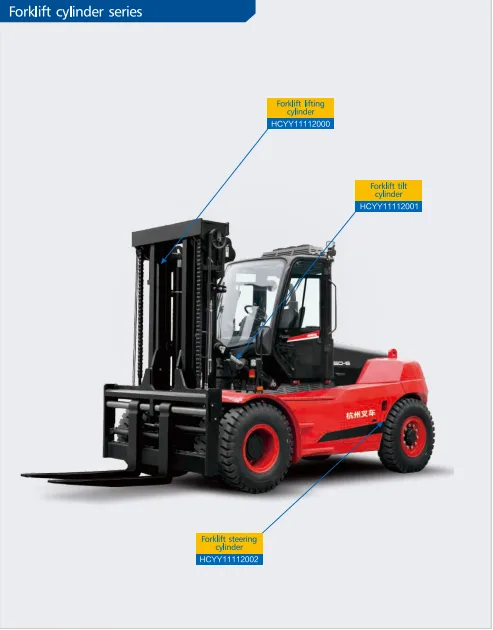
Fig. 3 — Forklift cylinder series: tilt cylinder installation position within mast assembly
Engineering Differentiators: How HCYY11112001 Outperforms Generic Forklift Cylinder Replacement Options
When evaluating forklift cylinder OEM replacement options, procurement teams often focus on price and delivery. But three engineering details separate a reliable replacement from a problematic one — and all three are addressed in the HCYY11112001 design:
- Cushion design: Many low-cost tilt cylinders omit the end-of-stroke hydraulic cushion, relying on the operator to stop the tilt lever at the right moment. In practice, this results in metal-to-metal impact at end of travel, which generates shock loads that crack welds, damage mast channels, and loosen the cylinder mounting hardware over time. The HCYY11112001 incorporates an adjustable needle cushion that decelerates the piston over the last 20–30 mm of travel, limiting the deceleration force to a value safe for the mast structure.
- Piston seal material stack: The double-acting piston in the HCYY11112001 uses a three-part seal arrangement: a PTFE guide ring on each side of the piston to centre it in the bore and absorb radial load, with a PU lip seal sandwiched between them. This arrangement eliminates metal-to-bore contact entirely — a key cause of score marks in simpler piston designs — and provides positive sealing in both directions.
- Rod surface hardness: The chrome plating on the HCYY11112001 rod is applied to achieve a minimum surface hardness of 850 HV. This hardness level is sufficient to resist the abrasion of wiper seal contact over tens of thousands of strokes without measurable chrome loss, maintaining the sub-micron surface finish that keeps rod seals intact.
Forklift Tilt Cylinder Failure Diagnosis: Common Failure Modes and Their Root Causes
Understanding how tilt cylinders fail is essential for maintenance teams who need to diagnose mast control problems quickly and avoid misidentifying the faulty component. The tilt control circuit involves the tilt cylinder itself, the tilt control valve spool, the hydraulic lines, and the mast structure — and symptoms from a faulty cylinder can sometimes present in ways that implicate other components.
The most common failure mode in double-acting tilt cylinders is internal bypass across the piston seal. This is identifiable by a specific symptom: the mast tilts normally in both directions under light load, but under a rated load the mast slowly drifts back toward the neutral position even when the operator releases the tilt lever. The drift rate is proportional to the severity of the bypass. This failure is caused by piston seal wear, which is in turn caused by contaminated hydraulic oil or excessive operating temperature softening the seal compound. A quick diagnostic test is to apply rated load pressure on the rod side of the cylinder and measure drift rate over a timed period; if drift exceeds the OEM-specified threshold, piston seal replacement is indicated.
The second most common failure mode is external rod seal leakage. This is visible as a film of oil on the chrome rod surface and oil accumulation at the rod guide, and it typically progresses to dripping and then to visible oil trails on the mast channel. Rod seal failure is usually caused by a pitted or scored chrome rod — the rod surface damage cuts the seal lip on every stroke. When rod seal leakage is observed, inspecting the rod surface before ordering a seal kit is strongly recommended. Installing a new seal set on a damaged rod results in immediate re-failure, typically within 50 hours.
The third failure mode — less common but more immediately problematic — is port or gland leakage. External leakage at the port fitting indicates either a damaged face seal on the hydraulic fitting or a cracked port boss. Port boss cracking is caused by over-torquing the fitting or by hydraulic shock from fast valve response without a cushion on the cylinder. The HCYY11112001 end cushion feature significantly reduces the likelihood of port boss cracking compared to uncushioned alternatives, but correct fitting torque is still essential and must be verified with a torque wrench during every installation.
A fourth, often overlooked, failure mode is guide bushing wear. As the phosphor-bronze bushing wears, the rod gains radial play within the guide. This play allows the rod seal to flex eccentrically on each stroke, which causes uneven seal lip loading and accelerated seal wear on the side exposed to the highest side load. Guide bushing wear is identifiable by lateral play in the rod that can be detected by applying a small lateral force to the rod end while the cylinder is unpressurised. If play is perceptible, the bushing should be replaced before installing a new seal kit, since the seal kit will fail prematurely if the bushing clearance is excessive.
Replacement Forklift Mast Tilt Cylinder Installation Notes and Common Mistakes to Avoid
Replacing a tilt cylinder on a counterbalance forklift involves working with the mast in the full-forward tilt position, which puts the cylinder in its retracted state and removes stored energy from the rod side of the piston. Before disconnecting any hydraulic line, release system pressure through the control valve and confirm that the mast is supported on suitable props — mast weight alone can cause unexpected movement if the cylinder is disconnected while vertical.
Port orientation: The HCYY11112001 port threads are specified per the dimensional drawing. When reconnecting hydraulic lines, always inspect the O-ring face seal (ORFS) or BSP adaptor for deformation before refitting. A damaged face seal is the single most common cause of external leaks reported at the tilt cylinder port within the first 50 hours of a replacement installation.
Clevis pin alignment: Misalignment between the cylinder clevis and the mast bracket mounting hole causes the cylinder to operate under constant side load. Even a 2–3 degree angular misalignment is sufficient to cause premature rod seal wear. Use new clevis pins with the replacement cylinder and verify that the pin passes through the clevis and bracket without requiring force before inserting the retaining clip.
Hydraulic flush: As with any cylinder replacement, flush the tilt circuit before connecting the new cylinder. The tilt circuit volume is relatively small, but debris from a failed seal can travel to the tilt control valve and cause spool sticking — a fault that presents identically to a faulty cylinder and is therefore frequently misdiagnosed.
Post-installation soak test: After completing the installation and initial break-in cycle, lower the load to the floor and hold rated system pressure on the tilt-forward side of the cylinder for five minutes while observing the external rod surface for any signs of seepage. A trace of oil visible as a sheen — but not as a drip — is acceptable during the first 50 hours as new seals seat and the chrome rod develops a thin oil film on its surface. A drip rate of one drop per minute or greater at any time is indicative of an installation problem that should be investigated before returning the machine to normal service.
Torque values and thread sealants: Hydraulic port threads on the HCYY11112001 use O-ring face seal (ORFS) or parallel BSP threads with bonded seal washers, depending on the port configuration specified at the time of order. Never use PTFE tape on ORFS or bonded-seal BSP ports — the tape compresses under torque and can extrude into the hydraulic circuit, blocking orifices in the tilt control valve. Use only clean thread lubricant or the manufacturer-specified sealant appropriate to the thread type. The correct torque for each port size is specified on the assembly drawing supplied with the cylinder.
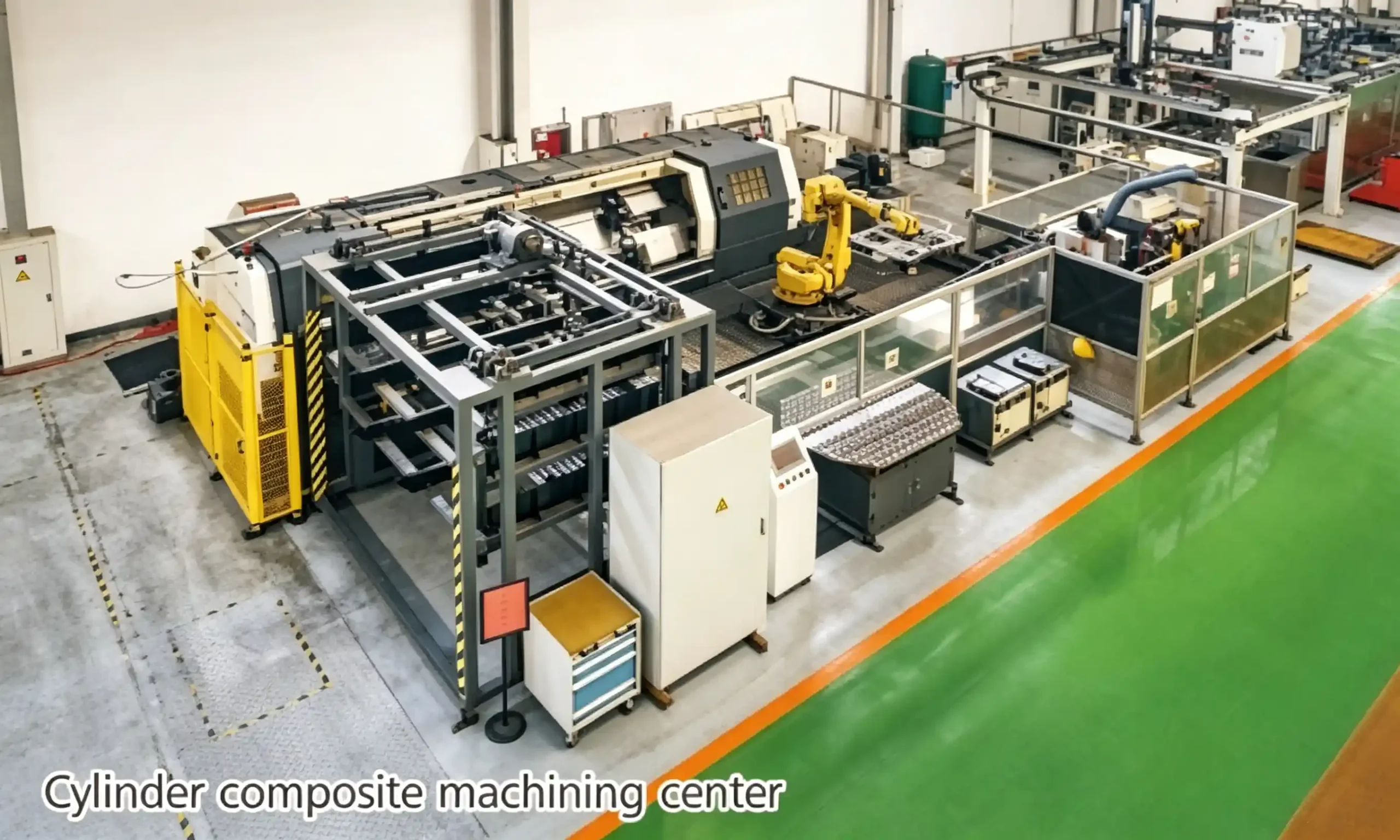
Fig. 4 — QC inspection and final assembly of tilt cylinders at our manufacturing facility
Get a Quote for HCYY11112001 Forklift Tilt Cylinder
Tell us your forklift model, current cylinder part number, and required quantity. Our technical team will confirm fit compatibility, provide a dimensional drawing for your reference, and return a competitive B2B price within one business day. Bulk-order pricing is available for fleet maintenance programmes and distributor partners.