Deskripsi
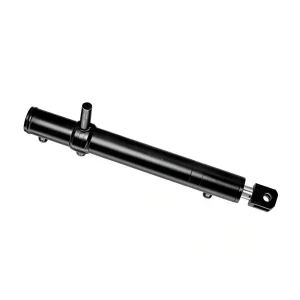
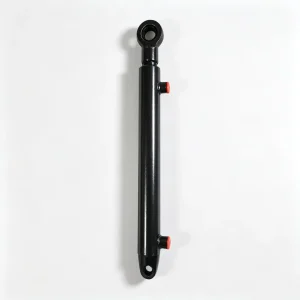
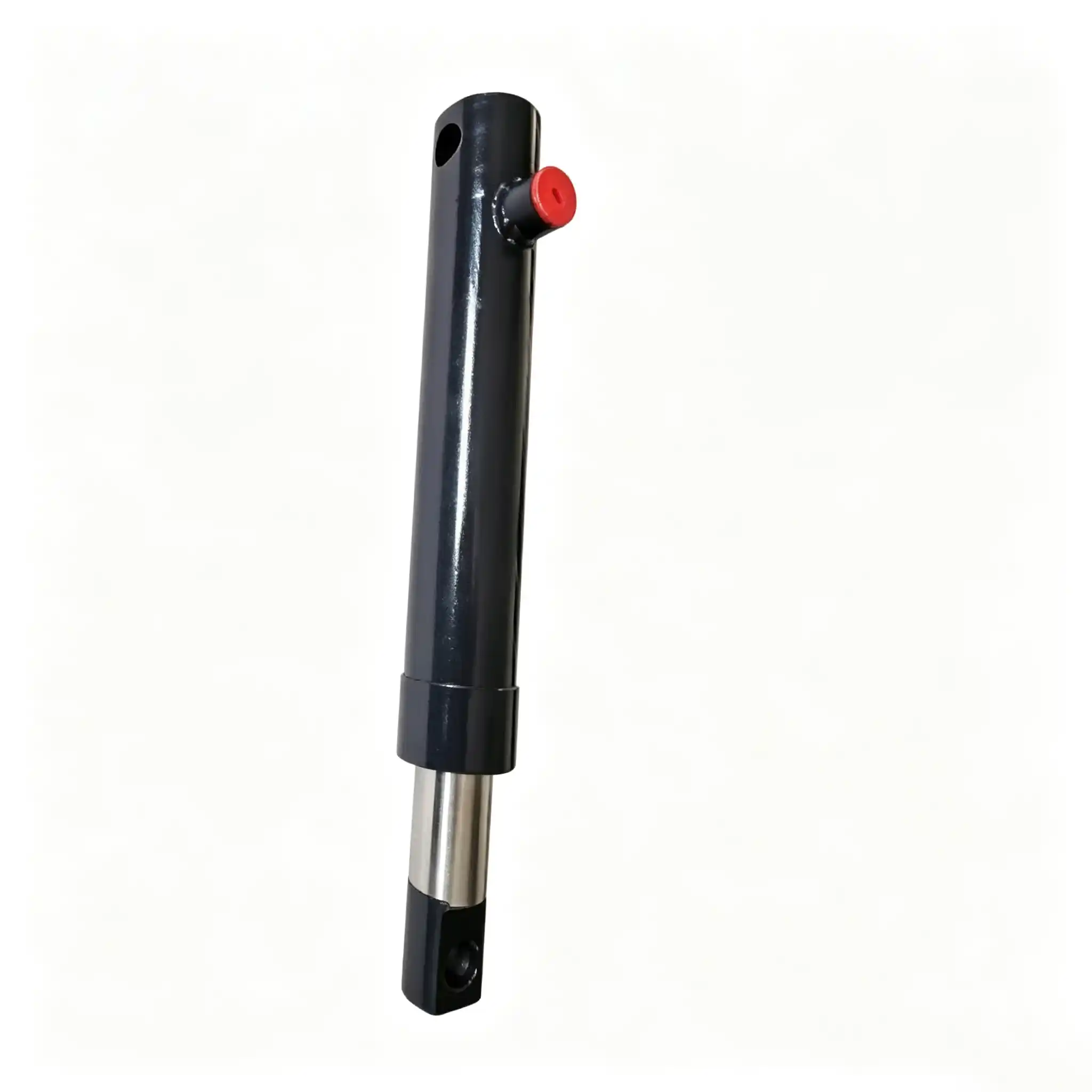
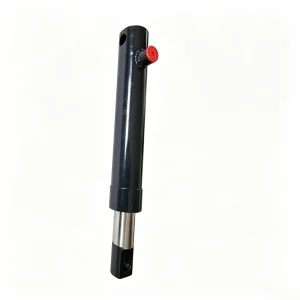
HK-DY-14 Pick-up Cylinder — 45mm Bore Ground-Following Actuator for Baler Pick-up Mechanisms
Product Overview
Of all the hydraulic cylinders on a baler, the pick-up mechanism actuator operates in the most hostile environment the machine encounters. While primary compression cylinders work inside a sealed bale chamber and tailgate cylinders are mounted high on the rear frame, the pick-up cylinder sits directly above the crop windrow — exposed to a continuous stream of dust, fine chaff, grass seed husks, silage particles, and abrasive soil thrown upward by the pick-up tines at 540 rpm. On a working day, this cylinder completes hundreds of height adjustment cycles as the operator raises and lowers the pick-up to match changing ground contours, passes through gateways, and clears obstacles. Each retract-and-extend cycle draws the rod back through the wiper seal and then exposes a freshly cleaned section of chrome rod surface directly into the particle-laden airstream above the pick-up reel. No other position on the baler subjects the rod seal system to this combination of continuous particulate bombardment and repeated partial-stroke cycling.
Seal failure on the pick-up cylinder is not a gradual performance degradation — it is typically a sudden and complete failure. When the rod wiper deteriorates to the point where it can no longer exclude crop debris from the primary seal, abrasive material accumulates in the seal lip contact zone and cuts through the primary seal within a matter of hours. The result is a cylinder that can no longer hold the pick-up at working height, causing the tine bar to drop to ground level under operating vibration — damaging tines, scalping the crop windrow, and, in stony fields, causing tine impact damage that requires far more expensive repairs than a seal kit replacement.
The HK-DY-14 is engineered around the specific demands of pick-up mechanism hydraulic parts applications. The 45mm bore, 40mm rod, 200mm stroke, and 430mm mounting distance combination is unusual — the 40mm rod on a 45mm bore gives a rod-to-bore ratio of 0.89, which is substantially higher than standard agricultural cylinder practice. This is not an arbitrary specification: it is the direct engineering response to the side-load and contamination demands of the pick-up position, and understanding why requires examining both the load case and the seal protection requirements in detail.
Technical Specifications
| Parameter | Value | Engineering Significance |
|---|---|---|
| Bore Diameter | 45 mm | Piston area ≈ 15.90 cm²; push force at 160 bar ≈ 25.4 kN — adequate for pick-up raise and hold under crop slug loading without over-pressuring the auxiliary circuit |
| Rod Diameter | 40 mm | Rod-to-bore ratio 0.89 — the highest in this product series; wide rod minimises exposed chrome area per stroke cycle and maximises wiper seal contact width for contamination exclusion |
| Stroke | 200 mm | Covers full pick-up height adjustment range from transport position to minimum ground clearance; limits total exposed rod surface to 200mm — every millimetre of exposed chrome is a contamination risk in this position |
| Mounting Distance | 430 mm | Center-to-center retracted; matches pick-up pivot bracket geometry on common baler platforms sharing the HK-DY-13 envelope with different bore/rod specification |
| Max Working Pressure | 160 bar (rated) / 200 bar (peak) | Peak rating covers pressure spikes from pick-up hitting an obstacle at working speed — an impact load event rather than a sustained overload |
| Cylinder Type | Double-acting, tie-rod construction | Positive raise and lower force; active lower force required when pick-up must be pressed into dense, mat-like windrow crop against pick-up mechanism spring flotation |
| Rod Surface Finish | Hard chrome, Ra ≤ 0.3 μm, min. 30 μm depth | Tightest surface specification in the series — smoother finish reduces abrasive particle adhesion to the rod surface; increased chrome depth provides reserve material against accelerated abrasive wear in the contaminated pick-up environment |
| Port Thread | BSP G3/8″ (SAE available) | Port size matched to required flow rate for fast pick-up response without generating excessive back-pressure in the auxiliary circuit |
The 40mm rod on a 45mm bore is the specification that most immediately distinguishes the HK-DY-14 from every other cylinder in this range, and it warrants detailed explanation. The annular area between a 45mm bore and a 40mm rod is only 3.24 cm² — compared to 11.60 cm² for the HK-DY-12’s 50mm bore / 32mm rod combination. This small annular area means the retract (lower) force at 160 bar is only 5.2 kN. For a pick-up mechanism with spring flotation that holds the pick-up off the ground at rest, 5.2 kN of hydraulic retract force is sufficient to press the pick-up down into working position against the flotation spring resistance, but it does not provide large margins for forcing the pick-up through heavy mat conditions. This is intentional: a pick-up mechanism should float over ground obstacles with modest resistance, not be hydraulically pinned to the ground at high force. An oversized retract force in this position creates ground pressure that damages tines and scalps the soil surface rather than allowing the pick-up to ride over obstacles.
The primary engineering benefit of the large rod diameter is contamination control, not force output. A 40mm rod presents a wiper seal contact width of 40mm to the contaminated air above the pick-up. Every millimetre of wiper contact width contributes to the scraping and excluding of particles before they reach the primary seal. A narrower rod — 25mm or 28mm — presents proportionally less wiper contact surface against the same particle stream. Furthermore, the large rod diameter reduces the length of chrome rod surface that is exposed outside the cylinder body in the working position: at the same 200mm stroke, a 40mm rod with its larger cross-section has proportionally less surface area per unit volume than a thinner rod, meaning there is less chrome surface per stroke for particles to adhere to and be carried into the seal interface on the return stroke.
Engineering & Design Advantages
Triple-Element Rod Seal Pack — Contamination Exclusion as the Primary Design Priority: The HK-DY-14 rod seal assembly uses three elements in sequence, working outward from the cylinder interior to the external environment. The innermost element is a polyurethane primary lip seal that provides the hydraulic sealing function — preventing oil from escaping along the rod. The middle element is a secondary polyurethane excluder lip, oriented outward (toward the contaminated environment) rather than inward. This outward-facing excluder lip does not seal against hydraulic pressure — it seals against the ingress of particles, intercepting debris that has passed the outer wiper before it can reach the primary seal. The outermost element is a PTFE-faced wiper ring with a stainless steel scraper insert. The stainless insert provides a rigid scraping edge that removes adherent particles — dried silage, compacted chaff, and caked soil — that a purely elastomeric wiper would deflect over rather than remove. No other cylinder in this product series uses this triple-element arrangement; it is specified exclusively for the HK-DY-14 because only the pick-up position combines continuous high-volume particle exposure with repeated partial-stroke cycling.
Labyrinth Wiper Housing — Particle Trap Before the Seal Stack: The front housing of the HK-DY-14 incorporates a labyrinth groove machined into the bore between the outer wiper and the secondary excluder lip. As the rod retracts, particles scraped from the rod surface by the outer wiper are deposited into this groove rather than being pushed inward toward the secondary seal. The groove volume is sufficient to accumulate a full season’s worth of normal field debris without requiring cleaning — it functions as a passive particle trap. On cylinders without this feature, scraped debris accumulates in the gap between the wiper and the primary seal housing and is gradually compressed into a solid plug that eventually wedges the rod and causes the wiper to tear. The labyrinth groove eliminates this debris compaction failure mode entirely.
Chrome Specification Upgrade — Ra ≤ 0.3 μm and 30 μm Minimum Depth: The HK-DY-14 carries the tightest chrome surface specification in the entire series: Ra ≤ 0.3 μm surface roughness and a minimum 30 μm chrome plating depth. The surface roughness reduction from the standard Ra ≤ 0.4 μm to Ra ≤ 0.3 μm may appear marginal, but its effect on particle adhesion is significant. Abrasive particles — particularly silica from soil and silica-rich crop stems — adhere to micro-peaks on the chrome surface and are carried into the seal contact zone on the return stroke. A smoother surface has fewer and shallower micro-peaks, reducing both particle adhesion and the abrasive contact stress when particles do enter the seal zone. The 30 μm minimum chrome depth provides a reserve of material against accelerated abrasive wear: even in worst-case contamination conditions, the chrome layer will not be worn through to the steel substrate within a normal service interval, preventing the catastrophic seal and bore damage that occurs when steel substrate is exposed in the rod seal contact zone.
Fast Response Calibration — Pick-up Height Control at Operating Speed: The pick-up height cylinder must respond quickly to operator commands. When the operator raises the pick-up to clear a gateway post or a field margin berm, the cylinder must complete its extend stroke before the machine reaches the obstacle — at typical field speeds of 8–12 km/h, the time available for the pick-up to clear an obstacle seen 10 metres ahead is under 4.5 seconds. At standard baler auxiliary circuit flow rates of 15–20 litres per minute, a 45mm bore cylinder with 200mm stroke requires approximately 1.1 seconds to complete a full extend stroke. This response time is not adjustable through cylinder design — it is determined by circuit flow rate and bore area. What can be designed is the absence of response lag from seal stiction: the HK-DY-14 seal break-out friction is verified at assembly to be below 150 N on a cylinder that has been static for 24 hours at ambient temperature. This low break-out friction ensures that the cylinder begins moving immediately when the SCV is opened, without the 0.5–1.0 second stiction lag that seals with high static friction produce on the first movement after a static hold period.
Impact Load Tolerance — Hitting Obstacles at Working Speed: Despite the operator’s best efforts, pick-up mechanisms encounter obstacles at working speed — stones, steel stakes, irrigation fittings left in the field, and hardened soil ridges. Each impact applies a sudden compressive load to the cylinder that can briefly exceed rated working pressure. The HK-DY-14 barrel wall thickness is calculated to maintain a safety factor of 4:1 against burst pressure at the maximum bore diameter, using a conservative von Mises yield criterion for the DOM (drawn-over-mandrel) steel tube. The end cap threads are designed to the same safety factor. This means the cylinder body will survive impact loads that trip the system relief valve without permanent deformation — the mechanical protection provided by the 4:1 safety factor exceeds the relief valve’s ability to limit pressure to a damaging level.
Application Specifics
The HK-DY-14 is designed for one primary function: controlling the height and ground-following behaviour of the baler pick-up mechanism. Within this primary function, several specific operational modes place distinct demands on the cylinder:
- Working height set and hold: The cylinder extends to lower the pick-up to the operator’s chosen working height and holds this position under the variable loads imposed by windrow density changes and ground undulation. The position-holding requirement in this mode is less critical than for a latch cylinder — a 5–10mm drift over a 30-minute baling run is acceptable, as the operator will readjust as needed. The primary requirement is that the cylinder does not drift rapidly enough to cause the tine bar to contact the ground between operator adjustments.
- Obstacle clearance — rapid raise: The most time-critical operation the cylinder performs. Maximum SCV flow is applied to the extend port and the cylinder must complete its full stroke as quickly as the circuit allows. The low break-out friction specification is most important here — a cylinder with high static friction will lose 0.5–1.0 seconds of the available response time before it begins to move, potentially resulting in tine contact with the obstacle before the pick-up clears it.
- Transport position — full retract and lock: During road transport, the pick-up is raised to its maximum height by fully retracting the cylinder. In this position, the maximum rod surface is inside the cylinder body under seal protection — the correct storage position for the rod. Many operators leave the SCV energised to hold the pick-up up during transport, but this is not recommended: a sustained pressure hold on a single-port circuit generates heat in the hydraulic fluid and places continuous pressure load on the piston seal. The correct practice is to use a mechanical transport lock on the pick-up mechanism after raising, allowing the SCV to return to neutral.
- Float mode operation (where equipped): Some baler hydraulic circuits include a float detent on the pick-up SCV that allows the cylinder to freely extend and retract in response to ground contour changes — the pick-up follows the ground passively with the cylinder acting as a passive support rather than an active actuator. In float mode, the cylinder experiences rapid, low-force partial-stroke cycling driven by ground undulation. The low break-out friction and the triple-element seal pack’s contamination resistance are both critical for reliable float-mode performance — a cylinder with high seal friction will not respond to the small ground-contour forces that should drive pick-up flotation, causing the pick-up to skip over the windrow rather than follow it.
An important dimensional note for procurement engineers: the HK-DY-14 shares its 430mm mounting distance and 200mm stroke with the HK-DY-13, but differs in bore (45mm vs 40mm), rod (40mm vs 28mm), and therefore in all force outputs and seal pack configuration. The two cylinders are not interchangeable despite their identical installed length. Always confirm bore and rod diameter by physical measurement before ordering — the bore diameter difference of 5mm and rod diameter difference of 12mm are both visible by inspection, but can be missed when ordering from memory or from a parts list that records only the mounting distance and stroke.
Quality Control & Testing
The HK-DY-14 quality protocol includes two tests unique to this model, reflecting the contamination exclusion and rapid-response requirements of the pick-up position:
- Static break-out friction measurement (100% individual test): Each assembled cylinder is pressurised to 5 bar on the extend port and the force required to initiate rod movement from a 24-hour static position is measured using a calibrated load cell. Acceptance criterion: break-out force below 150 N. Cylinders exceeding this threshold are disassembled and the seal assembly is inspected for installation defects — a twisted lip seal or a misaligned back-up ring are the most common causes of elevated break-out friction. The cylinder is rebuilt and retested before shipment. This test directly validates the fast-response performance the pick-up position requires.
- Accelerated contamination ingress test (batch sample): A minimum 3% of each production batch is subjected to a simulated contamination ingress test. The rod is coated with a standardised agricultural dust mixture (ISO 12103-1 A4 fine test dust mixed with short-cut crop fibre at 2:1 by mass) and cycled 5,000 times through the full 200mm stroke with the dust mixture continuously applied to the exposed rod surface. After 5,000 cycles, the seal assembly is disassembled and inspected under 10× magnification. Acceptance criterion: no abrasive particles detected inboard of the secondary excluder lip; primary seal lip shows no cuts, abrasion tracks, or material loss. This test validates the labyrinth groove and triple-element seal pack’s ability to exclude real-world field contamination over a representative portion of a working season.
- Standard protocol: No-load stroke verification (10 cycles at 5 bar), static pressure hold to 240 bar for 3 minutes on both chambers with zero measured pressure drop, individual piston bypass leakage measurement below 3.0 ml per 2-minute hold, and dimensional verification of all critical dimensions against drawing tolerances.
Maintenance & Troubleshooting Guide
The pick-up cylinder requires more frequent inspection than any other hydraulic cylinder on the baler, because its operating environment actively attacks the seal system throughout every working hour. The following guidance addresses the specific maintenance requirements and failure patterns of this position:
1. Weekly Rod and Wiper Inspection During the Harvest Season
At the end of each working week during harvest, clean the exposed rod surface with a lint-free cloth dampened with clean diesel or hydraulic fluid. Examine the rod surface under direct sunlight or a bright work light — not under a vehicle’s interior lighting, which lacks the directionality needed to reveal surface defects. Look specifically for three conditions: first, any area of the chrome surface that appears duller or more matte than the surrounding area, indicating that abrasive particles have begun micro-polishing the chrome; second, any linear scratch marks running parallel to the rod axis, indicating that a particle has been carried through the wiper and drawn across the chrome surface by the seal lip; third, any rust-coloured staining, indicating that the chrome has been breached and the steel substrate is beginning to oxidise. Any of these findings requires immediate seal kit replacement — within 48 hours if the machine is needed for continued harvest operation. Continuing beyond these early warning signs converts a scheduled seal replacement into an emergency cylinder replacement.
Additionally, inspect the outer face of the wiper housing for accumulation of crop debris around the rod entry point. A ring of compacted chaff or silage around the rod at the wiper housing face indicates that the outer wiper is filling its scraping capacity and debris is beginning to accumulate faster than the wiper can clear it. Clean this accumulation with a soft brush — not compressed air, which drives particles into the seal interface rather than removing them — and consider whether operating conditions (particularly wet silage or heavily stemmy crop) require more frequent rod cleaning during the day.
2. Identifying the Difference Between Seal Failure and Float Valve Failure
A pick-up that sinks slowly during operation can indicate either piston bypass in the HK-DY-14 or a leaking float valve or SCV in the tractor hydraulic circuit — two completely different components requiring different repairs. The diagnostic test is identical to the method described for the tailgate cylinder in the HK-DY-12 documentation: with the pick-up raised to working height and the SCV in neutral, disconnect both hydraulic hoses at the cylinder ports and plug them with clean caps. If the pick-up continues to sink with the ports plugged, the piston seal is bypassing — the cylinder requires a seal kit. If the pick-up holds position with ports plugged, the leak is upstream in the valve or SCV — the cylinder is functioning correctly and investigating it further wastes time and money. Performing this 5-minute diagnostic test before removing the cylinder from the machine eliminates the most common source of unnecessary cylinder replacement on balers with pick-up sinking complaints.
3. Seal Kit Replacement Interval in High-Contamination Conditions
The standard seal kit replacement interval for the HK-DY-14 under normal operating conditions is every two seasons or 500 operating hours — whichever comes first. Under high-contamination conditions — specifically silage baling with moisture content above 60%, baling in sandy-soil fields, or harvesting heavily stemmy crops such as maize stover or sunflower stalks — this interval should be reduced to one season or 250 operating hours. The contamination accelerators in these conditions are: moisture, which softens dried particle accumulations and allows them to be carried into the seal interface in suspension; silica from sandy soil, which is harder than the chrome plating and cuts seal lip surfaces faster than organic crop dust; and stiff stems, which can physically contact the rod surface and score the chrome if they enter the wiper housing before being deflected. A seal kit for the HK-DY-14 costs a fraction of the cost of a new rod or cylinder — building the more frequent replacement interval into the maintenance budget for high-contamination applications is straightforward cost management, not excessive caution.
4. Post-Season Rod Protection and Storage
At the end of the harvest season, before the baler is stored, fully retract the HK-DY-14 to minimise exposed rod surface. Apply a generous film of petroleum jelly (Vaseline) or a dedicated hydraulic rod protector compound to the remaining 10–20mm of exposed rod near the front clevis. Do not use a silicone-based protector — silicone compounds are incompatible with PU seal materials and will cause the outer wiper lip to swell and harden over winter, increasing break-out friction at the next season’s cold start. If the baler is stored outdoors or in an open-sided shed, fit a plastic rod sock — a simple tube of polyethylene sheet secured with cable ties — over the cylinder body from the front housing to the front clevis. This prevents UV degradation of the wiper rubber and prevents wasps and other insects from nesting inside the front housing bore around the rod — a surprisingly common cause of wiper distortion and rod scoring found at the start of the following season on machines stored outdoors.
Pertanyaan yang Sering Diajukan
Q: Why does the HK-DY-14 have a 40mm rod on a 45mm bore when most agricultural cylinders use a much smaller rod relative to their bore? Is the retract force adequate?
The large rod-to-bore ratio is a deliberate contamination-control design choice, not an oversight. A 40mm rod on a 45mm bore maximises wiper contact width, reduces exposed chrome surface area per stroke, and allows the labyrinth debris trap in the front housing to be machined with adequate groove volume — none of which is possible with a smaller rod diameter. The retract force of 5.2 kN at 160 bar is correctly sized for the pick-up lower function: it must overcome the pick-up flotation spring resistance (typically 800–1,500 N depending on baler model and spring setting) with sufficient margin to lower the pick-up to working height promptly. It is intentionally not large enough to pin the pick-up firmly to the ground against the flotation spring — doing so would defeat the purpose of spring flotation, which is to allow the pick-up to ride over minor ground undulations without operator input. If your pick-up mechanism requires more than 5.2 kN to lower into working position, the flotation spring tension has been set incorrectly and should be reduced to its specified pre-load before concluding that the cylinder’s retract force is insufficient.
Q: My baler pick-up drops to the ground every time I hit a bump during field operation. Is this a cylinder problem?
A pick-up that drops suddenly on impact rather than drifting gradually indicates a different failure mode than gradual piston bypass. Sudden drop on impact is almost always caused by a check valve or counterbalance valve fault in the pick-up circuit rather than a cylinder seal failure — the impact shock causes a momentary pressure spike that lifts the valve off its seat, allowing a large volume of fluid to transfer rapidly across the piston. Perform the port-plug diagnostic test first: if the pick-up holds with the cylinder ports plugged, the cylinder is not the source of the problem. If it holds with ports plugged, inspect the SCV detent mechanism and any counterbalance or load-holding valve in the pick-up circuit. If the pick-up continues to drop with ports plugged, the cylinder piston seal has failed to a degree where it cannot resist the impact-induced pressure spike — a seal kit will resolve the cylinder fault, but also check the circuit valve components before returning to service, as a failed piston seal under repeated impact loads often indicates that the circuit is seeing pressure spikes above the cylinder’s peak rating, which requires a circuit pressure relief check.
Q: Can I extend the seal service interval on the HK-DY-14 by applying grease or another lubricant to the rod surface during operation?
External rod lubrication is not recommended on the pick-up cylinder and can accelerate seal deterioration rather than extending it. A film of grease on the rod surface acts as an adhesive for crop dust and chaff particles, creating a contaminated paste on the rod surface that is then drawn into the wiper and primary seal on the retract stroke. The wiper seal is designed to function on a clean chrome rod surface — it excludes dry particles by scraping them off; it cannot exclude particles that are embedded in a lubricant film. The correct maintenance approach is to keep the rod surface clean using the weekly wipe-down procedure described above, and to replace the seal kit at the recommended interval. If you are finding that the seal interval is too short for your operating conditions, the correct response is to move to a shorter interval or to investigate the source of the contamination — not to attempt to compensate with external lubrication.
Q: We operate a fleet of balers across multiple farms and need a reliable source for HK-DY-14 pick-up cylinder seal kits and complete cylinder replacements. What supply arrangement do you offer?
For fleet operators, we offer two supply arrangements. The first is a pre-season kit program: before the harvest season, you provide your fleet size and baler configuration, and we supply a pre-packaged set of seal kits — one per cylinder per machine — with all O-rings, lip seals, wipers, back-up rings, and instruction sheets included per machine. These kits are batch-coded to the cylinder serial numbers on your fleet for traceability. The second arrangement is a consignment stock program for operators maintaining 10 or more balers: we hold a dedicated stock of complete HK-DY-14 cylinders and seal kits at our warehouse reserved against your fleet, with confirmed 24-hour dispatch on any order placed before midday. This eliminates the lead time risk during peak harvest when standard stock may be depleted by demand from other customers. Contact our sales team at the email below with your fleet size, baler makes and models, and preferred supply arrangement to receive a fleet supply proposal.
Enquire About the HK-DY-14 Pick-up Cylinder & Seal Kits
Our engineering and supply team handles single-unit replacement orders, pre-season seal kit programs, and fleet consignment stock arrangements for commercial baling operations. Provide your baler make and model, your measured cylinder dimensions (bore, rod, stroke, mounting distance), and your seasonal volume requirement and we will confirm compatibility and supply options within one business day.
Website:
ever-powers.com
Email:
[email protected]