Deskripsi
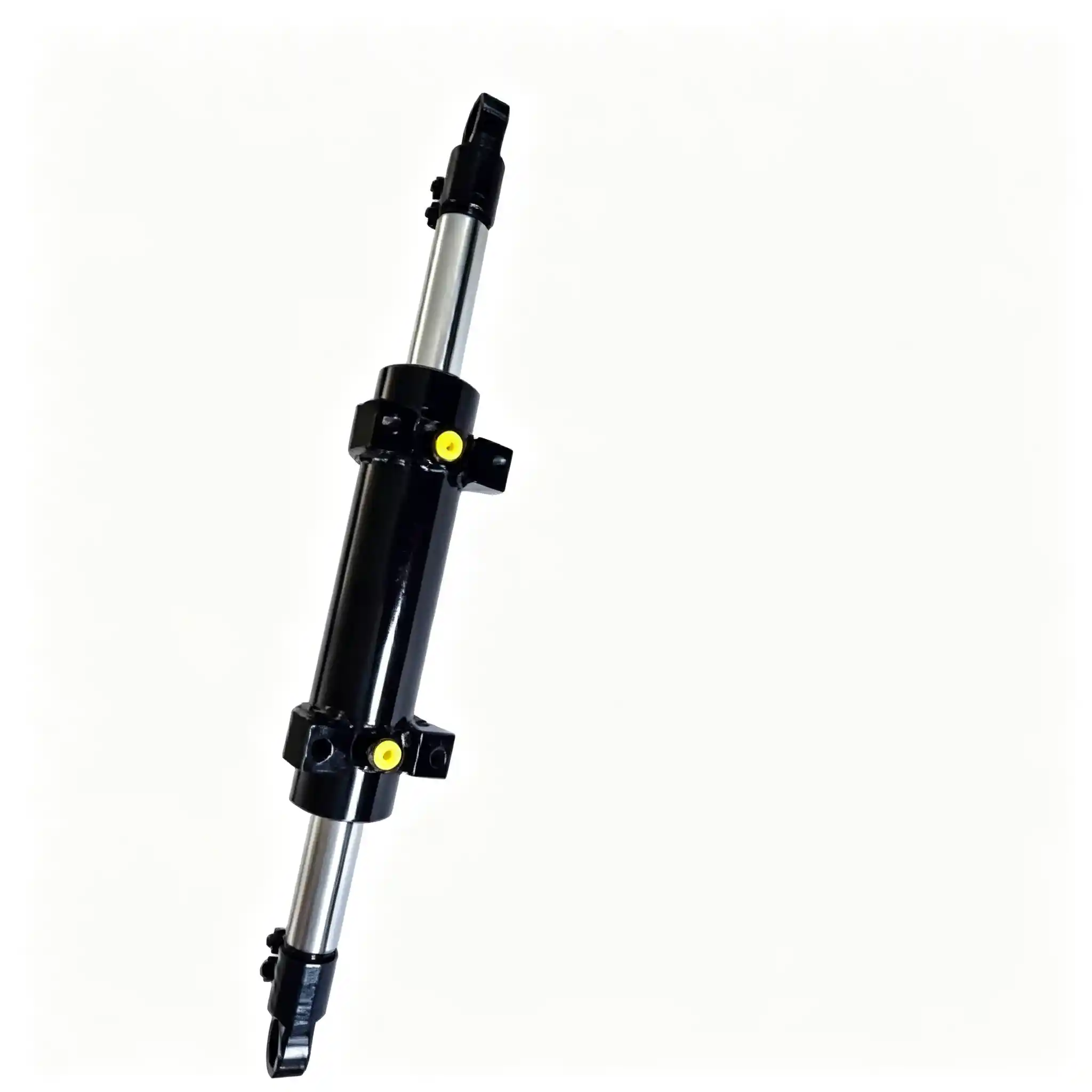
Forklift Steering System
LS-HCZD30N-03 Forklift Steering Cylinder — High-Response Directional Control for 3-Ton Class Machines
Rod: 40 mm
Stroke: 187.2 mm
Mounting: 676 mm
The LS-HCZD30N-03 forklift steering cylinder is a double-acting hydraulic actuator engineered for the rear-axle steering mechanism of 3-ton class internal combustion and electric counterbalance forklifts. Its 65 mm bore generates the hydraulic force needed for full lock-to-lock articulation under loaded conditions, while the 187.2 mm stroke is precisely calibrated to deliver the turning geometry required for tight aisle maneuvering without overshooting the steering stop.
Technical Specifications
| Part Number | LS-HCZD30N-03 |
| Cylinder Type | Double-Acting Steering Cylinder |
| Bore Diameter | 65 mm |
| Rod Diameter | 40 mm |
| Stroke Length | 187.2 mm |
| Installation Distance (C-C) | 676 mm |
| Target Machine Class | 3-Ton Counterbalance Forklift |
How the LS-HCZD30N-03 Steering Cylinder Geometry Controls Forklift Turning Radius and Aisle Performance
Forklift steering system design is a geometry problem before it is a hydraulic problem. The steering cylinder’s stroke determines the angular travel of the rear steering axle. On a 3-ton counterbalance forklift with a typical rear axle pivot arm of approximately 160–170 mm, a 187.2 mm stroke translates to roughly 55–62 degrees of full lock-to-lock articulation. This directly controls the vehicle’s turning radius — the metric that determines whether the machine can safely and efficiently operate in 3.0 meter versus 3.5 meter aisles.
The 65 mm bore is sized to generate the steering force needed to overcome the combined effect of rear wheel friction on the ground surface (which varies significantly between smooth epoxy warehouse floors and rough concrete dock surfaces), the self-alignment torque from the tire contact patch, and the static friction in the axle pivot bearing. On a 3-ton machine with a loaded rear axle weight of approximately 1.2–1.5 tons, the peak steering cylinder force required at low speed is typically 8–12 kN. At standard forklift system pressure of 150–175 bar, a 65 mm bore generates a push force of approximately 49–57 kN — providing a generous safety margin that prevents steering sluggishness even when hydraulic oil is cold and viscous at startup.
The 676 mm center-to-center installation distance is a critical mounting parameter. In double-acting steering cylinders, the C-C distance determines the moment arm available to the cylinder for rotating the steering axle. An incorrect C-C dimension — even by 10–15 mm — changes the effective steering ratio and can cause the machine to reach its physical steering stop before the cylinder reaches its hydraulic end stop, generating damaging end-of-travel pressure spikes that accelerate seal and port fitting wear.
Double-Acting Forklift Steering Cylinder Performance: Pressure Response, Seal Durability, and Fluid Compatibility
Unlike lift cylinders, which operate in a predominantly single direction under gravity return, the LS-HCZD30N-03 operates as a true double-acting system — it must develop full controlled force in both extension and retraction, and must do so with consistent response across hundreds of direction changes per shift. This places unique demands on the seal system: the piston seal must maintain low internal leakage in both directions, the rod seal must handle bidirectional rod velocity without ingesting air during retraction, and the wiper seal must strip contamination from the rod surface on every inbound stroke.
The LS-HCZD30N-03 uses a multi-lip piston seal configuration that provides differential sealing — higher sealing force in the higher-pressure direction, naturally compensated by system pressure. This approach reduces internal bypass leakage, which would otherwise cause steering drift: the subtle, dangerous tendency for a loaded forklift to gradually change direction without operator input, particularly noticeable on sloped dock surfaces. The rod seal is a compact triple-lip design that combines primary pressure retention, secondary contamination exclusion, and lip-seal back-pressure venting in a single cartridge unit.
Hydraulic fluid compatibility covers ISO VG 46 and VG 68 mineral hydraulic oils, as well as HLP-D detergent oil variants used in some European forklift OEM specifications. The standard seal package is rated for continuous operation up to 90°C bulk oil temperature, with excursion tolerance to 110°C for short-duration peak events. Polyglycol-based hydraulic fluids used in some environmentally sensitive applications require upgraded seal materials — consult with our technical team before specifying in these applications.
Installation, Bleeding, and Service Intervals for the LS-HCZD30N-03 Forklift Steering Hydraulic Cylinder
Steering cylinder replacement on a counterbalance forklift requires the machine to be supported with the rear wheels clear of the ground — the axle must be free to articulate through full travel during bleeding and functional check. Pin extraction from the clevis ends requires a hydraulic press or appropriate pulling tool; driving pins with a hammer risks distorting the clevis bore and creating alignment stress on the new cylinder’s end fittings.
After installation, the steering system must be bled of air through multiple full lock-to-lock cycles with the engine running at low idle. Residual air in the steering circuit causes spongy, inconsistent steering response — a safety concern on machines operating near pedestrians or racking structures. Confirm full bleed by checking that steering response is crisp and symmetric from center to both lock positions before returning the machine to service.
Under normal duty cycles, inspect the rod seal area for hydraulic film leakage at 500-hour intervals. A thin oil film on the rod surface is acceptable and indicates proper seal lubrication; wet leakage or dripping indicates seal wear and requires cylinder removal for seal replacement. Plan cylinder rebuilds at approximately 3,000–5,000 operating hours depending on operating environment dust load and hydraulic oil cleanliness level.
Compatible Forklift Applications
- 3-ton IC counterbalance forklifts (diesel / LPG / gasoline)
- 3-ton electric counterbalance forklifts with hydraulic power steering
- Reach trucks and order pickers with 3-ton rated rear steering axles
- Large pallet trucks with hydraulic rear-wheel steering
- Tow tractors with articulated rear-axle steering geometry
Source the LS-HCZD30N-03 Steering Cylinder — OEM Quality, B2B Pricing
Our team provides dimensional verification reports, cross-reference matching against your existing part numbers, and flexible MOQ options for fleet maintenance programs.