Descrizione
Food-Grade Jar and Wide-Mouth Can Blow Molding: What the Market Actually Demands
Wide-mouth food containers are mechanically more demanding than narrow-neck bottles. The preform stretches over a much larger diameter, which means wall thickness distribution is harder to control. The neck sealing surface needs to be dimensionally accurate enough that the lid torque spec is met every single cycle — not just on average. And in a food production environment, the machine itself needs to run cleanly, without lubricant contamination or excessive particulate from mechanical wear.
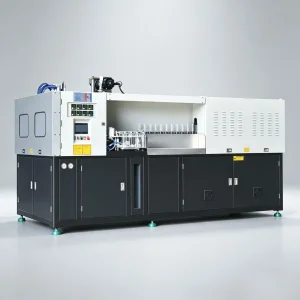
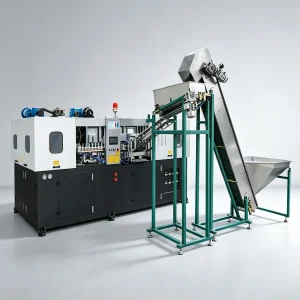
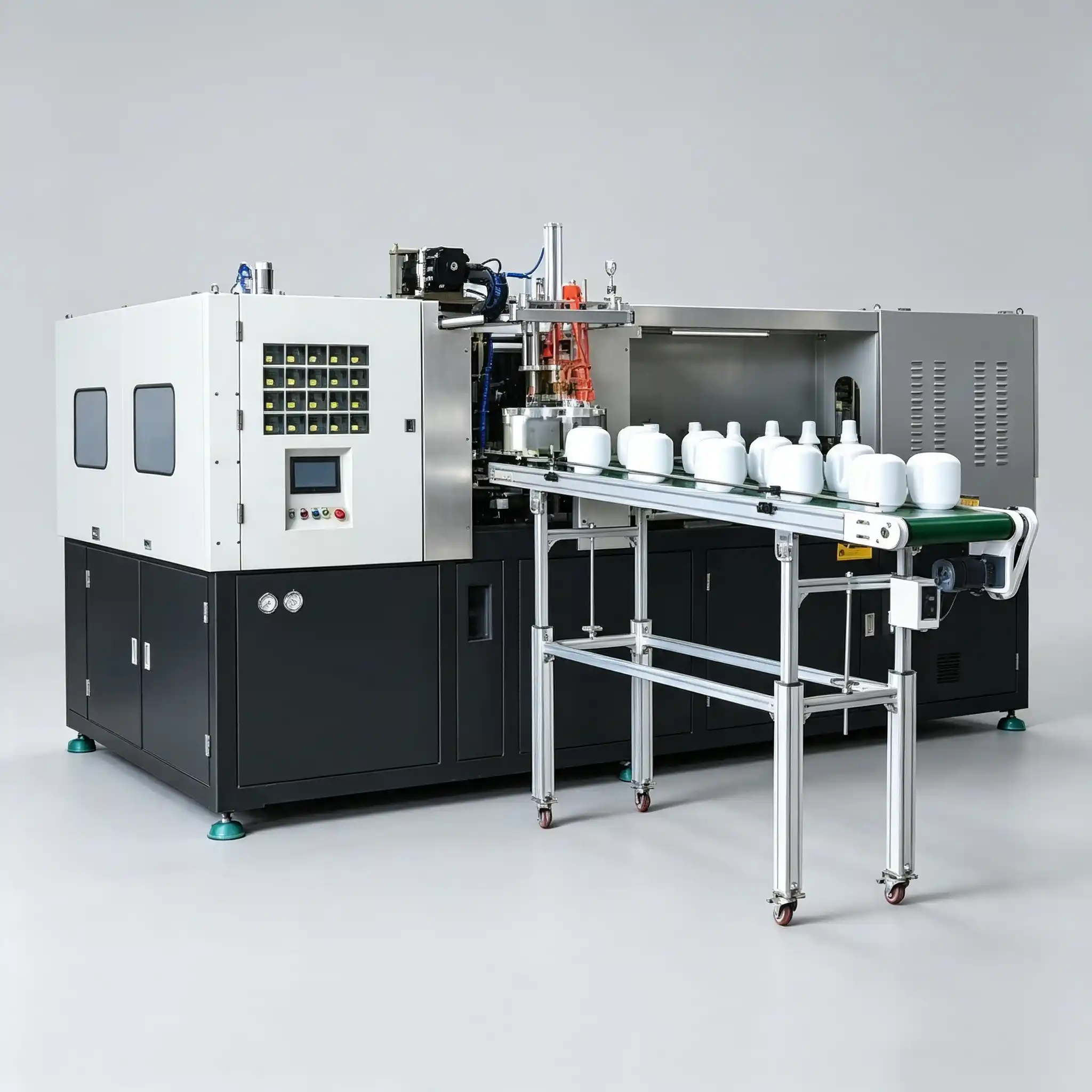
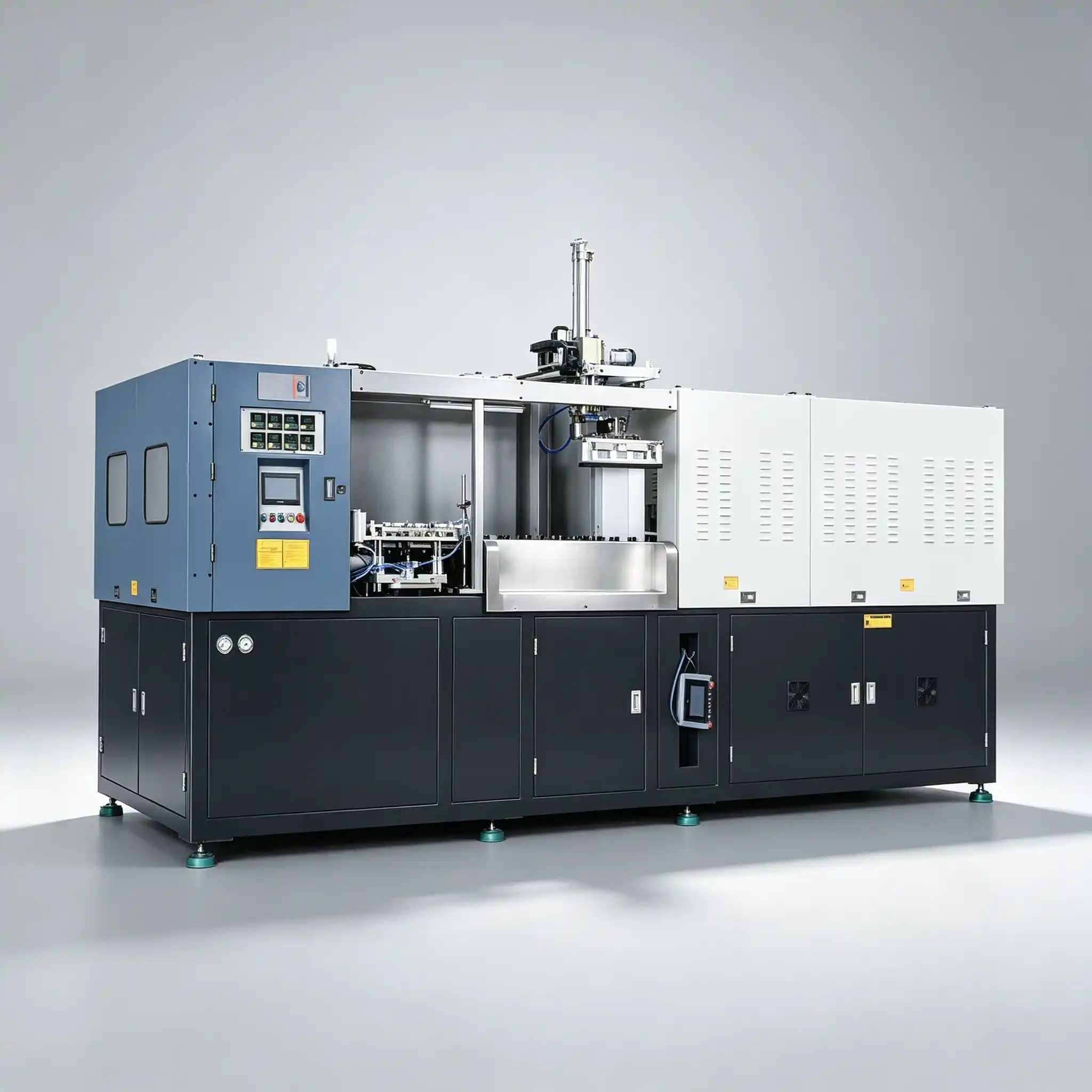
This food jar blow molding machine series covers 9 models ranging from a single-cavity 1,000ml jar machine through to a 2-cavity system capable of producing 15,000ml bulk storage containers. Theoretical output runs from 600 bph on the large-format single-cavity FS model up to 4,600 bph on the 4-cavity ES-4C100 — the right model depends entirely on your container volume and daily production target.
The standout technical capability in this series is the incision-free wide-mouth can blowing system — the first of its kind domestically. It produces wide-mouth can formats up to 190mm body diameter in a single blow operation, eliminating the trimming step that standard wide-mouth can machines require. For food-grade production lines, removing that secondary operation means fewer contamination points and lower labor cost per unit.
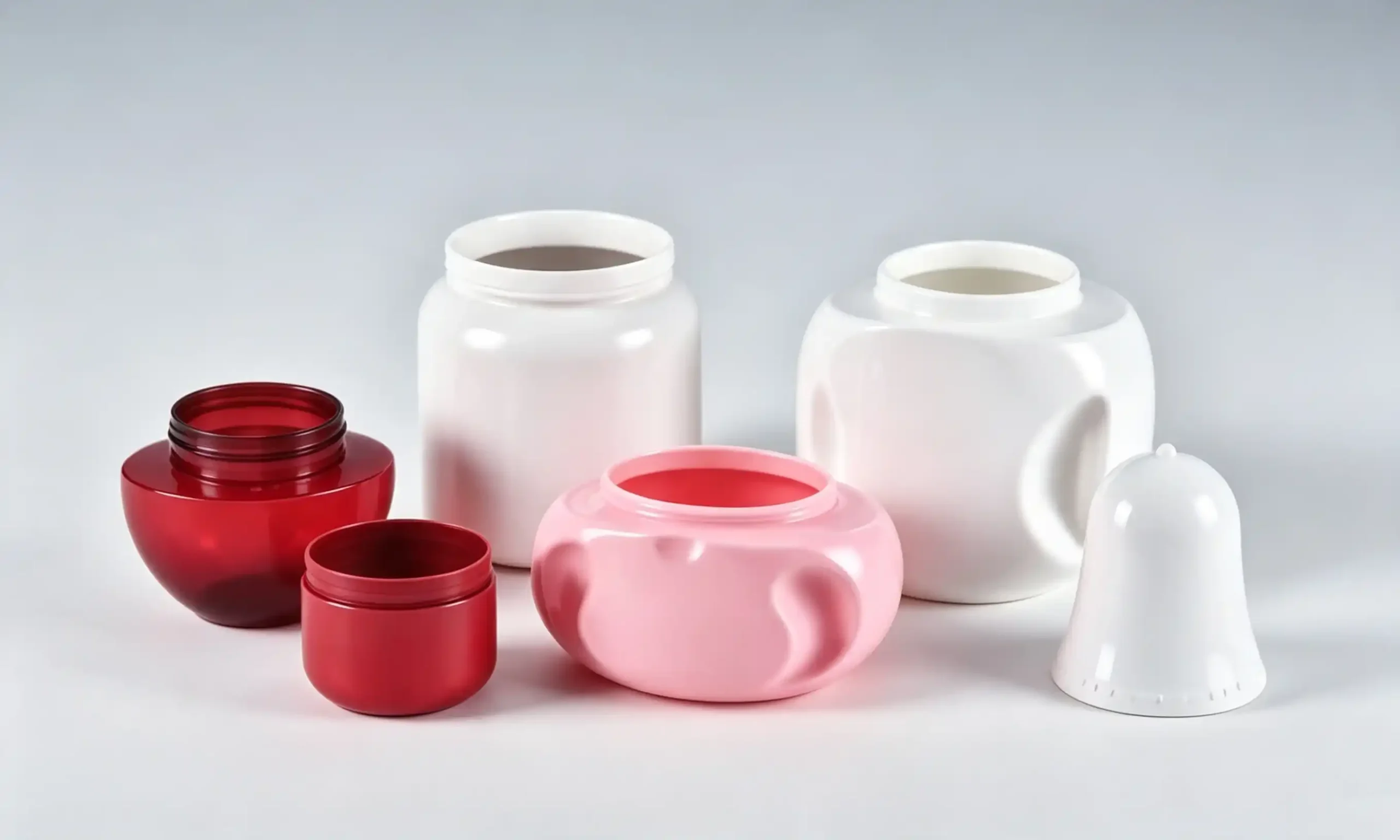
Typical output: PET wide-mouth food jars, condiment containers, edible oil cans, bulk storage containers — 1,000ml to 15,000ml
Container Types This Series Handles
Dried Food Jars
Nuts, cereals, dried fruit, snack products. 1,000ml to 5,000ml in 2-cavity production, neck diameters 98–138mm.
Condiment Jars
Sauce, paste, seasoning. Tight neck finish accuracy required for airtight sealing. 800ml to 2,500ml in 4-cavity configurations.
Wide-Mouth Oil Cans
Incision-free system. Body diameter up to 190mm. FS-1CG220 model, 5,000ml capacity, 600 bph.
Bulk Storage Containers
Up to 15,000ml in the ES-2C260. Suits institutional catering, food processing input, and bulk retail packaging.

Incision-Free Wide-Mouth Can Blowing: Why It Matters in Food Production
Standard wide-mouth can machines require a post-blow trimming step to open the can mouth to its final diameter. That means a secondary operation, flash waste, and an exposed container interior during handling — a problem when your line runs to food hygiene standards.
The incision-free system here forms the complete can mouth in the mold. The neck finish — sealing surface included — exits the machine dimensionally accurate and ready for closure application. No trimming station needed. No secondary labor cost. No additional contamination point in the process.
The FS-1CG220 model achieves body diameters up to 190mm and neck diameters up to 138mm in this format. Container height up to 330mm. At 600 bph for a 5,000ml container, this is the right configuration for specialty food packaging operations where dimensional quality and hygiene consistency matter more than raw throughput.
Full Technical Specifications — 9 Models
Each card shows the complete parameter set for one model. Scroll or expand to compare.
All data from factory technical documentation. Output figures are theoretical maximums under standard operating conditions.
How to Match the Right Model to Your Production Requirements
Need maximum throughput on small jars?
ES-4C100 at 4,600 bph is the answer — 4 cavities, 800ml max, 68mm neck. Best for mainstream condiment and snack jar formats at high daily volumes.
Running large-format 5L food jars?
ES-2C150 (2,500ml, 1,800 bph) or ES-2C200 (5,000ml, 1,600 bph) depending on exact volume. Note the ES-2C200 requires 91.4 ltr/min cooling water — check your chiller capacity.
Wide-mouth can format with 130–190mm body?
FS-1CG220 is the only model in the range with incision-free production at 190mm body diameter. 600 bph single cavity — suited for specialty production, not mass volume.
Institutional bulk containers above 5L?
ES-2C260 handles up to 15,000ml. Plan your compressed air system carefully — this model needs 16,000 ltr/min high-pressure air, which requires a dedicated compressor setup.
Domande frequenti
What materials can this series process — is it PET only?
The ES platform models are designed primarily for PET stretch blow molding, which covers the majority of food jar and wide-mouth can applications. If your product requires PP or HDPE — for example, wide-mouth containers that need to withstand repeated sterilization — that would require a different machine platform. Contact the engineering team with your material spec and they will advise on compatibility before you commit to a model.
Can one machine run multiple jar sizes without buying a new unit?
Yes, within the mechanical limits of the model. Switching between jar sizes requires a mold change and a temperature profile adjustment on the control panel. The machine itself does not need to be replaced. For example, an ES-4C130 running 1,500ml jars can be converted to 800ml jars with a mold swap — provided the new mold fits within the clamping stroke and cavity spacing of that model. Mold interchangeability should be confirmed with the engineering team at the time of order.
What is the minimum compressed air supply required for the 4-cavity models?
The 4-cavity ES models (ES-4C100, ES-4C130, ES-4C150) require high-pressure air consumption between 4,000 and 6,500 ltr/min depending on the model, at a blowing pressure of 30–35 kg/cm². This typically requires a dedicated high-pressure air compressor rated at 30–40 bar. Low-pressure air consumption for these models runs at 800 ltr/min, which is standard. If your facility already has a compressor setup for blow molding, check the flow rate against the specific model spec before ordering.
How long does mold changeover take between different jar formats?
With an experienced operator, a mold changeover typically takes 1.5 to 3 hours depending on the number of cavities and the complexity of the mold assembly. The preform holder may also need to be swapped if the new jar format uses a different neck finish. If you are running multiple SKUs on a single machine, it is worth discussing the changeover sequence with the engineering team at installation so the machine setup is optimized for your specific product mix.
Does the FS-1CG220 incision-free model require a different preform than standard ES models?
Yes. Wide-mouth can formats require a preform with a significantly larger neck finish diameter — in this case up to 138mm — which is a non-standard preform geometry. These preforms are not available from general commercial preform suppliers and typically need to be sourced from a specialist or produced in-house via injection molding. The engineering team can advise on preform specifications and, if needed, connect you with preform tooling suppliers when the machine order is placed.
What after-sales support is available for overseas buyers?
Standard after-sales support includes remote diagnostic assistance, spare parts supply, and installation guidance documentation. For larger line installations, on-site engineer dispatch is available — lead time and cost depend on destination country. The machines have been exported to Malaysia, Indonesia, Russia, Peru, and more than a dozen other countries, so the international logistics and commissioning process is established. Spare parts for all models in the series are held in stock at the manufacturing facility.
Get a Configuration Quote for Your Food Jar Line
Tell us your container volume, neck diameter, target daily output, and material — and receive a model recommendation from the 9-model range above, with pricing and mold design consultation.