Descrizione
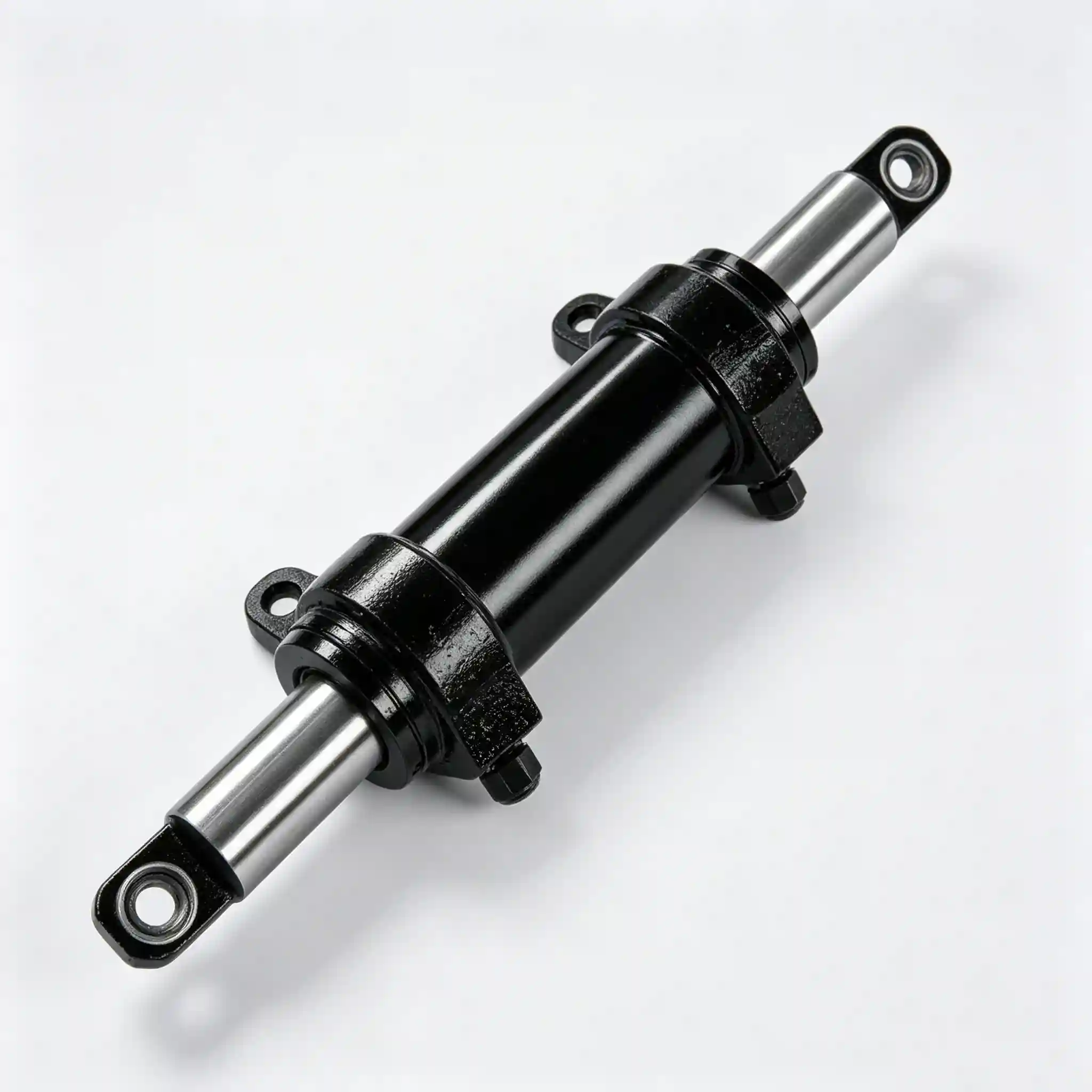
HCYY11112002 Forklift Lifting Cylinder — Telescopic Hydraulic Cylinder for Multi-Stage Mast Free-Lift Systems
The HCYY11112002 forklift lifting cylinder is purpose-designed for multi-stage mast assemblies where maximum lift height must be achieved within strict overhead clearance constraints. Used as the inner free-lift cylinder in triple-stage and quad-stage mast configurations, this telescopic hydraulic cylinder enables the carriage to travel through its full free-lift range before the outer stages begin to extend — a critical requirement in low-headroom warehouses, refrigerated stores, and double-deep racking systems where height utilisation directly affects storage density.
- Telescopic multi-stage plunger design for maximum stroke in minimum collapsed length
- Heavy-duty chrome-plated inner plungers with anti-rotation groove
- Rated working pressure: 20 MPa / 200 bar
- Integrated flow divider port for synchronised multi-cylinder mast systems
- All plunger stages independently pressure-tested before assembly
Telescopic Forklift Lifting Cylinder for Triple-Stage Mast: Engineering Principles and Design Rationale
To understand why the HCYY11112002 exists as a distinct product from the standard single-stage lift cylinder, it helps to understand how a multi-stage forklift mast actually works. In a three-stage mast, the free-lift phase raises the carriage from the floor to approximately the height of the inner mast crossbar — all without any visible mast extension above the operator’s line of sight. Only after the carriage reaches the end of its free-lift travel does hydraulic pressure build sufficiently to extend the outer mast stages upward.
This sequencing is governed by the relative piston areas of the free-lift cylinder and the outer lift cylinders. The free-lift cylinder — which is what the HCYY11112002 serves — has a smaller bore and therefore requires less oil volume to stroke, allowing it to move first at lower system pressure. Once the free-lift cylinder is fully extended, system pressure rises and the larger-bore outer cylinders begin to extend. This passive sequencing requires no electronic control — it is a consequence of the hydraulic circuit design — but it demands that the free-lift cylinder bore and stroke are precisely matched to the mast geometry.
The HCYY11112002 uses a telescopic plunger arrangement to deliver the required stroke within the physical space available inside the inner mast channel. Telescopic cylinders are inherently more mechanically complex than simple piston cylinders — each plunger stage requires its own seal stack and guide ring — and they are more sensitive to oil cleanliness because any contamination that bypasses the outer wiper enters the innermost stages where it is trapped and can score the plunger surface. This is why our production process includes a dedicated internal flush cycle before final assembly, and why we recommend 3-micron filtration for any forklift system using the HCYY11112002.
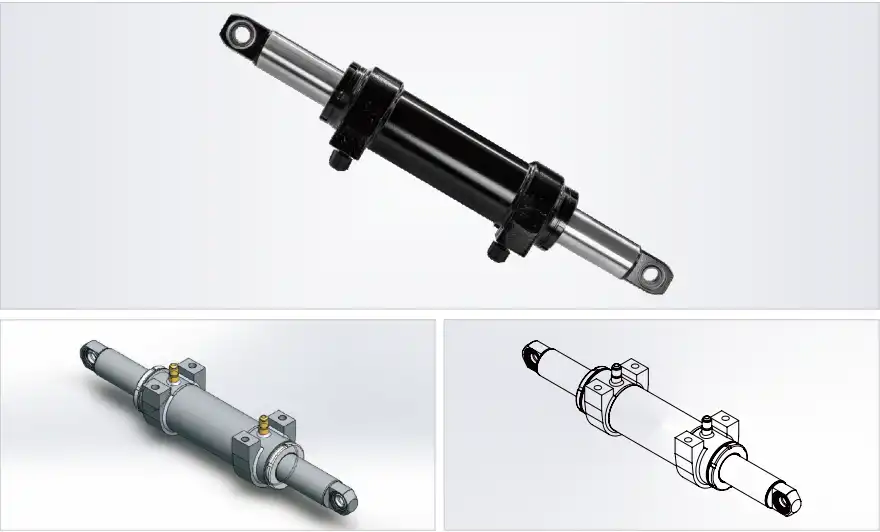
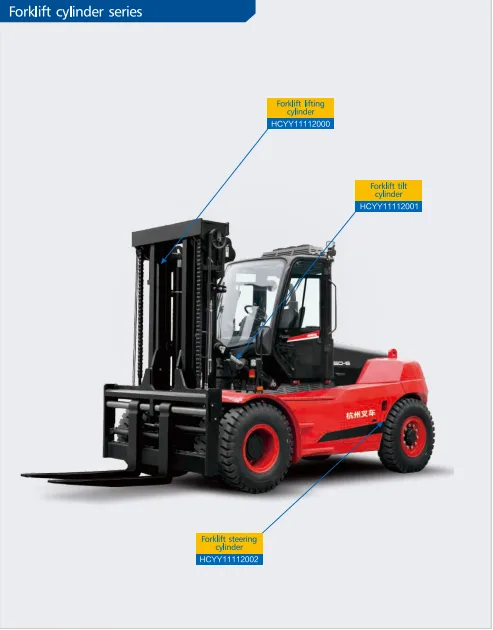
Fig. 1 — HCYY11112002 telescopic forklift lifting cylinder — assembly detail
Heavy-Duty Forklift Cylinder Replacement for 3.5–5 Ton Capacity Trucks: Full Specification Table
The HCYY11112002 is designed to operate across the full range of 3.5–5 tonne class counterbalance forklifts that employ triple-stage and quad-stage mast systems. The parameters below represent standard stock configurations; custom bore, stroke, and port options are available with a 15–20 working day engineering lead time.
| Parameter | Value / Specification | Engineering Note |
|---|---|---|
| Model | HCYY11112002 | Telescopic free-lift cylinder |
| Cylinder Type | Single-acting, multi-stage telescopic plunger | Gravity return via carriage weight |
| Rated Working Pressure | 20 MPa (200 bar) | Each stage proof-tested independently |
| Outer Cylinder Barrel | ST52 seamless honed tube | Ra ≤ 0.4 µm bore finish |
| Inner Plungers | 45# steel, hard chrome ≥ 30 µm | Thicker chrome for innermost stage |
| Anti-Rotation Feature | Machined groove on outer plunger | Prevents rotational misalignment during extension |
| Seal Stack per Stage | PU lip seal + PTFE guide ring + polyurethane wiper | Triple-layer contamination barrier |
| Flow Divider Port | Integrated on base cap | For twin-cylinder synchronised mast systems |
| Surface Treatment (barrel) | Phosphating + epoxy primer | Salt-spray tested ≥ 240 h |
| Operating Temperature | −20 °C to +80 °C (NBR/PU); −30 °C to +120 °C (FKM option) | Cold-store compatible with FKM seals |
| Hydraulic Fluid | ISO VG 32–68 mineral oil; HETG biodegradable | 3-micron return filtration recommended |
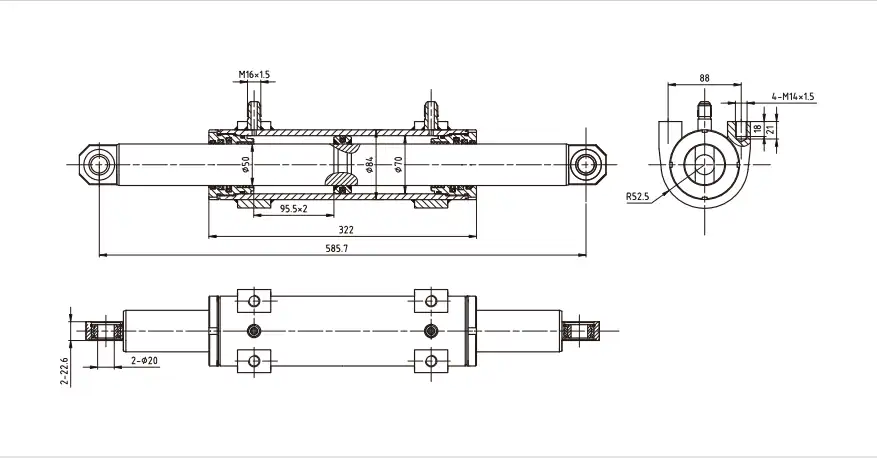
Fig. 2 — HCYY11112002 full dimensional drawing with stage-by-stage stroke breakdown
Free Lift Hydraulic Cylinder for Forklift Narrow-Aisle Operation: Sector Applications and Performance Requirements
The free-lift cylinder concept was developed specifically to address the operational need to raise loads to working height — typically 1,200–1,500 mm — without raising the top of the mast above the overhead beam height. This is not merely a convenience feature; in many facilities, the ability to operate under low overhead structure is a fundamental requirement of the material handling workflow.
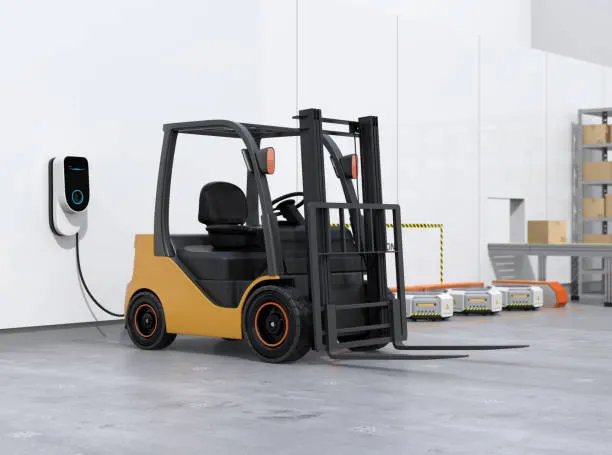
Cold-storage and refrigerated distribution: Refrigerated warehouses operate at temperatures as low as −25 °C. Standard NBR seals become brittle and lose pliability below −10 °C, causing immediate internal bypass and mast drift. The HCYY11112002 with FKM seal option remains fully functional at −30 °C, making it the appropriate specification for cold-chain logistics operations. Seal material selection should be confirmed at the time of ordering for these environments.
High-bay automated storage and retrieval (AS/RS): Modern automated warehouses integrate reach trucks and narrow-aisle forklifts with WMS control systems that monitor lift height and carriage position. The smooth, consistent travel speed of the HCYY11112002 across its free-lift range is important for height sensor calibration and accurate load placement in double-deep racking without mechanical surprises that could trigger safety stops.
Container stuffing and port logistics: Container interiors have a fixed 2,290 mm internal height, and operators working inside containers must raise and lower loads within this envelope repeatedly throughout a shift. The free-lift cylinder allows the forklift to manoeuvre and stack within the container without the mast contacting the container roof — a particularly important consideration when working with triple-stage masts in standard 20-foot containers.
Manufacturing and assembly lines: Forklifts serving component delivery to assembly lines typically operate in confined plant corridors with structural column overhangs and conveyor overpasses. The free-lift capability of the HCYY11112002 allows operators to service these tight locations safely without restricting the available lift height — which would require slower, more complex manoeuvring.
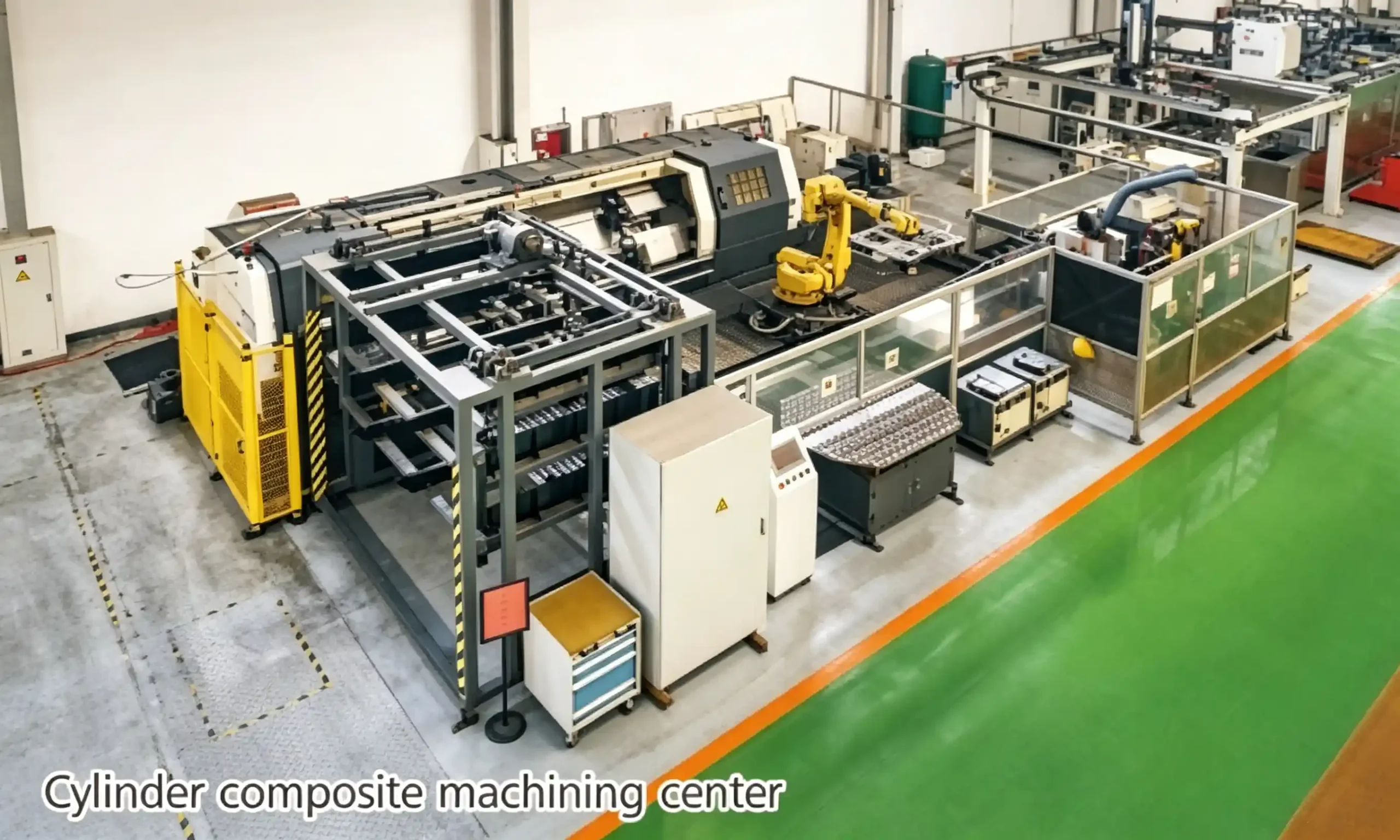
Fig. 3 — Telescopic lifting cylinder precision assembly and staged pressure testing at our facility
Quality Assurance for Telescopic Forklift Hydraulic Cylinders: Our Manufacturing and Testing Protocol
Telescopic cylinders are the most mechanically complex products in the forklift cylinder product family. Producing them consistently requires a controlled manufacturing sequence that cannot be shortcut without compromising the end product. Below is an overview of the production and QC steps applied to every HCYY11112002 unit.
- Material incoming inspection: All ST52 tube and 45# rod stock is subject to hardness testing and dimensional check upon receipt. Batch certificates are filed by heat number and linked to the production work order, providing full traceability from raw material to finished unit.
- CNC honing of all inner surfaces: The bore of the outer barrel and the inner surface of each guide band are honed to Ra ≤ 0.4 µm before assembly. Surface finish is measured with a contact profilometer and recorded. Any tube falling outside specification is quarantined and not used in production.
- Chrome thickness verification on all plungers: Every chrome-plated plunger is measured at three axial positions and four circumferential positions using an eddy-current gauge. Minimum chrome thickness on the HCYY11112002 inner plunger is 30 µm — 5 µm greater than the minimum for single-stage cylinders — to account for the additional abrasion from guide ring contact at each telescopic stage.
- Stage-by-stage pressure test: Before final assembly, each telescopic stage is individually pressure-tested at 1.5× rated working pressure (30 MPa) for a minimum soak period. This identifies seal installation errors or bore defects at the stage level, before they are buried inside the assembled unit.
- Internal flush cycle: After stage assembly and before external pressure testing, the complete cylinder is flushed with clean filtered oil at elevated temperature to remove any residual honing swarf, assembly lubricant, or seal flash. The flushed oil is sampled and particle-counted to verify cleanliness level before the cylinder is accepted.
- Full-stroke operational test: Each unit is cycled through five complete extension and retraction strokes on a test bench under rated pressure and measured flow rate. Extension speed consistency across cycles is recorded; any unit showing mid-stroke hesitation or uneven speed is rejected for re-inspection.

Fig. 4 — Precision lifting cylinder integration in automated material handling systems
Service Life and Maintenance Planning for Forklift Inner Mast Telescopic Cylinders
A well-maintained HCYY11112002 can be expected to deliver 10,000–15,000 operating hours of reliable service in a clean-oil environment with proper filtration. This service life expectation is based on the design life of the seal materials, the chrome layer thickness, and the bore surface finish tolerance — all of which degrade at predictable rates when the oil cleanliness and temperature targets are maintained.
The single most important maintenance action for a telescopic cylinder is oil filtration management. Particles above 10 microns in diameter cause abrasive wear on the plunger surface and seal lips at a rate that is non-linear: doubling particle concentration reduces seal life by a factor of four or more. Many forklift operators neglect return-line filter replacement because the filters are not visible during routine daily checks. Scheduling filter element replacement at every 500 hours of operation — independent of oil change intervals — is the most cost-effective way to extend cylinder service life.
Seal replacement intervals: In clean-oil environments (ISO 4406 cleanliness code 16/14/11 or better), the seal kit in the HCYY11112002 is designed for a minimum of 8,000 operating hours before replacement is required. In contaminated or high-cycle environments, seal inspection at 2,000-hour intervals is recommended, with replacement whenever dynamic seal lips show visible wear or hardening.
Plunger surface inspection: Inspect all plunger surfaces for rust pitting, scoring, and chrome flaking at each 500-hour service. Telescopic plungers are more sensitive to surface damage than single-stage rods because any surface defect on an intermediate plunger stage will contact both the seal above it and the bore below it, causing wear in two places simultaneously. A pitted intermediate plunger should be re-chromed or the cylinder sent for overhaul before returning to service.
Replacement seal kits for the HCYY11112002 are available as a complete stage-by-stage kit, itemised so that maintenance teams can replace only the seal set for a specific stage that has failed rather than the full complement. This approach reduces parts cost for planned maintenance while ensuring the correct seal part numbers are used at each stage.
Sourcing Forklift Lifting Cylinders for Fleet Maintenance: Procurement Strategy and Lead Time Planning
Telescopic lifting cylinders are not commodity parts. Their manufacturing complexity means that lead time for non-stocked configurations is significantly longer than for standard single-stage cylinders — typically 15–20 working days for custom stroke variants, compared to 3–5 days for stocked configurations. For fleet maintenance managers, this lead time has direct operational implications: a forklift with a failed lifting cylinder is an unproductive asset, and if the replacement cylinder is not available in the spares store, the machine downtime period extends to match the procurement lead time.
The solution adopted by most professional fleet maintenance operations is to hold one or two HCYY11112002 units as rotatable spares. A rotatable spare is a refurbished or new cylinder that is installed when a field unit fails, allowing the failed unit to be sent for overhaul without machine downtime. The total cost of this approach — spare cylinder capital cost plus overhaul cost — is almost always lower than the cost of unplanned machine downtime at full fleet operating rates, particularly when the forklift is serving a production line or a time-sensitive fulfilment operation.
For operators who are evaluating the HCYY11112002 as a replacement for a cylinder from a specific forklift OEM, we offer a dimensional comparison service. Send us the OEM part number and, where possible, a photo of the cylinder nameplate, and our engineering team will identify the matching HCYY11112002 configuration or advise on any modifications required. We maintain a cross-reference database covering the most common counterbalance forklift brands operating triple-stage and quad-stage mast systems, which allows us to confirm interchangeability rapidly in most cases.
Distributor partners who stock the HCYY11112002 benefit from our minimum-order flexibility. Unlike some manufacturers who require large minimum order quantities for telescopic cylinder types, we accept orders from single units upward at standard catalogue pricing, with volume discount tiers available for orders of ten units or more. This flexibility is designed to support distributors who serve mixed-brand fleets and cannot always predict which cylinder configuration will be required next. Contact us to discuss a stock-holding agreement that matches your customer base and warehouse capacity.
Technical documentation available for the HCYY11112002 includes the full dimensional drawing with stage-by-stage stroke data, the hydraulic schematic showing port positions and flow path, the seal kit component list with seal manufacturer part numbers, and the factory acceptance test report template. All documentation is available in English and can be provided in other languages for key markets upon request. Request access to the technical documentation portal when submitting your enquiry, and our sales team will set up access within one business day.
Request a Technical Drawing or Bulk Quote for HCYY11112002
The HCYY11112002 telescopic lifting cylinder is available in standard configuration for immediate quotation, or in custom stroke and bore variants for your specific mast geometry. Provide your forklift make, model, and mast stage configuration, and our engineering team will return a confirmation of fit, a full dimensional drawing, and a competitive price — typically within one business day. Distributor and fleet-procurement pricing is available on request.