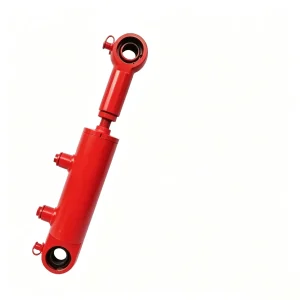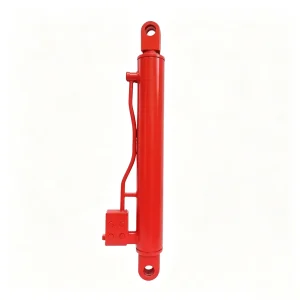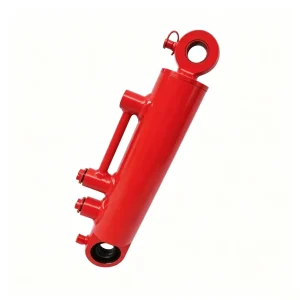

Сипаттама
How the 95 mm Bore and 2040 mm Stroke of the Ejector Cylinder Drive Complete Refuse Body Evacuation Under Full Load
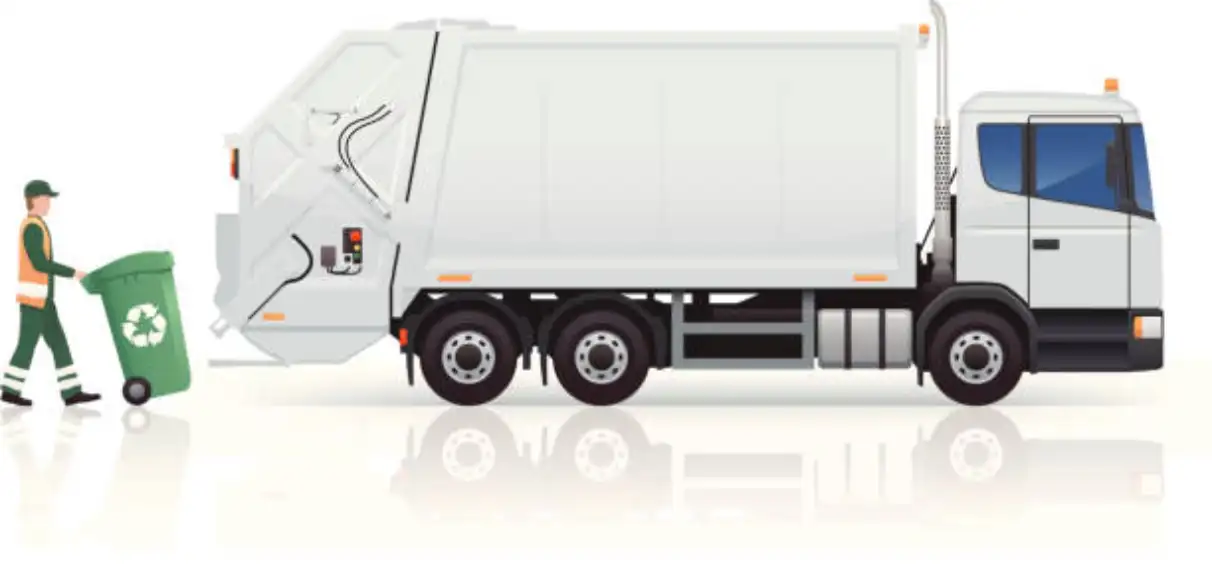
The ejector-body refuse truck is a fundamentally different discharge architecture compared to the conventional tip-body design. Rather than tilting the entire body on a sub-frame pivot — which requires stable, level ground and a vehicle rear clearance zone that is often unavailable at urban transfer stations — the ejector body uses a hydraulically driven scraper panel that travels the full internal length of the body, pushing all compacted waste out through the open rear door in a controlled, ground-level discharge. The ejector cylinder is the actuator that drives this panel through its complete traverse, and its specifications are defined by the geometry and load requirements of the panel’s full travel.
A 95 mm bore at the standard refuse vehicle system pressure of 200 bar generates approximately 142 kN of push force. This is the engineering baseline for the ejector cylinder bore selection. The scraper panel’s required drive force depends on three compounding factors: the weight of the compacted waste payload multiplied by the body floor friction coefficient, the compaction pressure remaining in the waste mass that acts on the panel face, and the seal friction between the panel edges and the body side walls. On a 10 cubic meter body loaded with 6,000 kg of municipal solid waste compacted to a density of 450–550 kg/m³, the combined scraper drive force typically ranges from 80 to 130 kN depending on waste composition, moisture content, and compaction ratio. The 95 mm bore provides meaningful force reserve above this range, ensuring full ejection even when waste compaction is heavier than average or when the body floor has developed surface roughness from wear that increases friction.
The 2040 mm stroke is essentially the internal usable length of the refuse body minus the scraper panel thickness and mechanical clearances at each travel extreme. This is not a dimension that can be adjusted arbitrarily — it must match the body’s internal geometry exactly. A cylinder with a shorter stroke leaves waste material at the front of the body that requires manual cleaning before the next collection cycle. A cylinder with a longer stroke causes the scraper panel to overtravel and impact the rear door frame structure, generating damaging end-of-travel impact loads that quickly destroy the panel guide rollers, body side seals, and cylinder rod-end connection fittings. The 815 mm C-C mounting distance positions the cylinder anchor point on the body front wall at the correct offset to maintain consistent lateral alignment of the scraper panel throughout its full 2040 mm travel.
Long-Stroke Refuse Truck Ejector Cylinder Construction: Rod Buckling Analysis, Seal Endurance, and Body Contamination Management
A 2040 mm stroke on a 40 mm rod raises an immediate engineering concern: column buckling. The Euler critical load for a 40 mm solid steel rod with an effective unsupported length of 2040 mm — treating both end connections as pin-pin — is calculated as approximately 155 kN, based on a rod cross-sectional moment of inertia of π × 40⁴ / 64 = 125,660 mm⁴ and a steel elastic modulus of 210 GPa. With a working force up to 142 kN at maximum system pressure, the theoretical buckling safety factor is approximately 1.09 — which sounds marginal but is acceptable because the effective unsupported length in a scraper drive cylinder is significantly shorter than the full stroke. The rod is guided by the cylinder’s front seal gland throughout its travel, and the scraper panel connection at the rod end provides additional lateral support. The effective unsupported length is therefore the exposed rod length minus the engagement depth in the gland and the connection length at the panel — typically reducing the unsupported length to 1,400–1,600 mm and raising the practical buckling safety factor to 1.8–2.2×, which is within acceptable limits for this application.
The internal environment of a refuse body ejector cylinder is uniquely challenging. The rod extends into the refuse body interior during ejection, where it is exposed to direct contact with compacted waste material, organic leachate, and fine abrasive particles from broken glass, ceramics, and construction waste that are common in municipal solid waste streams. The rod wiper seal must handle this contamination continuously — not just occasional exposure as in an outdoor-mounted cylinder. The wiper seal on this cylinder uses a heavy-duty PTFE-coated scraper ring ahead of the polyurethane wiper lip, providing two sequential contamination removal stages. The PTFE scraper handles hard, abrasive particles that would cut or embed in a standard polyurethane wiper, and the polyurethane wiper removes the organic film and moisture that the PTFE ring passes.
The 40 mm rod chrome plating specification is 30–35 μm — significantly heavier than the 20–25 μm used on protected outdoor cylinders — specifically to accommodate the abrasive contact with refuse material in the body interior. The chrome is applied over an induction-hardened substrate achieving 55–62 HRC surface hardness, providing the hardness differential needed for the PTFE scraper and polyurethane wiper to remove contamination from the rod surface without abrading through the chrome layer in the normal service life of the seal kit. Rod surface finish is maintained at Ra 0.2–0.4 μm after chrome plating and pre-inspection polishing.
Sourcing and Specifying Long-Stroke Ejector Cylinders for Refuse Body Manufacturers and Fleet Replacement Programs
For refuse body manufacturers, the ejector cylinder is the single most significant hydraulic component in the vehicle specification from a cost and performance perspective. Its bore, stroke, and mounting dimensions are determined by the body design before the cylinder is specified — meaning the cylinder supplier must work from the body’s internal geometry, not the other way around. We engage early in the design process for new body programs, providing cylinder sizing calculations, rod buckling analysis, and seal system recommendations based on the body’s target waste density range and discharge cycle frequency before committing to a production design.
For fleet replacement, the ejector cylinder is a lower-frequency but higher-cost replacement event compared to smaller refuse vehicle cylinders. Its large bore, long rod, and specialized internal seal system make it a significant repair investment. Fleet managers should inspect the ejector cylinder at every major service interval — checking rod surface condition, seal gland torque retention, and rod-end connection wear — and plan a proactive replacement at 4,000–6,000 operating hours or at the first sign of rod surface degradation, rather than waiting for a full seal failure that may contaminate the hydraulic reservoir with ingested waste particles.
We supply the ejector cylinder both as a complete assembly and as a rod-and-seal rebuild kit, allowing operations with sufficient workshop capability to replace the rod and seal package while reusing the serviceable barrel. This option is particularly cost-effective when the barrel shows no internal wear or scoring — a common situation when rod and seal replacement has been performed at the correct service interval. Complete cylinder exchange programs — where a reconditioned unit is shipped before the worn unit is returned — are available for fleet operations that cannot tolerate vehicle downtime during cylinder repair.
- Ejector-body refuse trucks — full-body scraper panel traverse drive cylinder
- Stationary refuse compactor ejector ram drive — fixed installation
- Transfer station compactor body ejection systems
- Recyclable material baler ejection cylinders — paper, cardboard, and plastic
- Industrial waste container liner ejection systems
The 40 mm rod on a 95 mm bore gives a rod-to-bore ratio of 0.42, which is lower than many general industrial cylinders. For an ejector drive cylinder, this is intentional. The primary load direction is push (extension), where the bore area governs force generation, not the rod area. The retraction force — pulling the empty scraper panel back to the start position — requires far less force than extension, so a smaller rod on the annular side is acceptable. The 40 mm rod does require careful buckling management at full 2040 mm extension, which is addressed through proper guide gland design and rod end support at the panel connection.
Yes. The 2040 mm stroke is our standard configuration for the most common ejector body lengths, but we manufacture ejector cylinders with strokes from 1,600 mm to 2,600 mm for bodies ranging from small 6-cubic-meter urban collection units to large 22-cubic-meter transfer vehicle bodies. Provide your body’s internal panel travel measurement and we will quote the corresponding cylinder configuration, including an updated rod buckling analysis for the specific stroke length.
The rod uses a two-stage seal arrangement: a PTFE-coated hard scraper ring removes abrasive particles from the rod surface before they reach the polyurethane wiper lip. The chrome plating is specified at 30–35 μm — heavier than standard outdoor cylinders — to withstand abrasive contact with refuse material. In some body designs, a rod shield tube is also fitted to protect the exposed rod section from direct waste contact during the retraction phase.
Under normal municipal solid waste ejection duty — 2–4 full ejection cycles per day — plan a rod and seal inspection at 2,000 operating hours and a proactive seal rebuild or full replacement at 4,000–6,000 operating hours. Operations handling abrasive waste streams (construction and demolition debris, glass-heavy streams) should shorten this interval by 20–30%. Early replacement at the first sign of rod chrome degradation prevents abrasive wear particles from contaminating the barrel bore and requiring a more expensive complete cylinder replacement.
Source the Ejector Cylinder for Your Refuse Body Build or Fleet Program
We support OEM body manufacturers with early-design cylinder sizing and custom stroke configurations, and fleet operations with replacement supply, rod rebuild kits, and exchange programs.