Beschrijving
Mast Control System
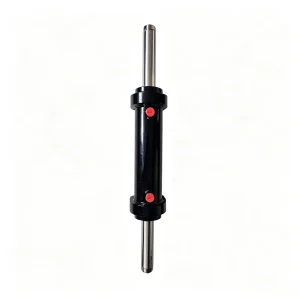
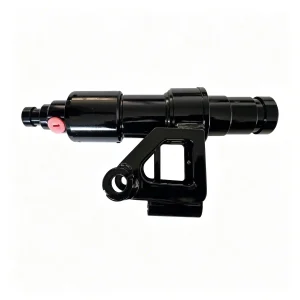
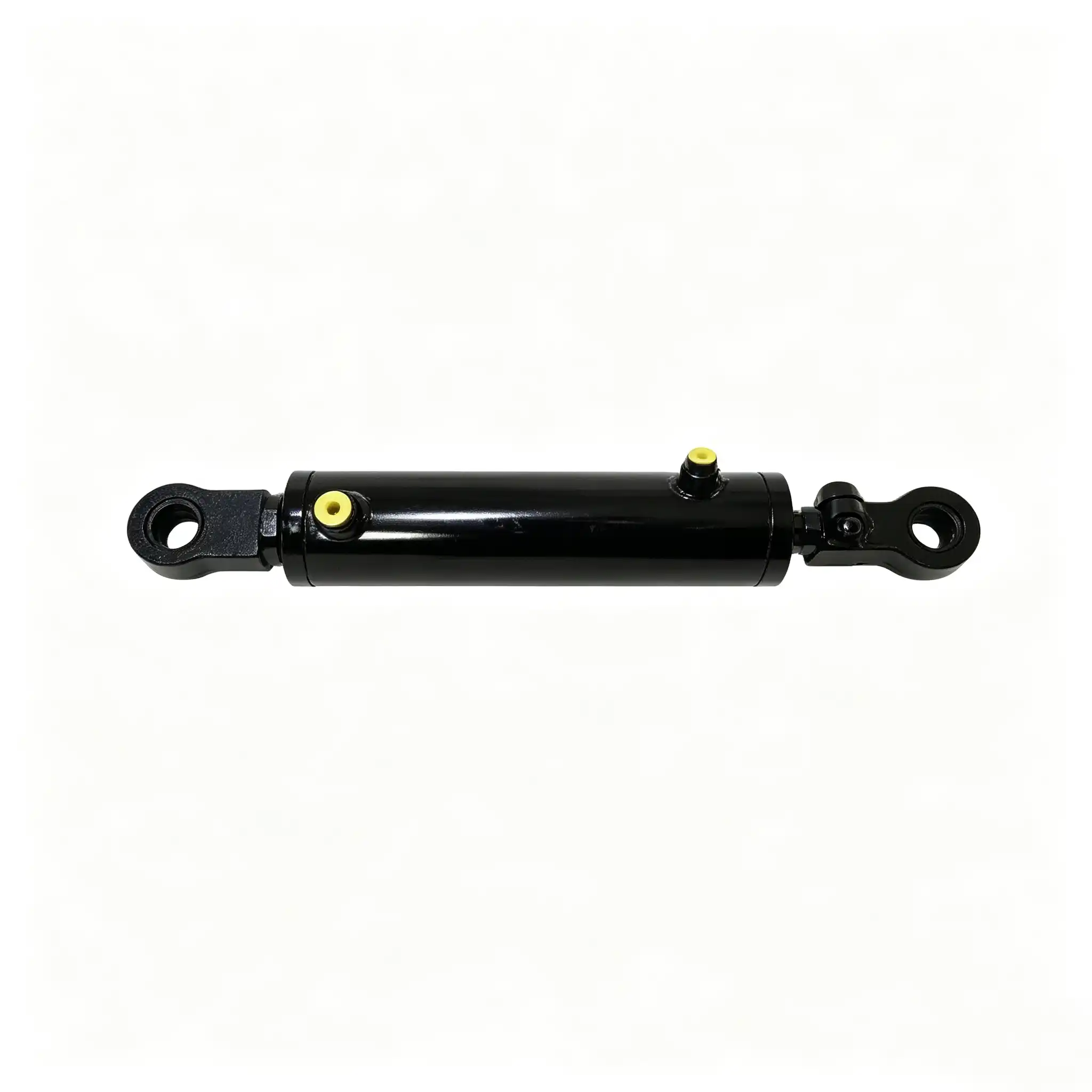
Forklift Tilt Cylinder — 70 mm Bore, 167 mm Stroke for Precise Mast Angle Control Under Full Load
Rod: 32 mm
Stroke: 167 mm
Mounting: 455 mm
The forklift tilt cylinder governs one of the most operationally critical movements in a counterbalance forklift: the forward and backward tilt of the mast assembly relative to the chassis. With a 70 mm bore generating substantial hydraulic force, a precisely controlled 167 mm stroke, and a 455 mm center-to-center mounting distance that positions the cylinder optimally within the chassis-to-mast pivot geometry, this unit delivers smooth, leak-free tilt control across the full duty cycle of high-throughput warehouse and logistics operations.
Technical Specifications
| Cylinder Type | Double-Acting Tilt Cylinder |
| Bore Diameter | 70 mm |
| Rod Diameter | 32 mm |
| Stroke Length | 167 mm |
| Installation Distance (C-C) | 455 mm |
| Function | Mast Forward / Backward Tilt Control |
How Forklift Tilt Cylinder Bore, Stroke, and Mounting Distance Control Mast Angle and Load Stability
The tilt cylinder occupies a unique functional position in the forklift’s hydraulic system: unlike the lift cylinder, which operates against gravity in a single primary direction, the tilt cylinder must generate controlled force in both extension and retraction against the significant moment arm created by the combined weight of the mast assembly, the fork carriage, and the lifted payload. On a 3-ton counterbalance forklift with a standard mast weight of 400–600 kg and a full payload of 3,000 kg centered at 500 mm load center, the tilt cylinder must resist a mast tilting moment that can exceed 15,000 N·m during forward tilt under full load.
A 70 mm bore at 175 bar system pressure generates approximately 67 kN of hydraulic force. With a moment arm from the chassis tilt pivot to the cylinder rod pin of typically 200–250 mm, this translates to a resistive torque of 13,400–16,750 N·m — correctly matched to the mast tilting moment described above. This balance is not accidental: the bore diameter is specifically selected to provide adequate force with sufficient margin for seal pressure drop, system temperature variation, and hydraulic line pressure losses, while avoiding an oversized cylinder that would make fine tilt control sluggish and difficult for operators to modulate accurately.
The 167 mm stroke produces the mast tilt angle range mandated by ISO 3691-1 and common OEM specifications: typically 5–6 degrees forward tilt and 10–12 degrees backward tilt. Forward tilt is used for low-level pallet placement and during travel on downhill grades; backward tilt secures the load against the backrest during transport and is the default carry position for safety compliance. The 455 mm C-C mounting distance positions the cylinder at the correct geometric relationship to the mast pivot point to achieve these angles without binding at the end-of-travel stops.

32 mm Rod Design in Tilt Cylinders: Seal Load Management and Why It Differs from Lift Cylinder Rod Specifications
The 32 mm rod diameter on a 70 mm bore cylinder represents a rod-to-bore ratio of approximately 0.46 — significantly lower than the 0.90 ratio seen on the 20176B-02000 bracket cylinder. This is deliberate and correct for a tilt cylinder application. Unlike the bracket cylinder which faces significant compressive side loads, the tilt cylinder rod primarily operates under a combination of axial compression (during backward tilt) and axial tension (during forward tilt under load). The rod-to-bore ratio of 0.46 provides adequate column strength for the axial compressive loads encountered, while the smaller rod diameter increases the annular area differential between the cap-end and the rod-end — giving operators better fine-motion control during slow forward tilt maneuvers because the differential force between push and pull directions is more proportional.
The 32 mm rod is manufactured from induction-hardened alloy steel, ground and hard-chrome plated to the same Ra 0.2–0.4 μm surface finish specification as the steering cylinder rods. The critical difference in tilt cylinder service is the type of bending load the rod experiences: because the mast tilts through an arc, the cylinder’s rod-end clevis must rotate relative to its pin during operation, which means the clevis pin bore experiences continuous oscillating contact stress. High-quality bronze bush inserts in the clevis bore distribute this contact stress and prevent fretting wear of the steel clevis material — a standard feature on cylinders intended for high-cycle tilt applications.
Internal leakage control in the tilt cylinder is particularly important from an operator safety perspective. A tilt cylinder with worn piston seals will allow the mast to creep forward under the weight of the payload when the tilt control valve is in neutral — a condition known as mast creep. Mast creep is not just a nuisance: on racking systems with tight clearances, unexpected mast movement during pallet placement causes load tip-offs and impacts with racking structure. Our tilt cylinders use a bi-directional floating piston seal system that maintains internal leakage below the ISO 10100 permissible limit of 0.5 mL/min throughout the service life of the seal kit.
Forklift Tilt Cylinder Maintenance Schedule: Preventing Mast Creep and Extending Seal Service Life
A systematic maintenance approach to the tilt cylinder will prevent the most common failure modes: rod seal external leakage (visible oil on the rod) and internal piston seal bypass (mast creep). The primary maintenance action is hydraulic oil quality management. Tilt cylinders are particularly sensitive to oil contamination because the cylinder’s natural oscillating motion causes fine abrasive particles to work against the piston seal lips with every tilt cycle. Maintaining oil cleanliness at ISO 4406 class 17/15/12 or better — achieved through regular filter servicing and sealed reservoir maintenance — is the single most effective action for extending tilt cylinder seal life.
Inspect the rod wiper seal area every 250 operating hours by wiping the visible portion of the rod clean with a lint-free cloth, then operating through two full tilt cycles and re-inspecting. A dry rod surface after this test indicates acceptable seal condition. Any oil film accumulation on the rod should prompt inspection at the next scheduled service interval. At 2,000–4,000 operating hours, depending on duty cycle severity and oil cleanliness, plan a proactive seal replacement using a genuine seal kit — replacing seals before failure avoids the more expensive consequence of contaminated oil reaching the cylinder barrel hone surface.
Lubricate the clevis pin bushes every 250 hours using a lithium-based EP grease rated for oscillating pin joint applications. Neglecting this maintenance allows metal-to-metal contact in the pin bore, generating iron particle contamination that migrates into the hydraulic circuit and accelerates downstream component wear. Most forklift service schedules align tilt cylinder greasing with the 250-hour engine oil change interval, making it straightforward to incorporate into existing planned maintenance workflows.
Industries and Forklift Types Commonly Using This Tilt Cylinder
- E-commerce fulfillment centers — high-cycle pallet movement with narrow-aisle racking systems
- Food and beverage distribution — stainless or corrosion-resistant specification available on request
- Automotive assembly plants — precision pallet placement for components and body panels
- Pharmaceutical warehouses — contamination-controlled environments with food-grade oil compatibility
- Paper and printing industry — handling large-format pallets on counterbalance machines
- Building materials distribution — heavy pallet loads requiring strong backward tilt force
OEM Replacement and Aftermarket Supply of Forklift Tilt Cylinders: Quality Assurance and Batch Ordering
The tilt cylinder is a safety-critical component under OSHA 1910.178 in North America and equivalent standards in the EU and Asia-Pacific regions. Procurement teams sourcing aftermarket replacement cylinders must verify that the replacement meets or exceeds the original equipment dimensional and performance specification — not just the external dimensions, but also the working pressure rating, the internal leakage specification, and the temperature range of the seal package. We provide complete dimensional inspection reports and material certificates (mill cert for barrel tubing and rod stock, seal compound data sheets) with all batch orders.
Each cylinder in a production batch is hydraulic-pressure tested at a minimum of 250 bar (or 1.5× rated working pressure, whichever is greater) before final inspection and packaging. Cylinders that show any external leakage, dimensional nonconformance, or port thread defect during this test are 100% rejected from the shipment lot. Test records are retained for quality traceability and are available as supplementary documentation upon request by customers with ISO 9001 incoming inspection requirements.
Standard packaging protects the rod surface with a film sleeve and the port openings with plastic caps to prevent contamination and physical damage during international freight. For ocean shipments, vapor-corrosion inhibitor (VCI) packaging is standard. Palletized bulk orders are stretch-wrapped and corner-protected, with individual cylinder serialization available for inventory tracking programs on request. Lead times for standard stock configurations run 15–25 working days from order confirmation; consult our sales team for expedited availability on urgent fleet maintenance requirements.
Order the Forklift Tilt Cylinder — Certified, Tested, Ready to Ship
Request a formal quotation with dimensional drawings, material certification, and pressure test documentation. Batch orders, MRO programs, and OEM supply agreements available.